 CASTLE
The reconstruction shows Alcañiz around 1412, when the Aragonese parliament was lodged in the castle of Pui Pinos and the Concordia paved the way for the Compromise of Caspe. The plan, the chapel, the keep, the cloister and the corner towers follow the present-day Cadastre and orthophoto. The height of the tower, the west and south wings before the palace, the outer wall and the perimeter of the town are hypotheses. The great Palace of the Commanders, from the 18th c., appears on the timeline; today it is a parador.
Works in the browser on computers and phones, with nothing to install. Fly with the drone and switch between then and now.
Interpretive recreation: our approach ›
Or fly over it as the centuries go by: from the first settlement to today, with the town growing and the milestones of its history.
- Period reconstructed
- c. 1412
- Town
- Alcañiz
- County
- Bajo Aragón
- Province
- Teruel
- Region
- Aragon
- Coordinates
- 41.04831, -0.13265 · Open the map
Leave us your email and we'll send you the poster of this castle at its height, high resolution, ready to print, plus two wallpapers (computer and phone). We'll also tell you about news on this castle. No passwords; unsubscribe any time.
Are you at the castle? Get its stamp for your castle passport. We only check that you are within 300 m; we don't store your location.
Keep
Four floors with 14th-century wall paintings; the ground floor is the atrium of the chapel doorway, which the model cannot show. The height is hypothetical.
Chapel of Santa María Magdalena
A single nave with a pointed barrel vault and a Romanesque doorway; it houses the tomb of Juan de Lanuza, commissioned from Forment in 1537. The model makes it narrower than the real one.
Cloister
Single-story with a beamed ceiling, built against the south wall of the chapel; it was begun in the 14th c. The model approximates its galleries.
Lanuza Tower
A tower of medieval origin next to the apse; its pyramidal stone roof dates from the first decades of the 16th c., so it is not shown here.
Central courtyard
An open space in front of the convent buildings, to the north. The wings enclosing it before 1728 are hypotheses.
South front and Palace of the Commanders
The 18th-century palace (reorganized in 1728, façade dated 1738) was built between two towers of medieval origin. Today it is the parador, opened in 1968.
Entrance arch
Today the castle is reached by a long walled ramp from the 19th c. The route in 1412 is unknown.
Outer wall
It runs along the slopes of the hill and was adapted for musketry during the Carlist Wars. Its course in 1412 is hypothetical.
Plaza Mayor and Lonja
The square arose when the town gained its own council, in the 14th c.; the Lonja is from the 15th c., later than or contemporary with this scene.
Santa María la Mayor
A collegiate church from 1407 and seat of the parliament of the Concordia. The present building is from the 18th c. and keeps the Gothic tower.
Town wall
An upper Calatravan wall and a lower one from the 14th c.; towers and stretches survive. The perimeter in the model is hypothetical.
Guadalope River
The river wraps around the town in a meander. The model makes it wider than it really is, and the boats shown come from the engine, not from history.
Videos and stories about this place on our account.
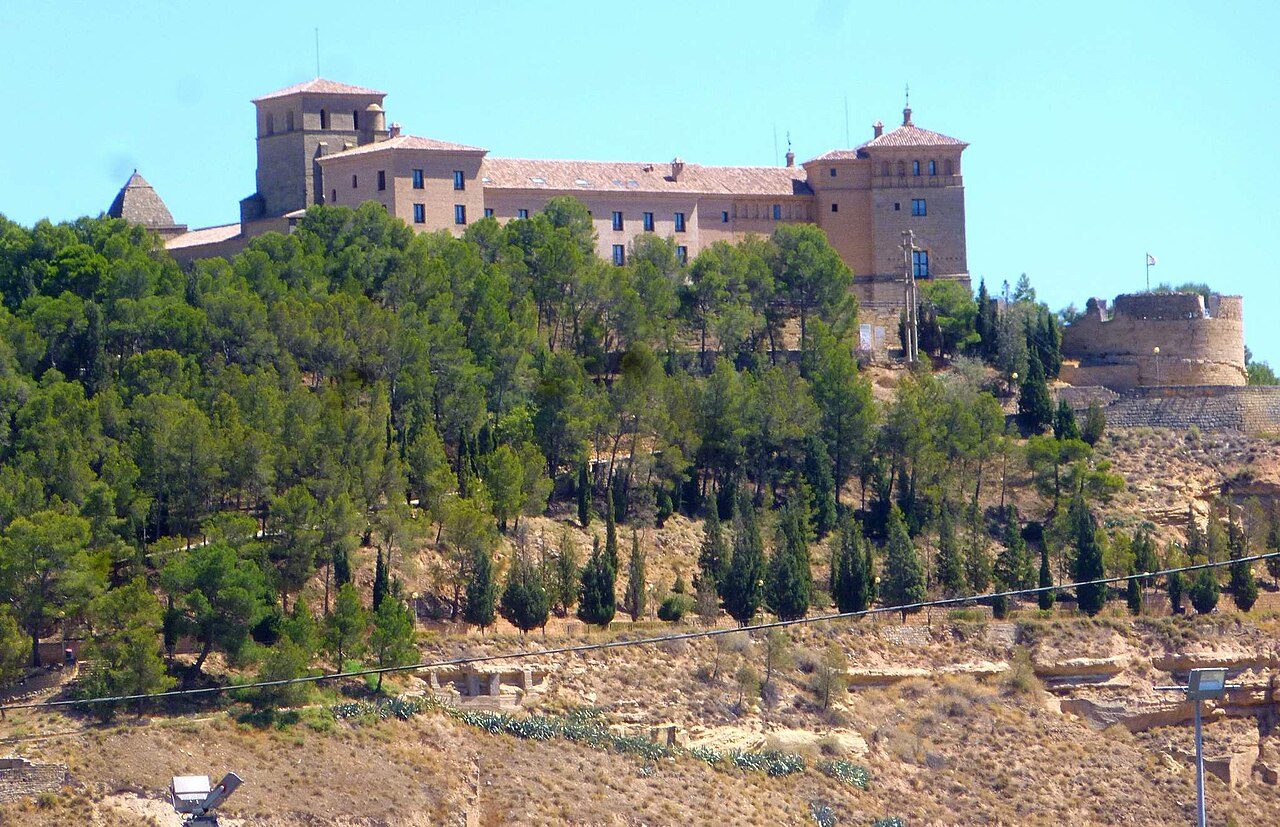
Photo: Zarateman · CC0
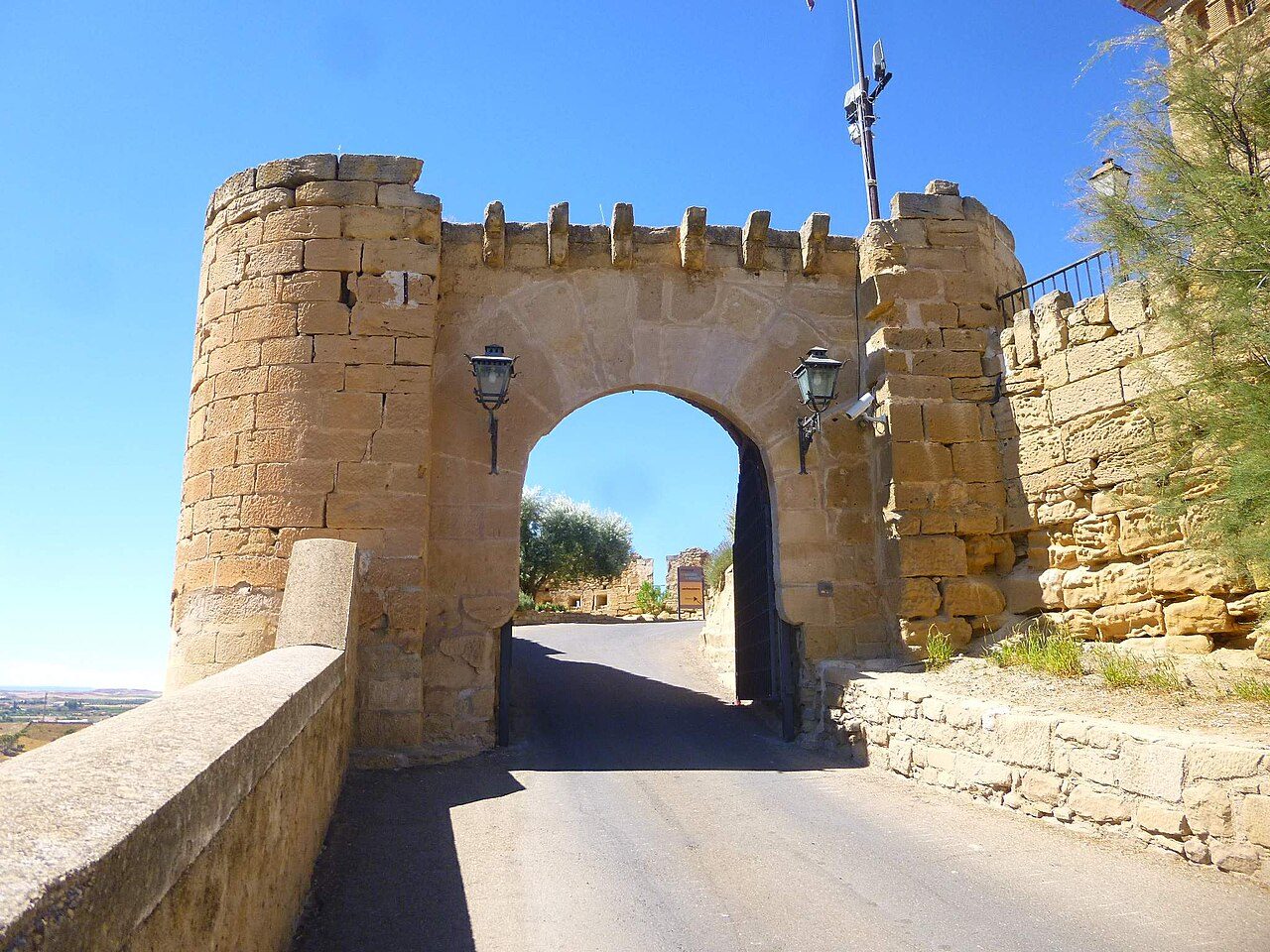
Photo: Zarateman · CC0
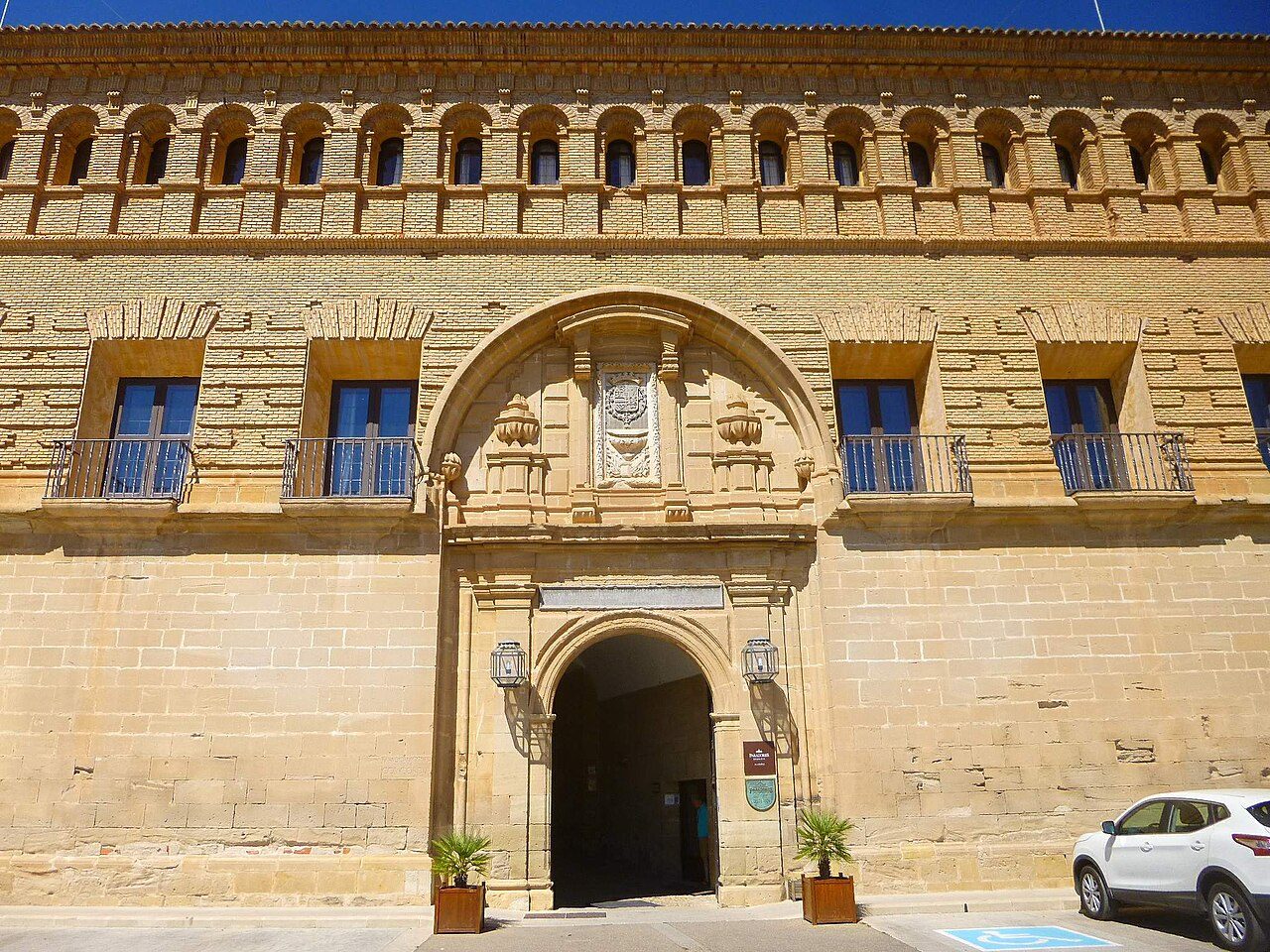
Photo: Zarateman · CC0
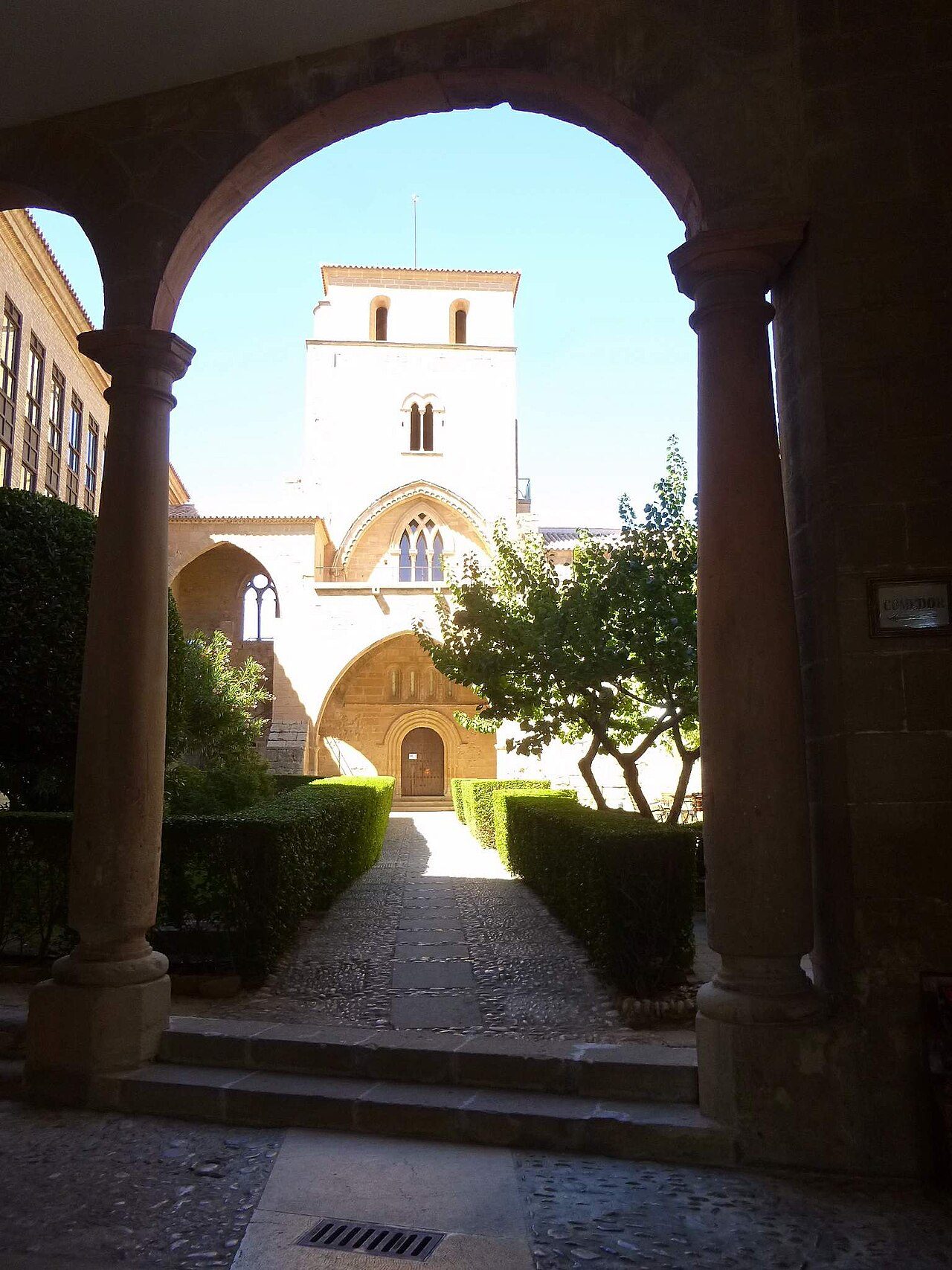
Photo: Zarateman · CC0
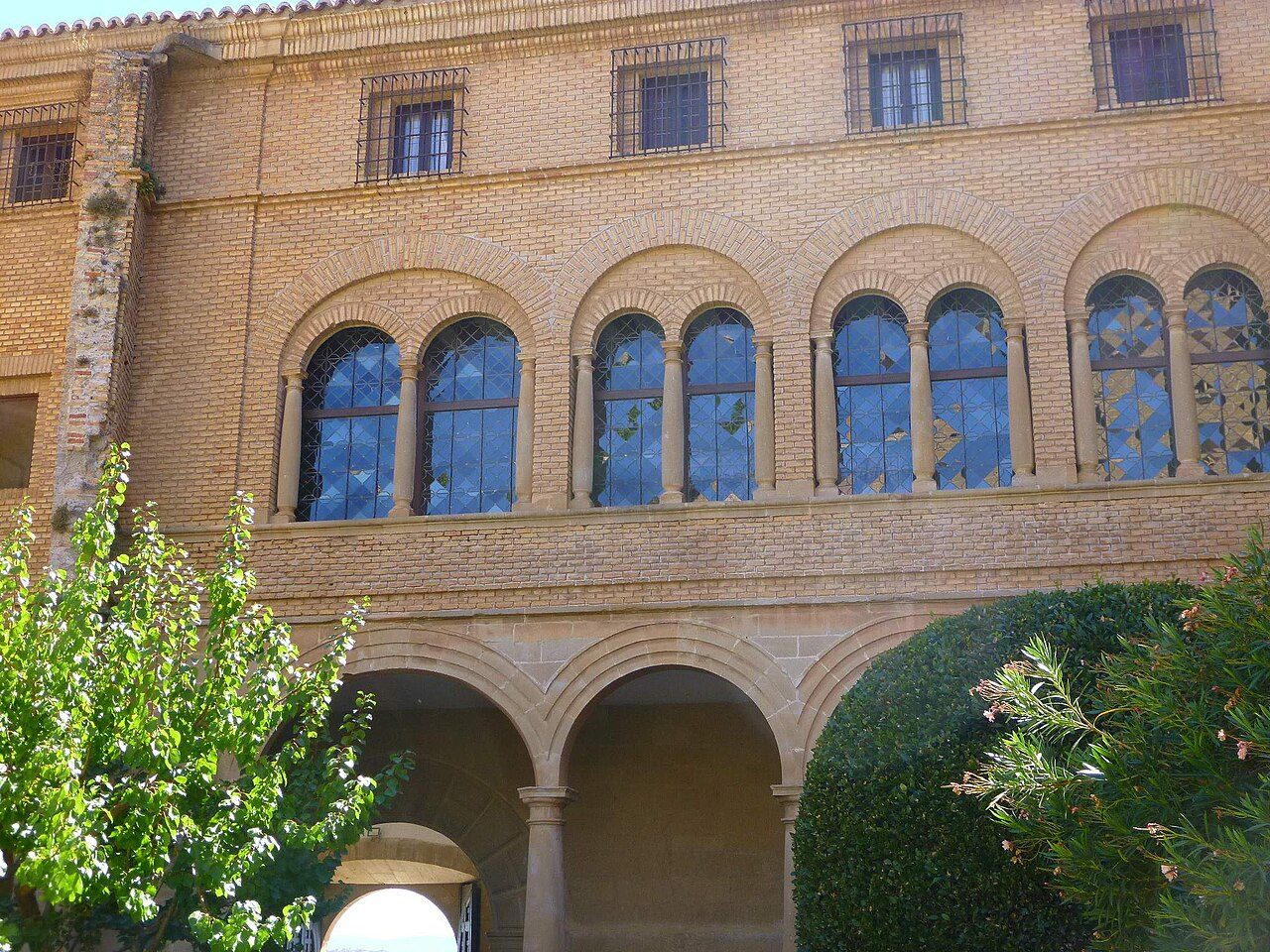
Photo: Zarateman · CC0
- Antiquity–12th c.
Hillfort and alcazaba?
Remains of a Roman hillfort and perhaps of a Muslim alcazaba on the hill.
- 1157
Settlement charter
Ramon Berenguer IV recovers the town and grants it a charter.
- 1179
Grant to Calatrava
Alfonso II hands Alcañiz over to the order; the great commandery is not consolidated until the early 13th c.
- 1283
Uprising
An anti-seigneurial revolt, settled with difficulty and heavy payments by the vassals.
- 14th c.
Cloister and paintings
The convent buildings are completed and the tower is painted.
- 1321
Siege
The militia of Alcañiz besieges the castle on the orders of Prince Alfonso.
- 1352
In the king's hands
Peter IV has the castle occupied in the face of the threat of war with Castile.
- 1411–1412
Concordia of Alcañiz
The Aragonese parliament is lodged in the castle; the Concordia is signed on February 15, 1412.
- 1537
Lanuza's tomb
Damián Forment is commissioned to make the tomb of Commander Juan de Lanuza.
- 1728–1738
Palace of the Commanders
The south front is turned into a palace; the dates vary depending on the source.
- 1809–1813
Peninsular War
French occupation; Battle of Alcañiz on May 23, 1809.
- 1838–1874
Carlist Wars
Sieges of the town and use of the castle as barracks; loopholes are opened in the wall.
- 1938
Bombing
Some 500 victims on March 3; there is no record of damage to the castle.
- 1968
Parador
The palace opens as a parador; in 2025 the Lanuza Tower is restored.
- SIPCA: castillo de los Calatravos
- Laliena Corbera, Studia Historica. H.ª Medieval 41 (2023)
- J. Díez Arnal: castillo de Alcañiz
- Gran Enciclopèdia Catalana: Alcanyís
- Sobrecullidas: fogaje de 1495
- La Comarca: restauración del torreón de Lanuza (2025)
- La Comarca: 80 años del bombardeo
- Wikipedia: Castillo de los Calatravos
- Wikipedia: Alcañiz