 CASTLE
The reconstruction shows Calonge Castle around 1550, when it belonged to the Cardona-Anglesola family, Counts of Palamós: a square keep about 11 m on each side, a trapezoidal enclosure with cylindrical corner towers and the Gothic palace on the east and south sides, next to the church of Sant Martí. The plan has been measured on the orthophoto and the Cadastre, because no published plan could be consulted: the heights, the gate and the date of the towers are hypothetical.
Works in the browser on computers and phones, with nothing to install. Fly with the drone and switch between then and now.
Interpretive recreation: our approach ›
Or fly over it as the centuries go by: from the first settlement to today, with the town growing and the milestones of its history.
- Period reconstructed
- c. 1550
- Town
- Calonge
- County
- Baix Empordà
- Province
- Girona
- Region
- Catalonia
- Coordinates
- 41.86314, 3.07339 · Open the map
Leave us your email and we'll send you the poster of this castle at its height, high resolution, ready to print, plus two wallpapers (computer and phone). We'll also tell you about news on this castle. No passwords; unsubscribe any time.
Are you at the castle? Get its stamp for your castle passport. We only check that you are within 300 m; we don't store your location.
Keep
Almost square, 11.60 × 11.15 m with walls 1.10 m thick, preserved up to about 10 m: it is the oldest core, from the 12th c. according to Catalunya Romànica (perhaps earlier). The original height in the model is hypothetical.
Gothic palace
Gothic wings on the south and east sides, built before 1477 or rebuilt after the fires of 1477 and 1485. The source text does not specify which wings.
Cylindrical towers
Two on the north side, one at the southeast corner and a semicircular one halfway along the east curtain wall, with stepped merlons. Probably from the 16th c.; the model shows them this way around 1550.
Plaça del Castell
The former parade ground, north of the enclosure. Today it hosts the summer music festival. The model draws no building there, and its old boundary is not known.
Gate
The Renaissance entrance, with the coat of arms of the Dukes of Sessa, is from the late 16th or the 17th c. and faces the Plaça Major. The 1550 gate is hypothetical.
Sant Martí
The town's parish church, documented since 944; the present building is later. The bell tower is a landmark next to the castle.
Videos and stories about this place on our account.
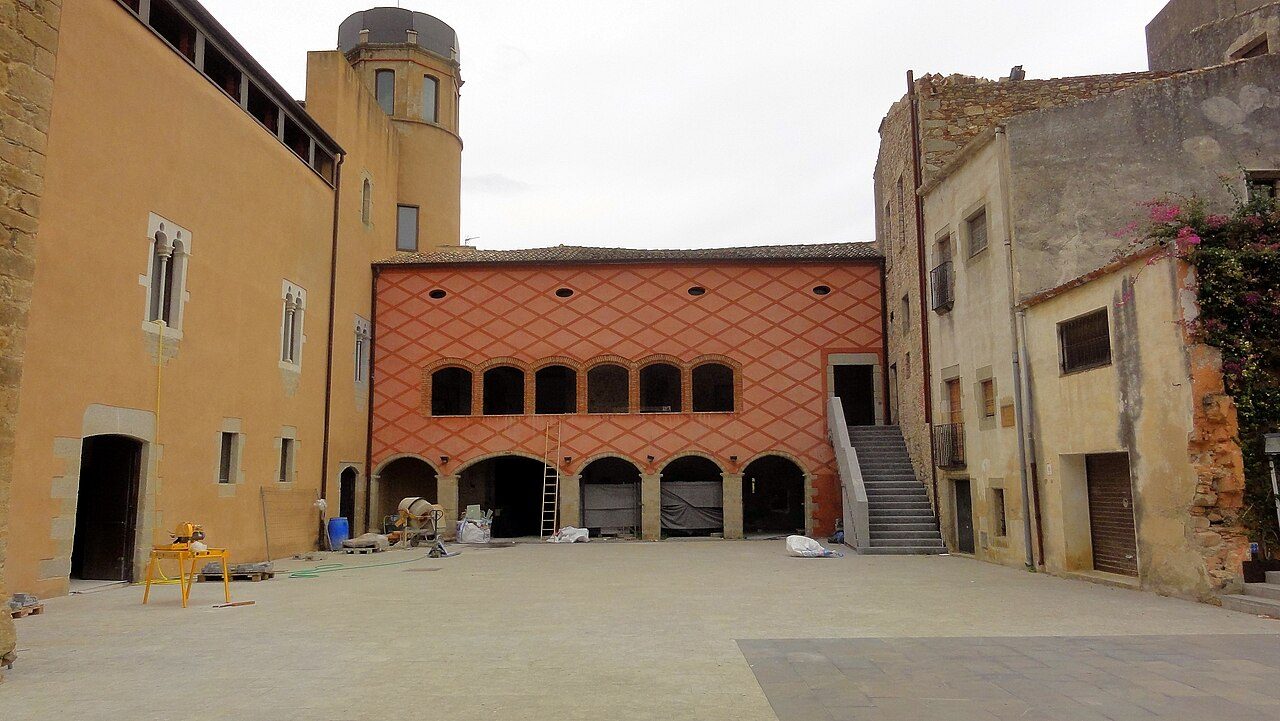
Photo: Talavan37 · CC BY-SA 4.0
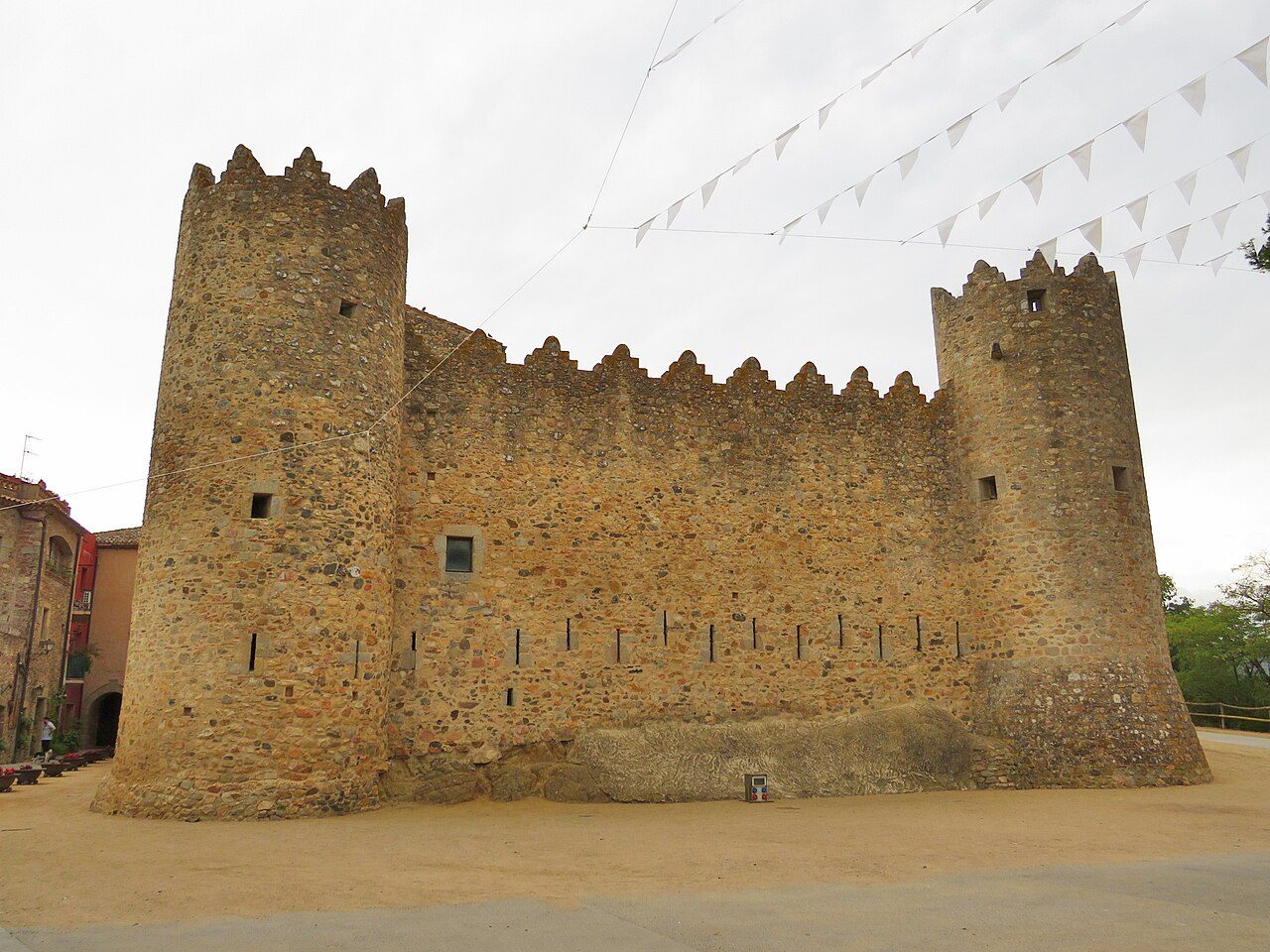
Photo: Enric · CC BY-SA 4.0
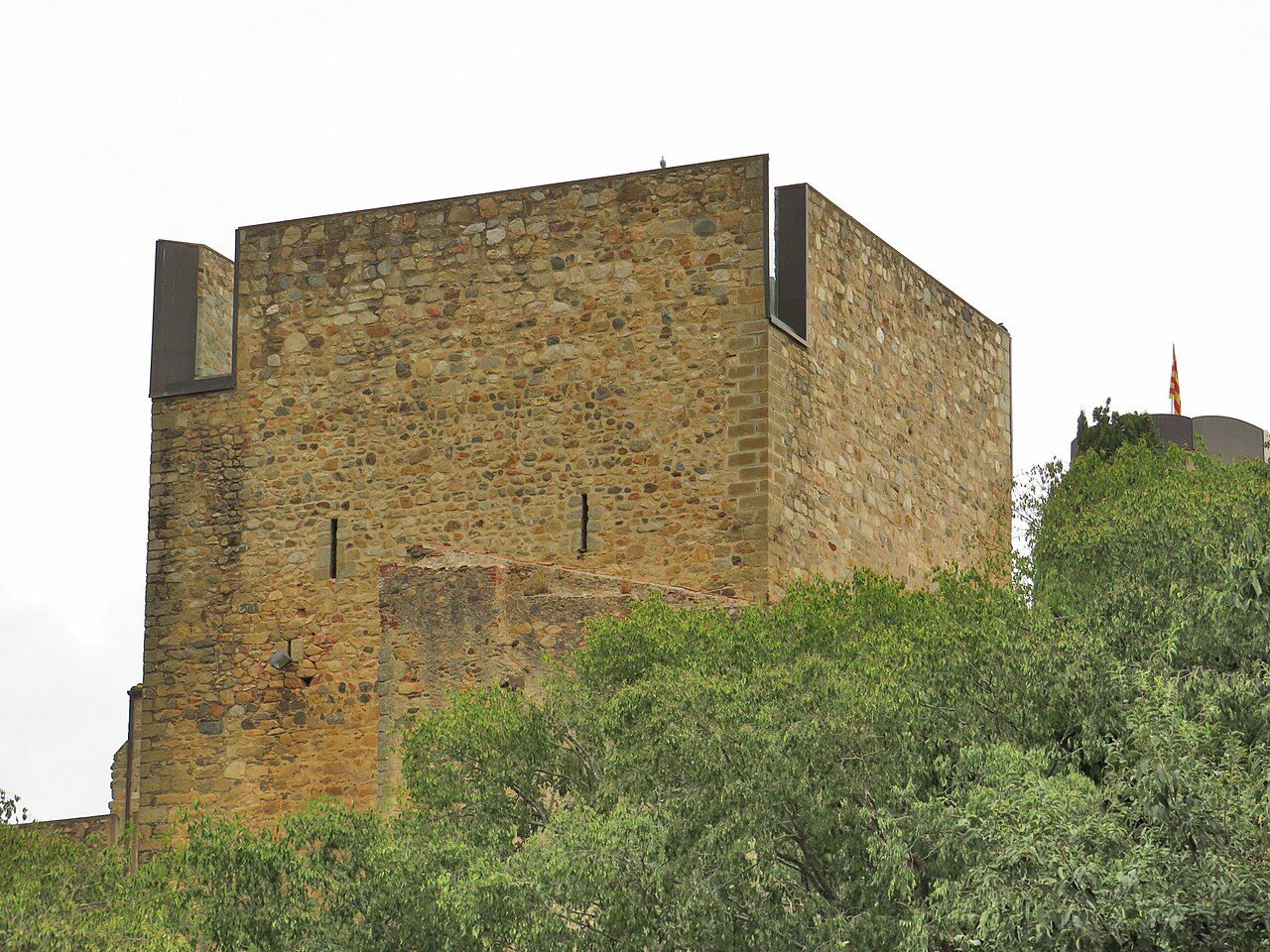
Photo: Enric · CC BY-SA 4.0
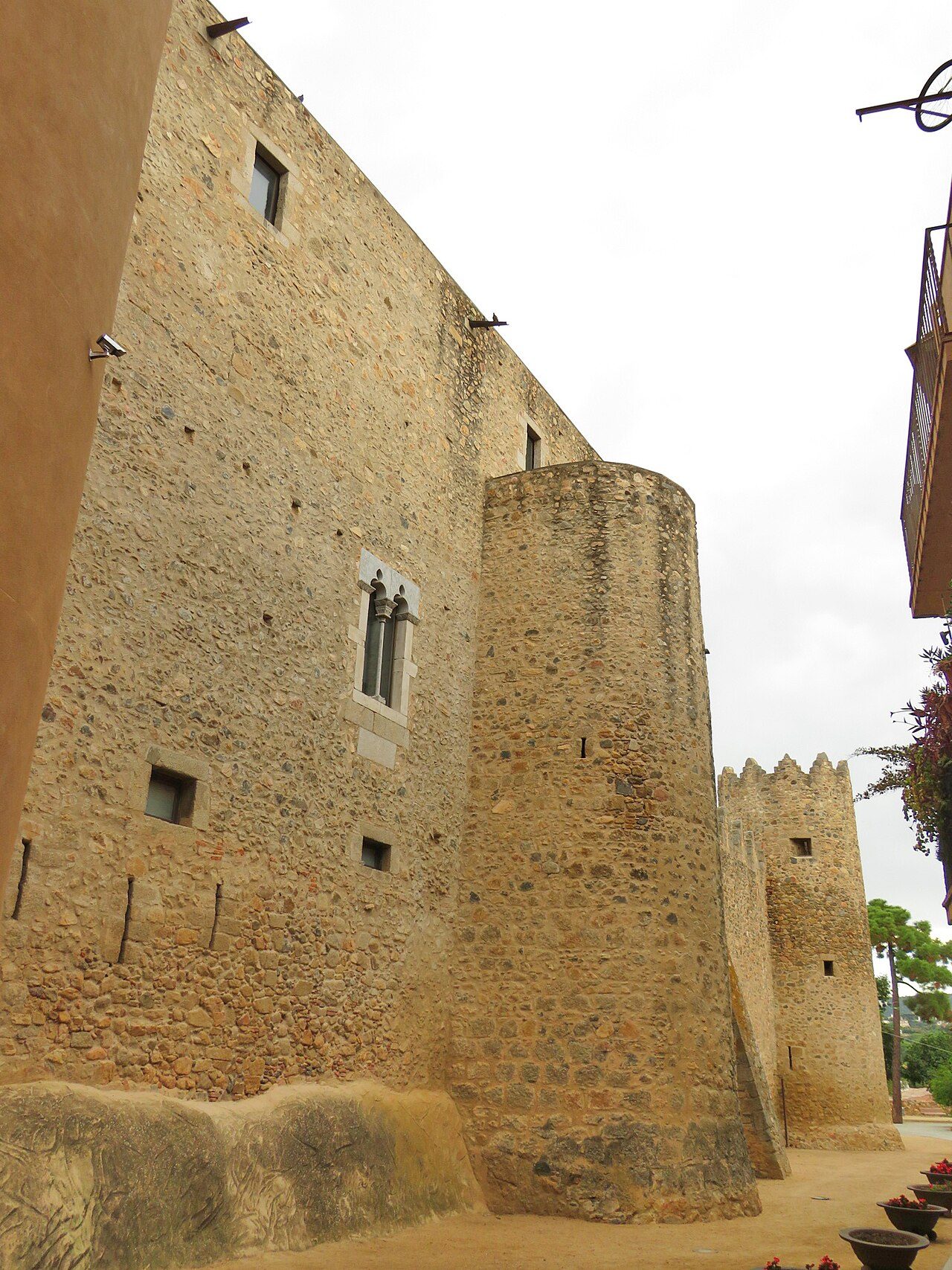
Photo: Enric · CC BY-SA 4.0
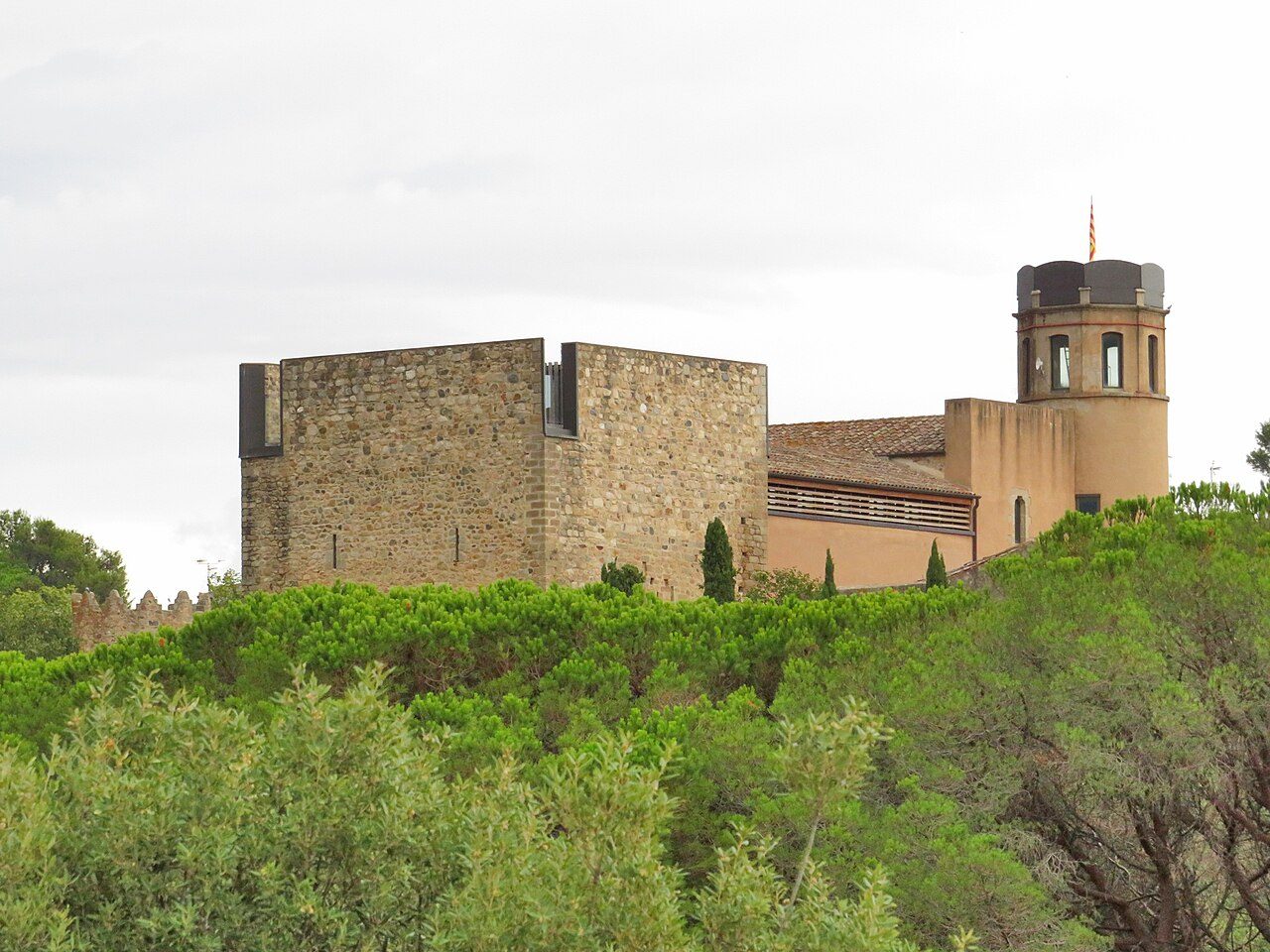
Photo: Enric · CC BY-SA 4.0
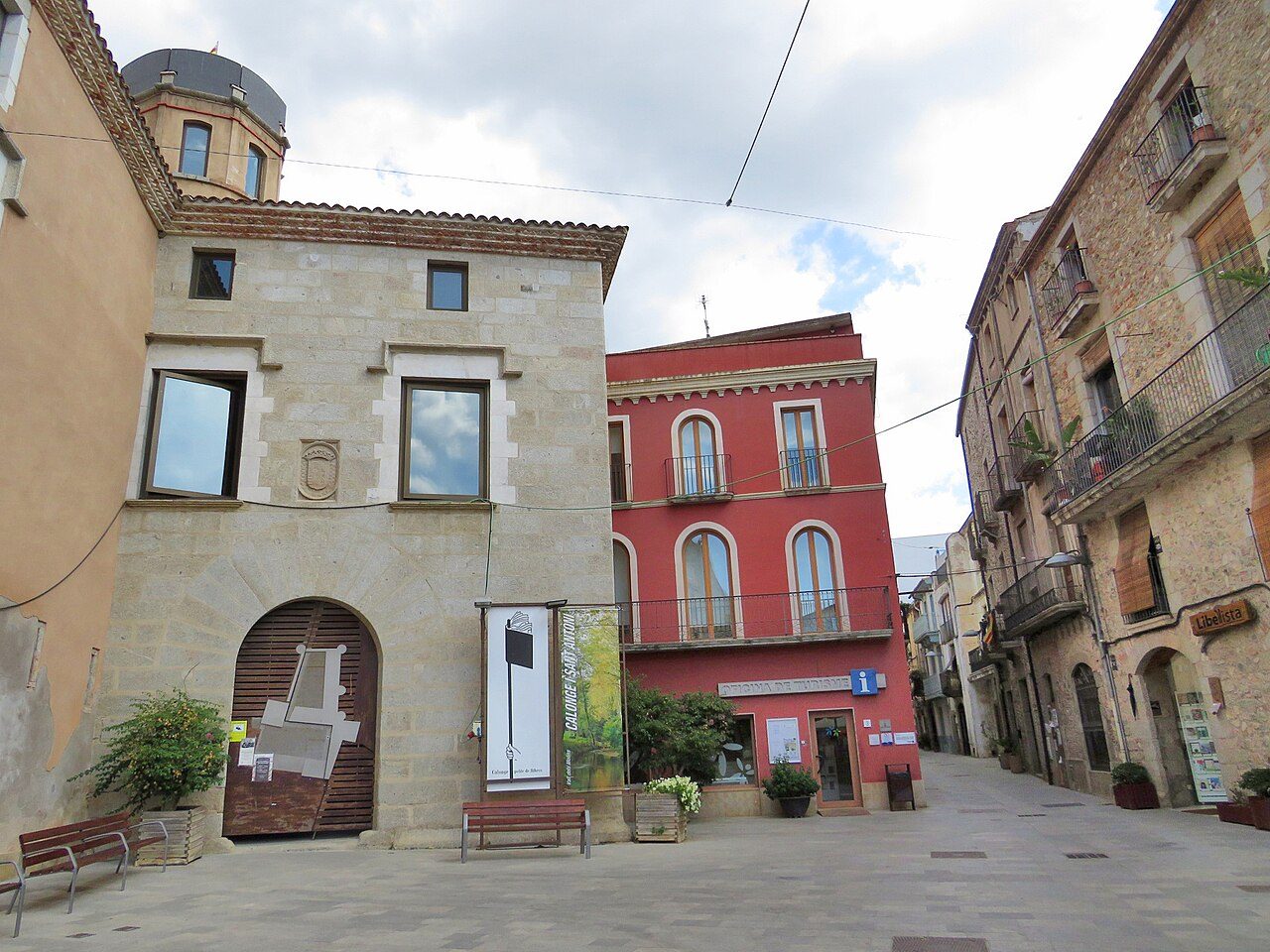
Photo: Enric · CC BY-SA 4.0
- 881
The first document
A diploma of Carloman grants the Aro valley to Bishop Teuter of Girona; the church of Sant Martí is recorded from 944.
source: Catalunya Romànica (Enciclopèdia Catalana), Castell de Calonge - 1193
Homage to Alfonso I
The castle is held directly by the count-kings, and Ramon de Solius, who holds it in fief, pays homage to Alfonso I.
source: Catalunya Romànica (Enciclopèdia Catalana), Castell de Calonge - 13th c.
The Cruïlles family
The Cruïlles hold it for centuries; in 1259 they pledge its revenues to the king for 8,000 sous.
source: Catalunya Romànica (Enciclopèdia Catalana), Castell de Calonge - 14th–15th c.
Enclosure and palace
A trapezoidal enclosure is proposed for the 14th c. and a Gothic palace for the 15th c., perhaps rebuilt after a fire.
source: Catalunya Romànica (Enciclopèdia Catalana), Castell de Calonge - 1477
The remença peasants burn the castle
The remença peasants sack the town and set fire to the castle; it burns again in 1485.
source: Catalunya Romànica (Enciclopèdia Catalana), Castell de Calonge - 1488
County of Palamós
Ferdinand II creates the County of Palamós, and with it Calonge passes to Galcerà de Requesens; it will later belong to the Cardona-Anglesola family and the Dukes of Sessa.
source: Catalunya Romànica (Enciclopèdia Catalana), Castell de Calonge - 16th c.
Towers and merlons
The cylindrical towers and stepped merlons are usually dated to the 16th c.; the Renaissance entrance, to the end of that century or the 17th.
source: Catalunya Romànica (Enciclopèdia Catalana), Castell de Calonge - 1861
Casino and theater
Part of the castle houses the Casino Calongense, with a theater; in 1899 the heirs sell it to the Casellas family.
source: Catalunya Romànica (Enciclopèdia Catalana), Castell de Calonge - 1987–2022
Study and restoration
In 1987 there is a preliminary restoration project; the Town Council roofs over the courtyard and opens an exhibition hall, and in 2021 it allocates €400,000 to the final phase.
source: El Punt Avui / Biblioteca Girona, «Les obres del castell de Calonge»