 CASTLE
On a hill beside the Cardener, Cardona Castle controlled the salt of the Vall Salina, the wealth that made its lords one of the most powerful lineages of the Crown. Around 1400 the summit was divided between the castle and palace of the counts, to the west, and the canonry of Sant Vicenç, to the east, while the town had just closed its new Gothic wall. The present ring of bastions is later (from 1692).
Works in the browser on computers and phones, with nothing to install. Fly with the drone and switch between then and now.
Interpretive recreation: our approach ›
Or fly over it as the centuries go by: from the first settlement to today, with the town growing and the milestones of its history.
Or watch how it was raised: the years of building up to its heyday, with masons, treadwheel cranes, carts and the passing seasons (interpretive recreation).
🏰 Enter the castle in 3D⏳ See how it changed⚒ How they built it
- Period reconstructed
- c. 1400
- Town
- Cardona
- County
- Bages
- Province
- Barcelona
- Region
- Catalonia
- Coordinates
- 41.91434, 1.68561 · Open the map
Leave us your email and we'll send you the poster of this castle at its height, high resolution, ready to print, plus two wallpapers (computer and phone). We'll also tell you about news on this castle. No passwords; unsubscribe any time.
Are you at the castle? Get its stamp for your castle passport. We only check that you are within 300 m; we don't store your location.
Sant Vicenç de Cardona
Three-nave basilica consecrated in 1040, a model of the First Catalan Romanesque: 51 m long, with an octagonal crossing tower. Burial place of the lords.
Sant Miquel
Gothic parish church of the town, consecrated in 1397: a single 50 m nave with a seven-sided apse.
Torre de la Minyona
Cylindrical main tower about 10.5 m in diameter (11th c.); around 1400 it still had its original height, 20–25 m.
Palace of the counts
The Casa del Senyor, with wings around a courtyard; the counts lived there until the mid-15th c.
Parade ground
The first upper enclosure of the castle, with an underground cistern.
Gothic cloister
Small cloister from around 1330 with thistle capitals, the emblem of the Cardona family.
Wall and gateway
Gothic enclosure about 1,500 m long (1372 – c. 1400); the Portal de Graells is the only surviving gate.
Plaça de la Fira
Former fairground that became the main square between 1350 and 1450.
La Salina and the Salt Mountain
Salt valley worked in the open since the Neolithic: the source of the Cardona family's wealth.
Videos and stories about this place on our account.
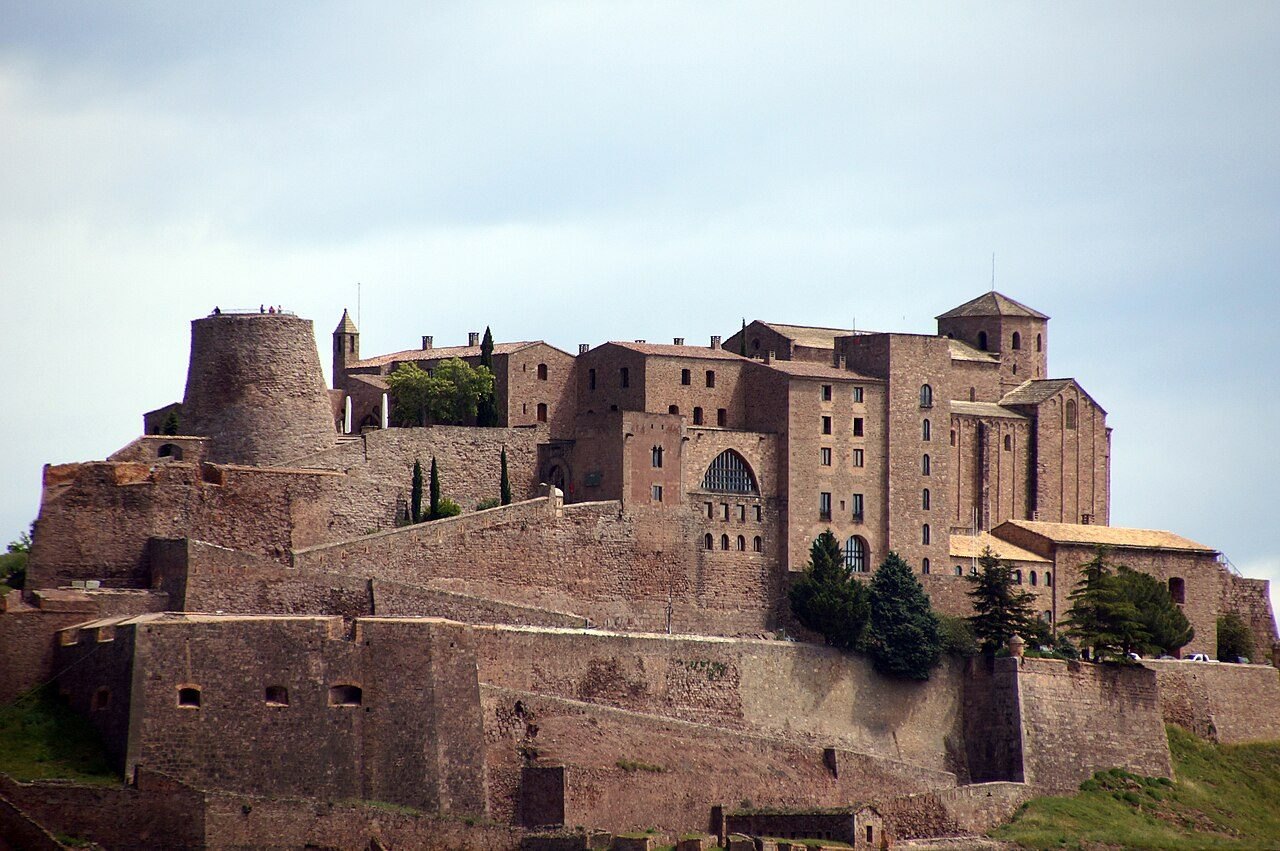
Photo: DagafeSQV · CC BY-SA 3.0
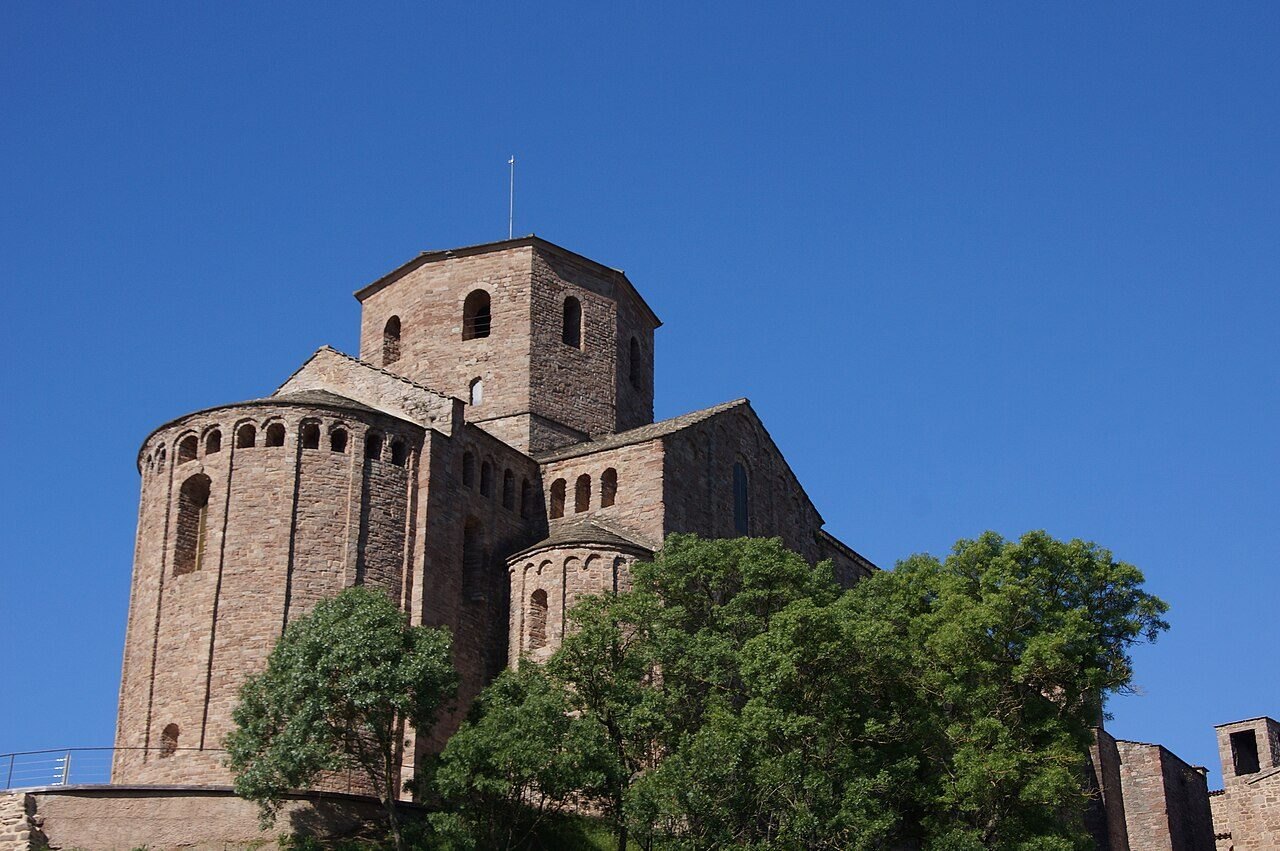
Photo: DagafeSQV · CC BY-SA 3.0
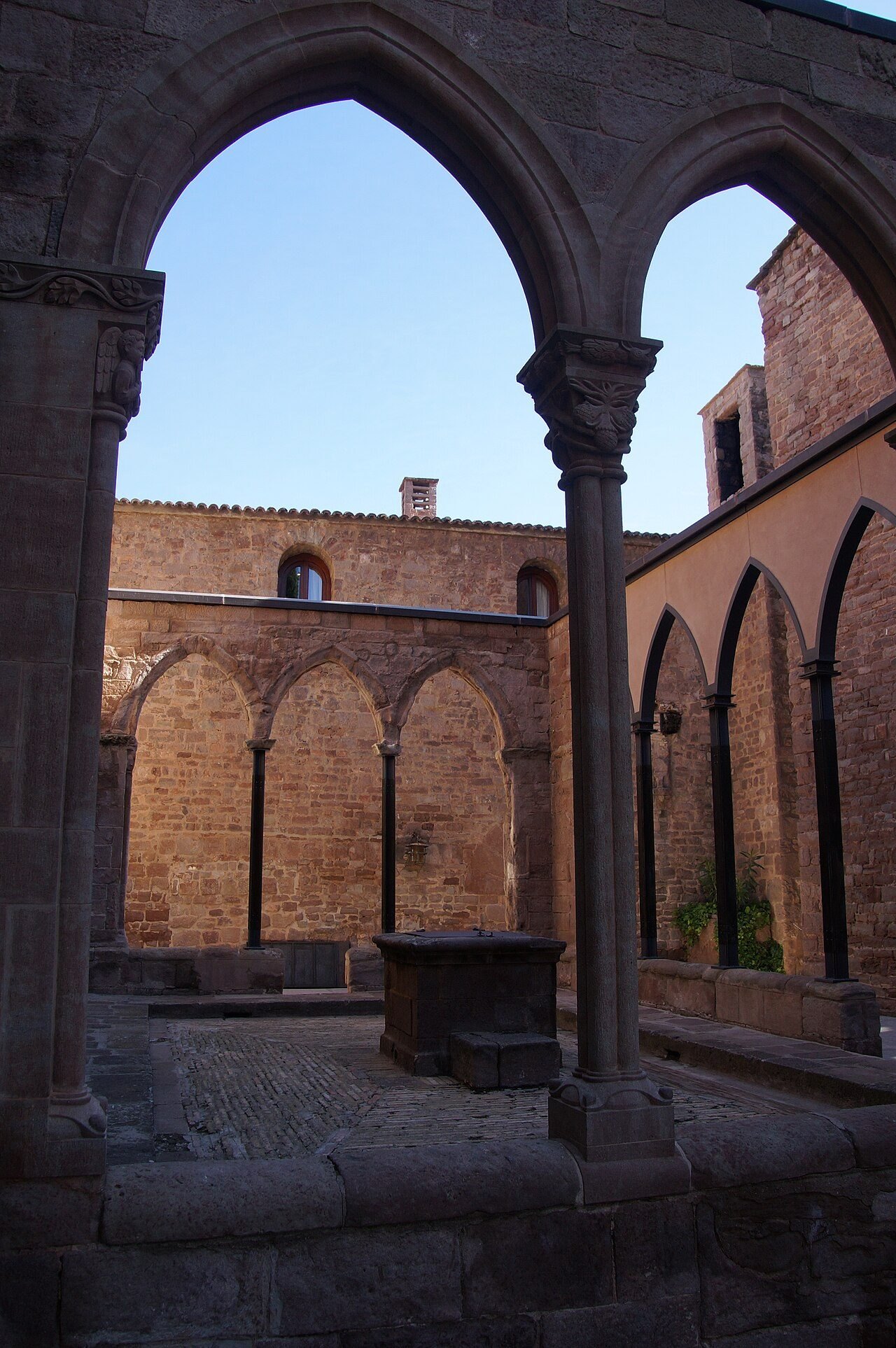
Photo: DagafeSQV · CC BY-SA 3.0
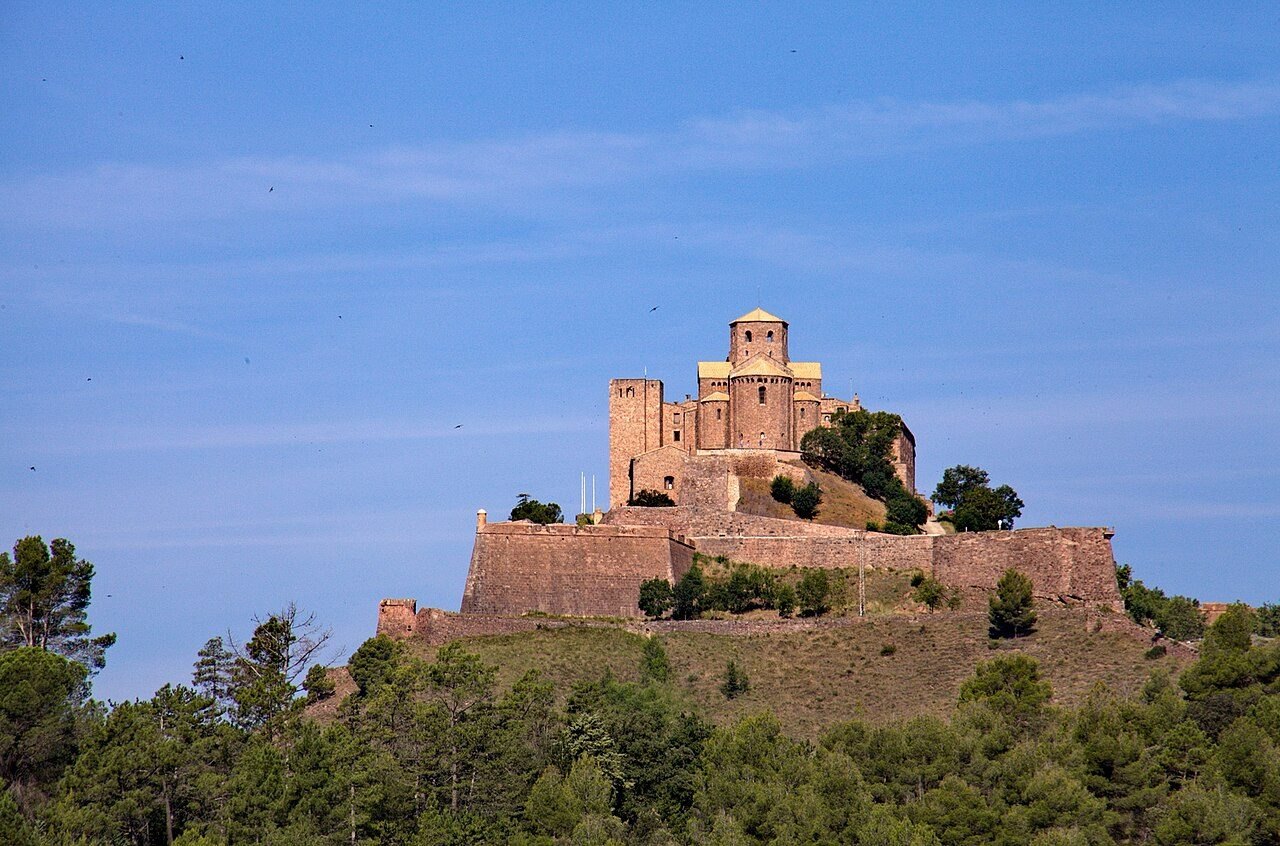
Photo: Amadalvarez · CC BY-SA 3.0
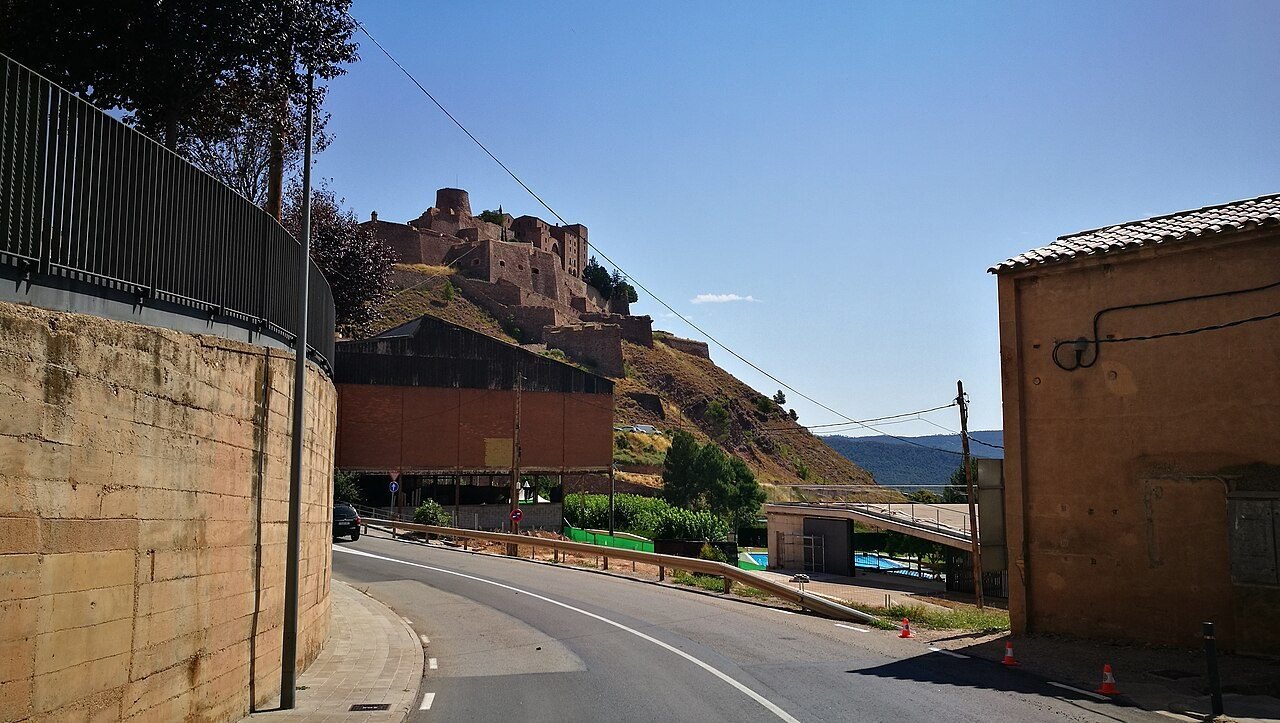
Photo: Pitxiquin · CC BY-SA 4.0
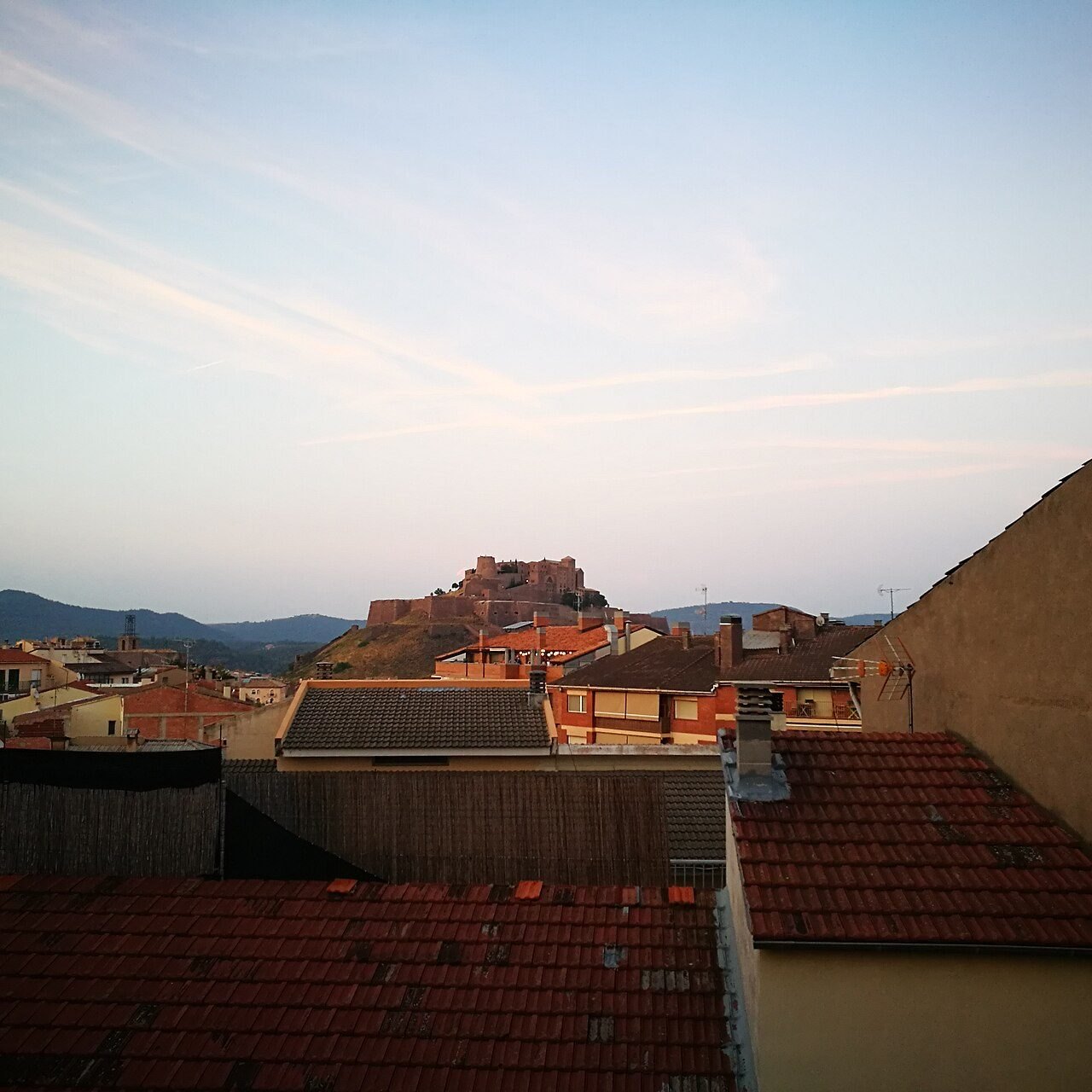
Photo: Pitxiquin · CC BY-SA 4.0
- 798
Carolingian occupation
Louis the Pious orders the occupation of the castrum Cardonam as a prelude to the conquest of Barcelona.
source: Generalitat: Guia de visita del Castell de Cardona - 986
Settlement charter
Count Borrell II renews Wilfred's franchises and grants the castle to Ermemir, of the viscomital lineage of Osona.
source: Generalitat: Guia de visita del Castell de Cardona - 1019
Bermon reforms the canonry
Viscount Bermon, advised by Abbot Oliba, restores the community of Sant Vicenç and begins the new church.
source: Catalunya Romànica: Sant Vicenç de Cardona - 1040
Consecration of Sant Vicenç
Bishop Eribau of Urgell consecrates the church, and the lords give the abbot the eastern half of the summit.
source: Catalunya Romànica: Sant Vicenç de Cardona - c. 1330
Gothic cloister
The small cloister is built at the foot of the church, with an upper gallery linking the palace and the church.
source: Generalitat: Guia de visita del Castell de Cardona - 1372
New wall
Work begins on a new enclosure about 1,500 m long that makes the town six times larger than its original core.
source: L'Art Gòtic a Catalunya: la vila de Cardona - 1375
County of Cardona
Hug Folc II obtains the title of count and the viscounty becomes a county.
source: Viquipèdia: Castell de Cardona - 1397
Consecration of Sant Miquel
The new Gothic parish church of Sant Miquel is consecrated, in the heart of the town.
source: L'Art Gòtic a Catalunya: Sant Miquel de Cardona - c. 1400
The medieval heyday
The town's Gothic wall is finished and the counts live in the castle; in August 1400 Hug Folc II dies.
source: L'Art Gòtic a Catalunya: la vila de Cardona - 1491
Duchy of Cardona
Cardona is raised to a duchy; by now the lords live mainly in Barcelona.
source: Viquipèdia: Castell de Cardona - 1692
The ring of bastions
Work begins on the bastions surrounding the medieval enclosure; it is not finished until 1793–1814.
source: Generalitat: Itinerarios en torno al castillo - 1714
Last bastion
Governor Manuel Desvalls surrenders the fortress on 18 September, a week after Barcelona.
source: Generalitat: Guia de visita del Castell de Cardona - 1794–1976
Barracks and Parador
The canons are expelled and Sant Vicenç serves as a military store; in 1976 the castle opens as a Parador.
source: Viquipèdia: Sant Vicenç de Cardona
Using the 3D model we worked out how big this castle was and what it took to build it. Here is a sample:
- How many people worked, how much stone, lime and carts, year by year
- Work by work and how we calculate it
- The data to download (CSV)
Leave your email and you will see everything, for this castle and all the others. As a gift, the castle poster.
Already signed up? Sign in with your email- Generalitat: Guia de visita del Castell de Cardona
- Catalunya Romànica: Sant Vicenç de Cardona
- L'Art Gòtic a Catalunya: la vila de Cardona
- L'Art Gòtic a Catalunya: Sant Miquel de Cardona
- Viquipèdia: Castell de Cardona
- Enciclopèdia Catalana: castell de Cardona
- MDT: IGN · Ortofoto: ICGC (CC BY 4.0)
- Cadastre (INSPIRE)
🏰 Enter the castle in 3D⏳ See how it changed⚒ How they built it