 CASTLE
The reconstruction shows Javier around 1510, between the rebuilding by the Azpilcueta and Jaso families and the demolition of 1516. The layout comes from Goicoechea's plans (1890) and Recondo's excavations, fitted onto the orthophoto. The New Palace, the barbican on the west side, the two round towers and the layout of the village are hypothetical.
Works in the browser on computers and phones, with nothing to install. Fly with the drone and switch between then and now.
Interpretive recreation: our approach ›
Or fly over it as the centuries go by: from the first settlement to today, with the town growing and the milestones of its history.
Or watch how it was raised: the years of building up to its heyday, with masons, treadwheel cranes, carts and the passing seasons (interpretive recreation).
🏰 Enter the castle in 3D⏳ See how it changed⚒ How they built it
- Period reconstructed
- c. 1510
- Town
- Javier
- County
- Merindad de Sangüesa
- Province
- Navarre
- Region
- Navarre
- Coordinates
- 42.59404, -1.21585 · Open the map
Leave us your email and we'll send you the poster of this castle at its height, high resolution, ready to print, plus two wallpapers (computer and phone). We'll also tell you about news on this castle. No passwords; unsubscribe any time.
Are you at the castle? Get its stamp for your castle passport. We only check that you are within 300 m; we don't store your location.
Tower of San Miguel
The core of the castle, from the 10th century: a freestanding tower about 20 m tall on the rock, with a raised entrance. In 1516 it was cut down to half its height.
The shell wall
11th-century wall that wraps around the tower on three sides. To the west, the chapel of San Miguel.
Tower of the Santo Cristo
13th-century tower with a rounded head. Around 1500 the chapel with the crucifix and the Dance of Death was made inside it.
Tower of Undués
Pentagonal tower from the second half of the 15th century, 15 m tall and facing Aragon, with a sloping base and machicolations.
North polygon
The rear: nine sections of wall about 11 m high, with a range of storerooms and stables open to the parade ground.
New Palace
Francis Xavier was born here in 1506. It disappeared with the basilica: its shape is a hypothesis.
The moat
Recondo found it in 1952 under three meters of fill, with the stones from the 1516 demolition.
Strong tower
Forward gate on the barbican, in front of the drawbridge. Its actual height is unknown.
Church and abbey
The parish church, outside the wall, where it stands today. The present building is later, from 1702.
The old village
About fifteen houses on what is now the esplanade, demolished around 1965. The layout is a hypothesis.
Videos and stories about this place on our account.
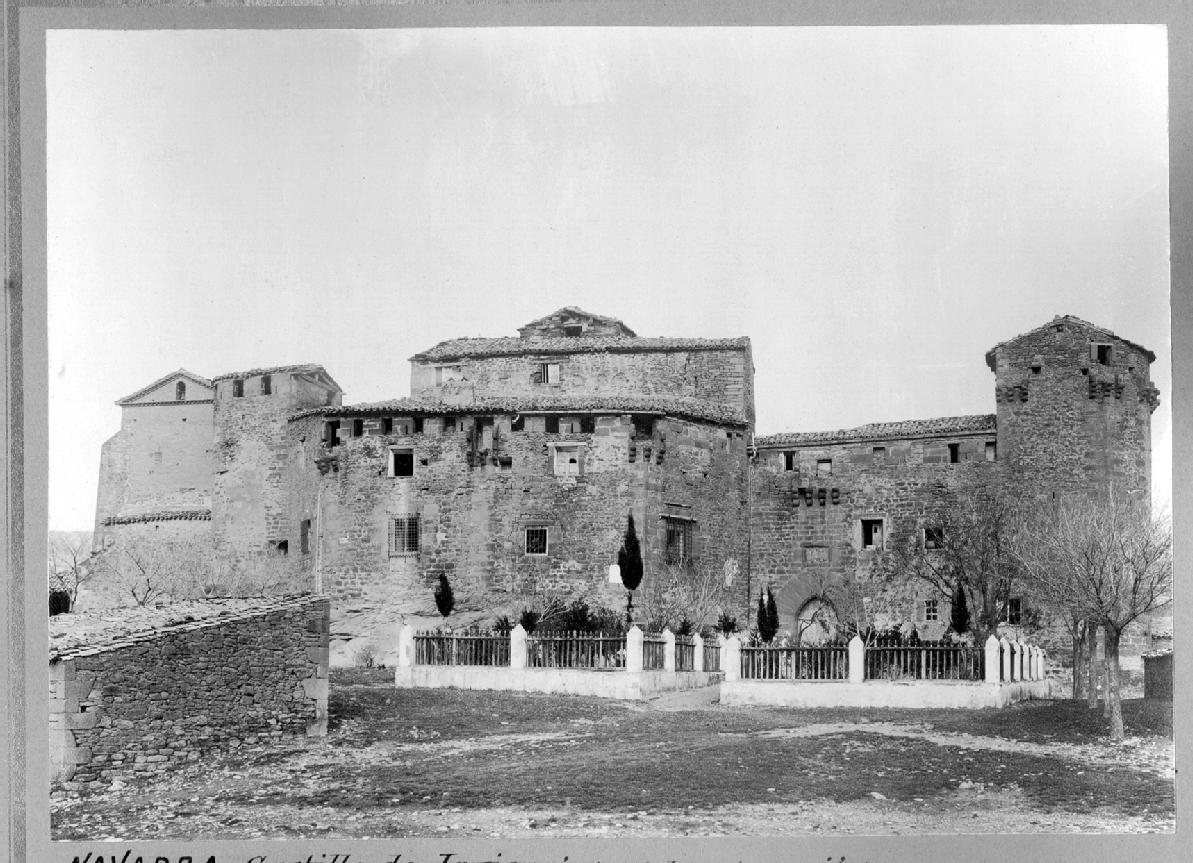
Photo: Julio Altadill · Public domain
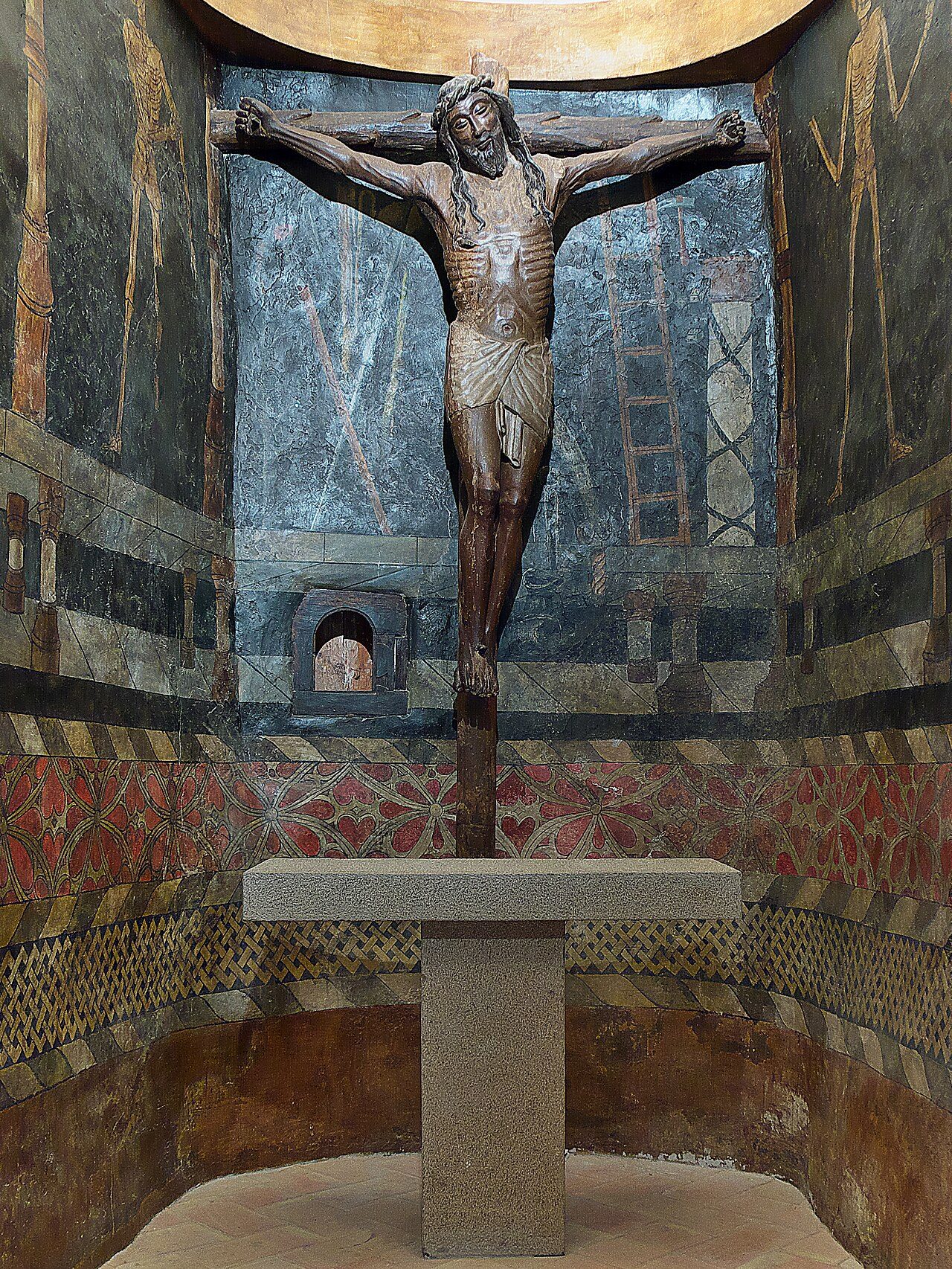
Photo: José Luis Filpo Cabana · CC BY-SA 4.0
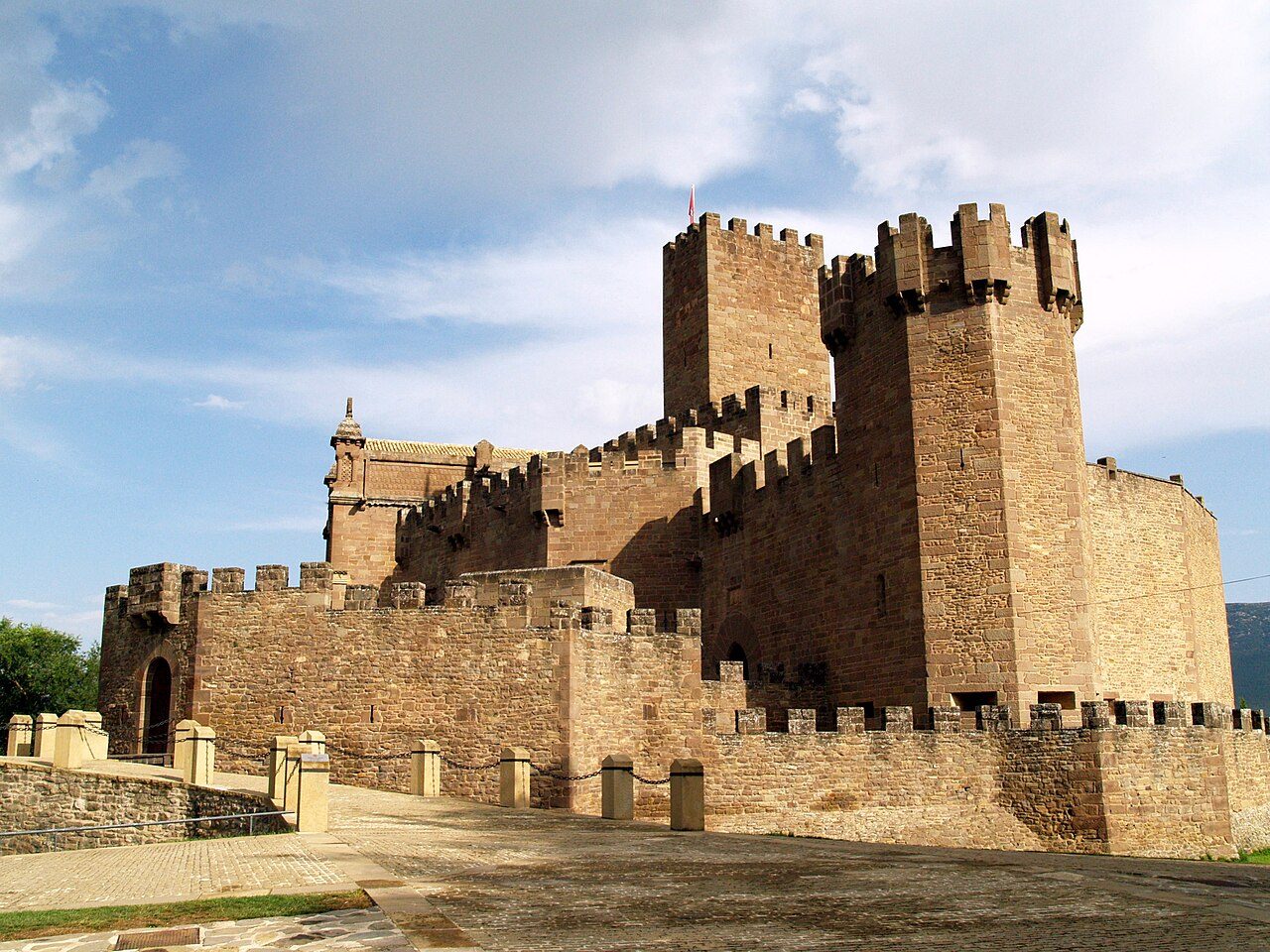
Photo: Emvallmitjana · CC BY-SA 3.0 es
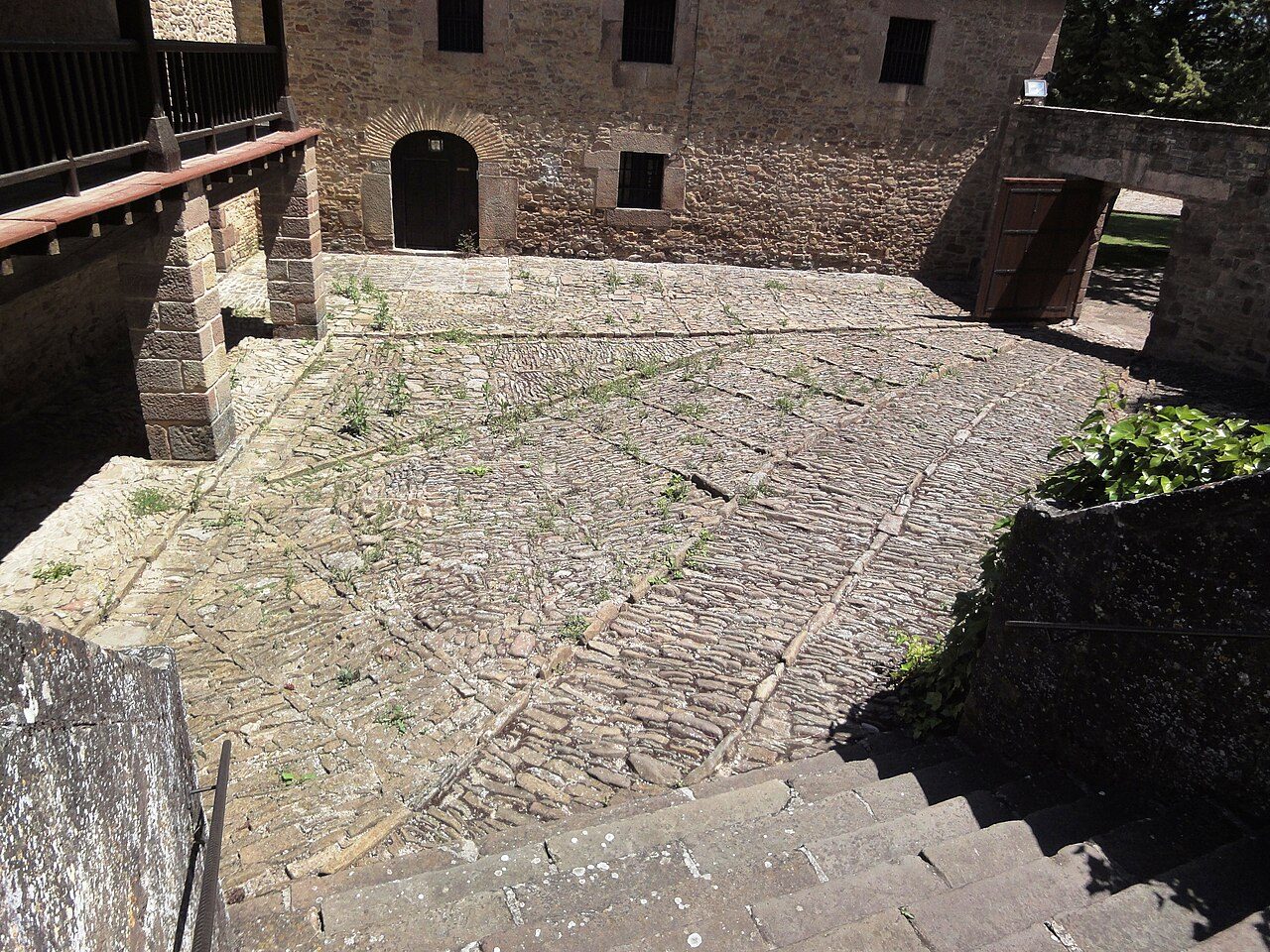
Photo: JnCrlsMG · CC BY-SA 4.0
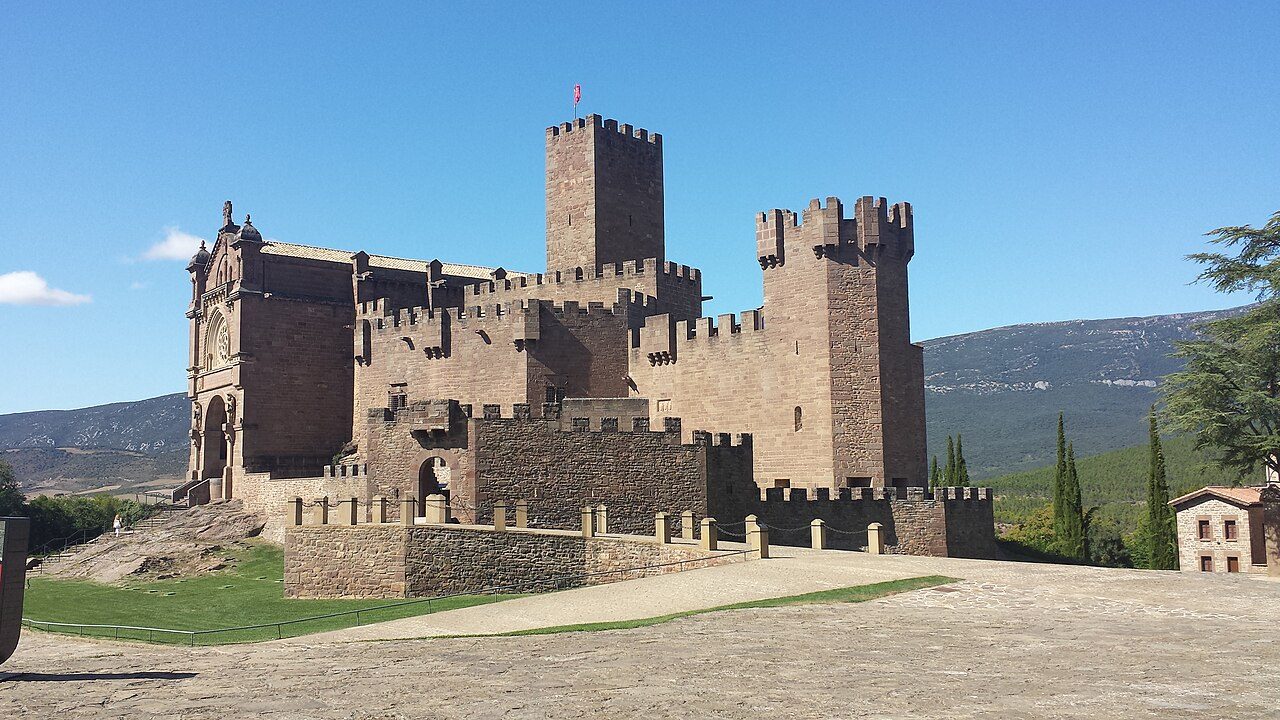
Photo: Julina · CC BY-SA 3.0 es
- 10th c.
A tower on the rock
A freestanding tower about 20 m tall is raised, with its entrance on the third level, and the village moves down from El Castellar.
source: L. J. Fortún, Cátedra de Patrimonio UNAV - 11th c.
The shell wall
A wall wraps around the tower on three sides and turns it into a small castle.
source: L. J. Fortún, Cátedra de Patrimonio UNAV - c. 1205–1225
The castle grows fivefold
Two polygons and two flanking towers make the fortress five times larger, on the border with Aragon.
source: L. J. Fortún, Cátedra de Patrimonio UNAV - 1251
Lordship of the Aznárez de Sada
Theobald I grants Martín Aznáriz the castle, the town and the abbey in perpetuity.
source: J. M. Recondo, Príncipe de Viana (1957) - 1455
The siege by Pierres de Peralta
In the war between the Beaumontese and the Agramontese, Peralta besieges Javier and tears down a large part of it.
source: J. M. Recondo, Príncipe de Viana (1957) - 1463–c. 1505
Azpilcueta and Jaso rebuild
The Tower of Undués, the north polygon, the barbican and the New Palace go up.
source: L. J. Fortún, Cátedra de Patrimonio UNAV - April 7, 1506
Francis Xavier is born
The future saint is born in a chamber of the New Palace, at the castle's moment of greatest splendor.
source: J. M. Recondo, Príncipe de Viana (1957) - May 1516
Cisneros orders the defenses torn down
The wall, the gates and half of the Tower of San Miguel fall, and the moat is filled with the stones.
source: J. M. Recondo, Príncipe de Viana (1957) - 1622
Canonization and chapel
Xavier is canonized and the New Palace is gradually transformed into a chapel and place of pilgrimage.
source: L. J. Fortún, Cátedra de Patrimonio UNAV - 1891–1904
Restoration and basilica
The Duchess of Villahermosa restores the castle, and Goicoechea's basilica replaces the New Palace.
source: L. J. Fortún, Cátedra de Patrimonio UNAV - 1952–1955
The moat reappears
Father Recondo's excavations uncover the moat, the strong tower and the barbican, and the defenses are rebuilt.
source: L. J. Fortún, Cátedra de Patrimonio UNAV - 1964–1965
The village moves
The old village is dismantled to clear a large esplanade for pilgrims.
source: L. J. Fortún, Cátedra de Patrimonio UNAV
Using the 3D model we worked out how big this castle was and what it took to build it. Here is a sample:
- How many people worked, how much stone, lime and carts, year by year
- Work by work and how we calculate it
- The data to download (CSV)
Leave your email and you will see everything, for this castle and all the others. As a gift, the castle poster.
Already signed up? Sign in with your email- J. M. Recondo, «El Castillo de Xavier», Príncipe de Viana 18 (1957)
- L. J. Fortún, Javier, un castillo para un santo. Cátedra de Patrimonio y Arte Navarro (UNAV)
- Ayuntamiento de Javier: El castillo
- Wikipedia: Castillo de Javier
- Wikipedia: Javier (Navarra)
- IDENA, Gobierno de Navarra: edificios del catastro foral
🏰 Enter the castle in 3D⏳ See how it changed⚒ How they built it