 CASTLE
Mequinenza, the Andalusi Miknasa, was conquered in 1149 and from 1212 belonged to the Moncadas. The reconstruction shows it around 1410: the Gothic castle-palace, with seven towers and a courtyard with a cistern, dominating a walled town that ran down to the Ebro. That town was demolished in the 1960s and 70s for the reservoirs; the terrain data show the present water surface.
Works in the browser on computers and phones, with nothing to install. Fly with the drone and switch between then and now.
Interpretive recreation: our approach ›
Or fly over it as the centuries go by: from the first settlement to today, with the town growing and the milestones of its history.
Or watch how it was raised: the years of building up to its heyday, with masons, treadwheel cranes, carts and the passing seasons (interpretive recreation).
🏰 Enter the castle in 3D⏳ See how it changed⚒ How they built it
- Period reconstructed
- c. 1410
- Town
- Mequinenza
- County
- Bajo Cinca
- Province
- Zaragoza
- Region
- Aragon
- Coordinates
- 41.36497, 0.29649 · Open the map
Leave us your email and we'll send you the poster of this castle at its height, high resolution, ready to print, plus two wallpapers (computer and phone). We'll also tell you about news on this castle. No passwords; unsubscribe any time.
Are you at the castle? Get its stamp for your castle passport. We only check that you are within 300 m; we don't store your location.
Courtyard and cistern
A trapezoidal courtyard with a cistern cut into the rock and a gallery of three pointed arches.
Old town
Narrow streets with a layout of Muslim origin that ran down to the Ebro; today it is the Pueblo Viejo, partly under water.
South gate
The only entrance, a round arch between two towers some 4 m above the ground; the Moncada coat of arms is from the 16th c.
Great hall of diaphragm arches
Large pointed arches that supported a wooden roof; the old chapel was here.
Cistern
A cistern cut into the rock, the only known underground structure in the castle.
Town walls
Three walls ran down from the castle toward the Ebro to enclose the town.
Confluence
Here the Segre, having just received the Cinca, joins the Ebro: that is why the site was strategic.
Parish church
The location and form of the medieval church are not documented; the foundations of the 1803 church survive.
Videos and stories about this place on our account.
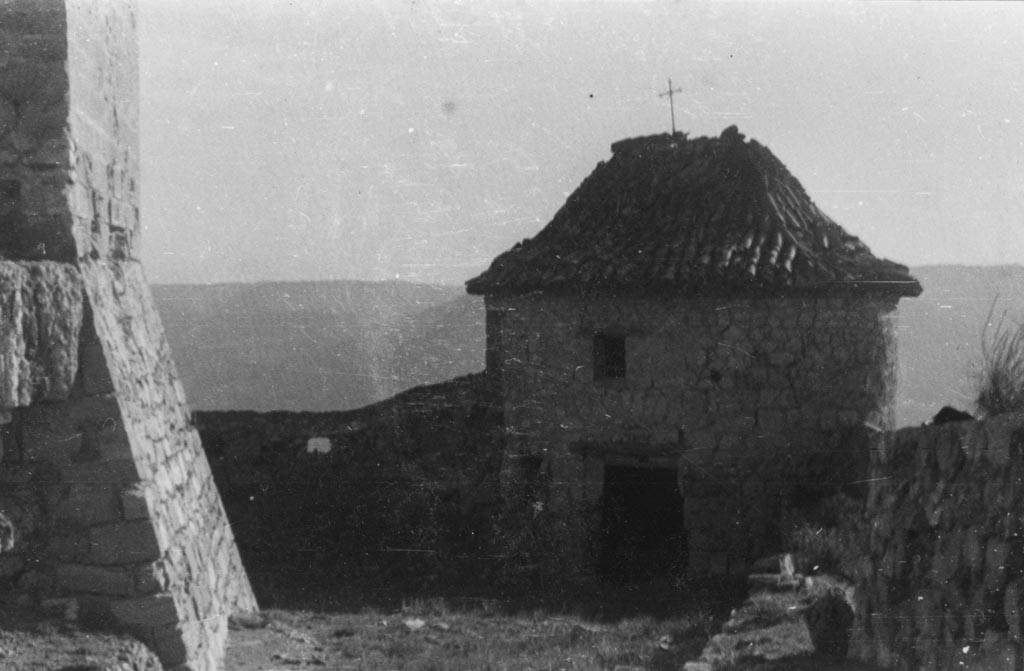
Photo: Antoni Gallardo i Garriga · Public domain
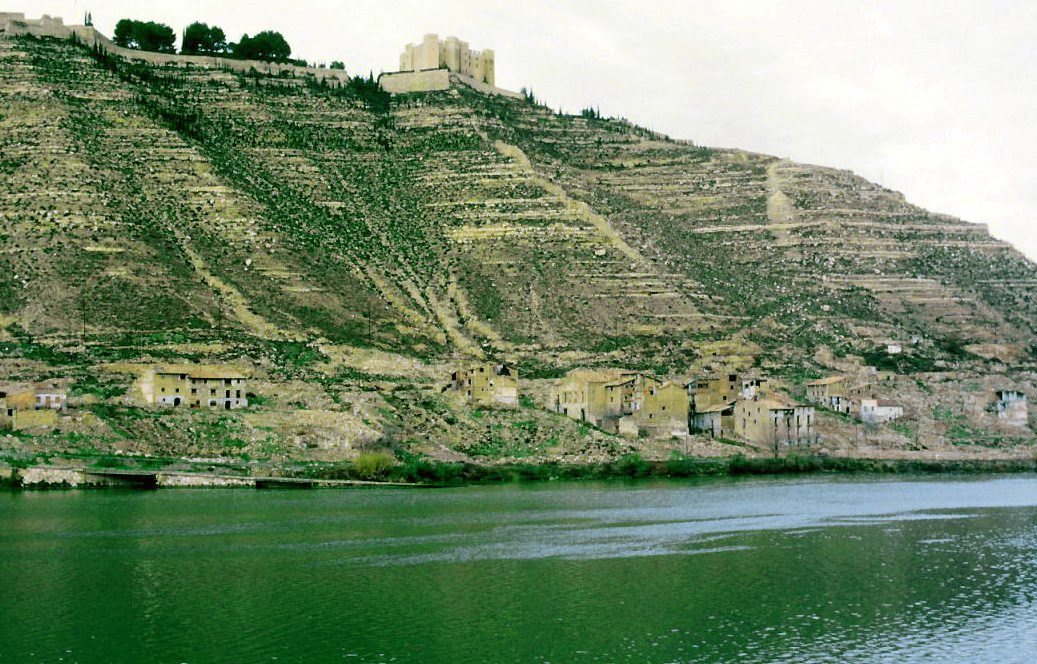
Photo: LBM1948 · CC BY-SA 4.0
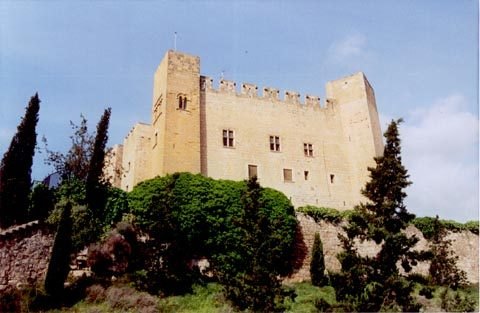
Photo: Mequinensa · Public domain
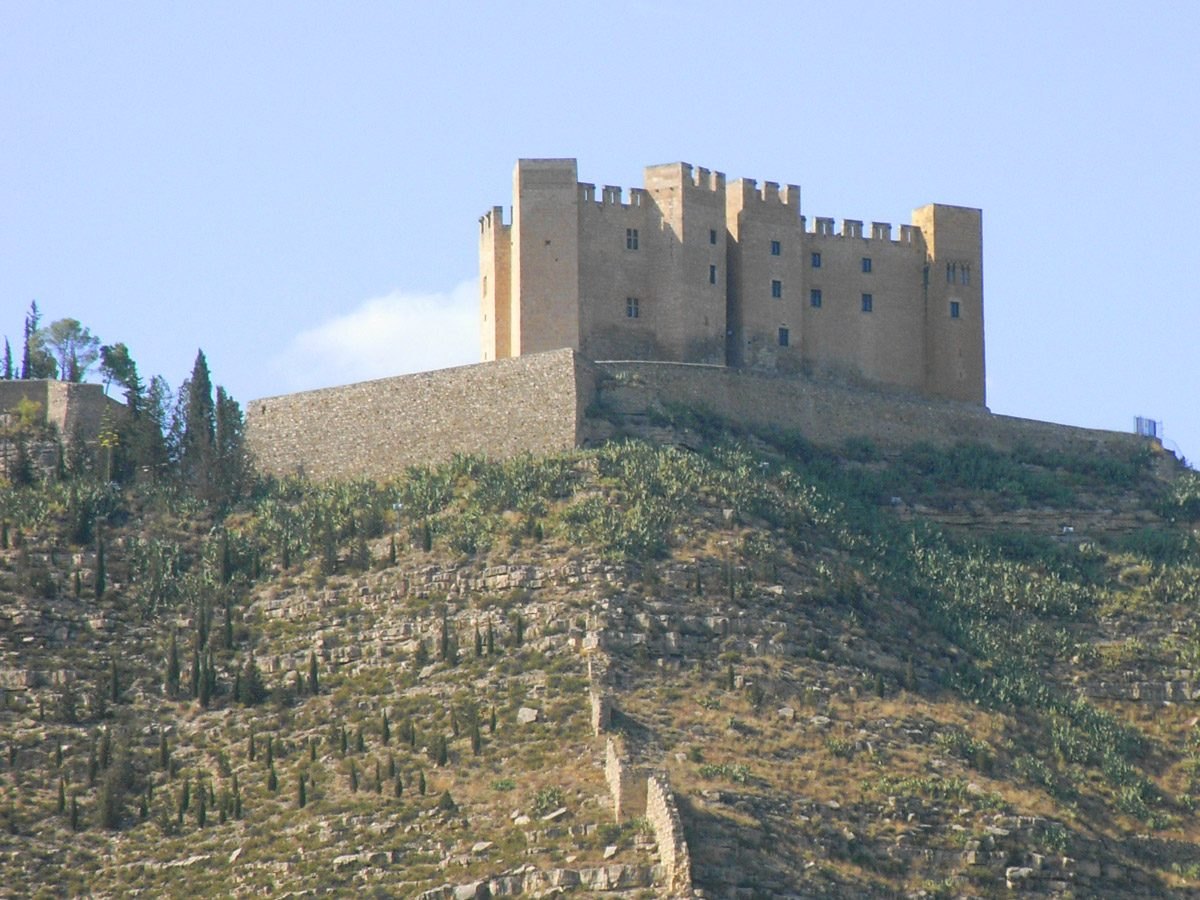
Photo: jordi domènech · CC BY-SA 3.0
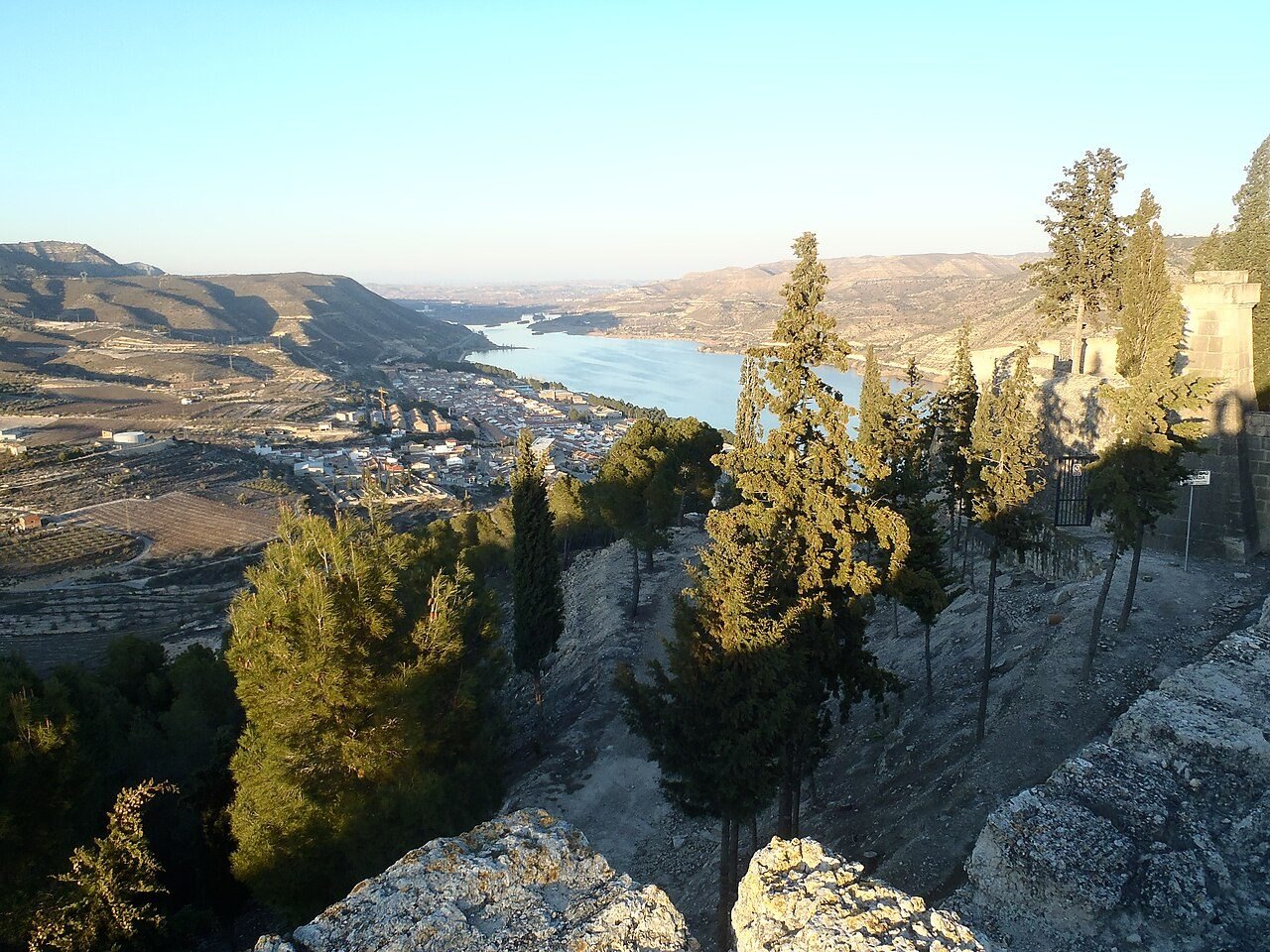
Photo: Albert · CC BY 2.0
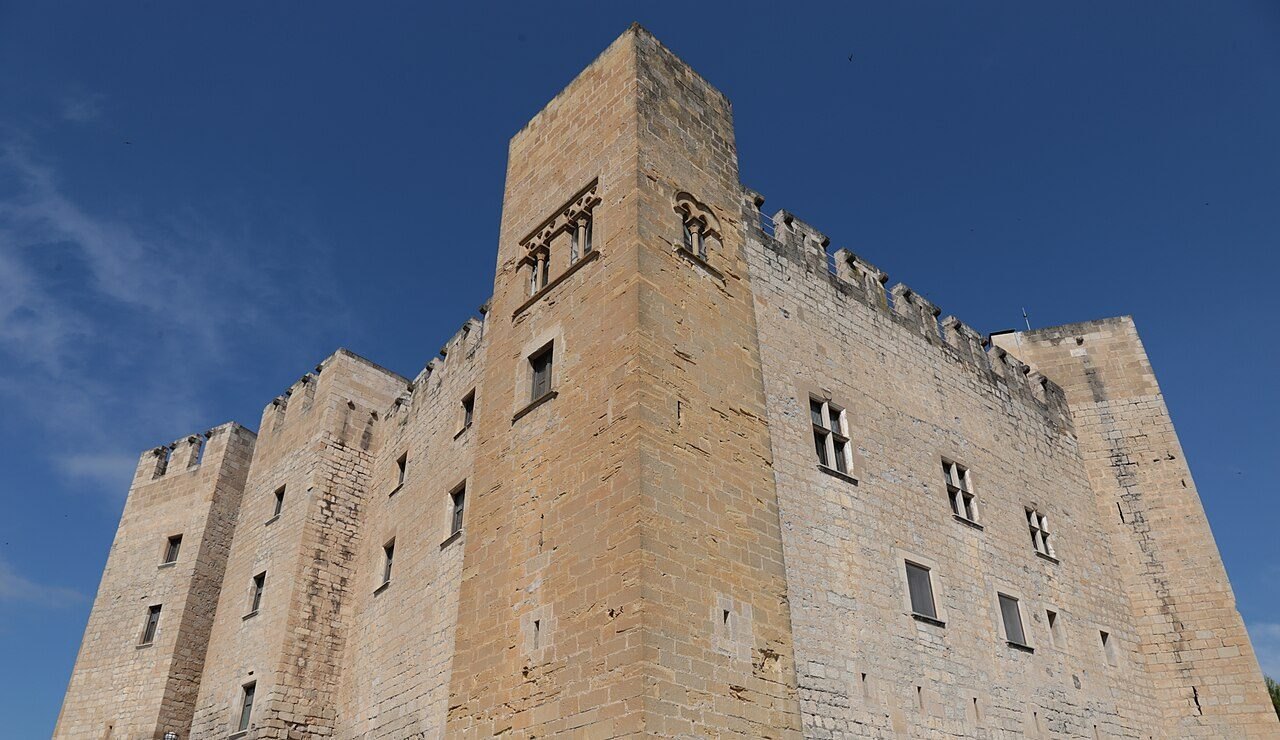
Photo: JosebaEder · CC BY-SA 4.0
- 8th–12th c.
Andalusi Miknasa
A stronghold of the Upper March that watched over the Ebro; al-Idrisi describes it as small, with a strong fortress.
source: Enciclopèdia.cat: Castell de Mequinensa - 1133
Conquest by Alfonso the Battler
Alfonso I takes the town after a three-week siege, but it is lost around 1136.
source: Enciclopèdia.cat: Castell de Mequinensa - 1149
Final conquest
Ramon Berenguer IV conquers it on October 24, the same day as Fraga and Lleida.
source: Enciclopèdia.cat: Castell de Mequinensa - 1212
The Moncadas arrive
Peter II includes it in the dowry of his daughter Constanza, married to Guillén Ramón de Moncada, ancestor of the lords of Aitona.
source: Viquipèdia: Mequinensa - 13th c.
The Gothic halls
The halls with pointed vaults and diaphragm arches are the oldest surviving part.
source: Enciclopèdia.cat: Castell de Mequinensa - 1288
A captive prince
Charles of Anjou, Prince of Salerno, is held here as a hostage until the Treaty of Canfranc.
source: Wikipedia: Castillo de Mequinenza - 1410
Urgellist parliament
During the interregnum, the supporters of James of Urgell hold their Aragonese parliament here; the Gothic castle of the Moncadas is at its height.
source: Wikipedia: Mequinenza - 1523–1581
Counts and Marquises of Aitona
The Moncadas turn the castle into a residence, with a Renaissance portal bearing their coat of arms.
source: Enciclopèdia.cat: Castell de Mequinensa - 1610
Expulsion of the Moriscos
Some 265 Moriscos have to leave; Labaña describes the town surrounded by half-ruined walls.
source: Wikipedia: Mequinenza - 1810
Siege by Suchet
The castle surrenders to Marshal Suchet on June 8, 1810.
source: Wikipedia: Castillo de Mequinenza - 1957–1974
The reservoirs
With the Mequinenza and Ribarroja dams, the old town is demolished and the population moves to the new town, beside the Segre.
source: Viquipèdia: Mequinensa - 2026
The castle becomes municipal
The Town Council buys the castle to open it to tourism.
source: Viquipèdia: Castell de Mequinensa
Using the 3D model we worked out how big this castle was and what it took to build it. Here is a sample:
- How many people worked, how much stone, lime and carts, year by year
- Work by work and how we calculate it
- The data to download (CSV)
Leave your email and you will see everything, for this castle and all the others. As a gift, the castle poster.
Already signed up? Sign in with your email🏰 Enter the castle in 3D⏳ See how it changed⚒ How they built it