 CASTLE
The reconstruction shows Montblanc around 1400, with the wall completed in 1396-1397: a circuit of about 1,500 to 1,700 m with some thirty towers, four gates (Sant Antoni, Sant Francesc, Sant Jordi and Bover) and the small castle on the hill of Santa Bàrbara, which by then was only a minor fortification. The course of the wall comes from OpenStreetMap and the orthophoto; the 19 mapped towers are in their places, and about five more, on the east side, are hypothetical. The houses are a generated sample, not the real plot layout. Of the castle there is only a plan: the remains excavated in 1985-86 are what is known, and the elevation is approximate.
Works in the browser on computers and phones, with nothing to install. Fly with the drone and switch between then and now.
Interpretive recreation: our approach ›
Or fly over it as the centuries go by: from the first settlement to today, with the town growing and the milestones of its history.
- Period reconstructed
- c. 1400
- Town
- Montblanc
- County
- Conca de Barberà
- Province
- Tarragona
- Region
- Catalonia
- Coordinates
- 41.37786, 1.16063 · Open the map
Leave us your email and we'll send you the poster of this castle at its height, high resolution, ready to print, plus two wallpapers (computer and phone). We'll also tell you about news on this castle. No passwords; unsubscribe any time.
Are you at the castle? Get its stamp for your castle passport. We only check that you are within 300 m; we don't store your location.
Montblanc Castle
A small castle at the top of the Pla de Santa Bàrbara, already standing in 1161-1170 and repaired in 1302 and 1361. Only traces of walls remain, excavated in 1985-86; the elevation is hypothetical.
Santa Maria
The 14th-century Gothic church replaced a Romanesque one. The model shows a generic church, not the real plan.
Sant Miquel and the Courts
A church documented from 1288, where the General Courts of 1307 were held and where the town council met before it had its own building. Courts were also held in 1333, 1370-71 and 1414.
Main Square
The Mercadal, documented in the late 12th century, is the center of the town; the Carrer Major crosses it from north to south, from Sant Antoni to Sant Francesc.
Sant Jordi gate tower
The western gate, facing the Prades Mountains, set in a crenellated tower.
Bover gate tower
The eastern gate, facing Barberà and Barcelona; it is the best-preserved tower, closed on all four sides, and was restored in 1925.
Portal de Sant Antoni
The northern gate, facing Lleida and Poblet, next to a tower. It was demolished in the 19th century and rebuilt in 1996-97.
Portal de Sant Francesc
The southern gate, the entrance from the Camp de Tarragona, next to the tower of the same name. It disappeared in the mid-19th century.
Videos and stories about this place on our account.
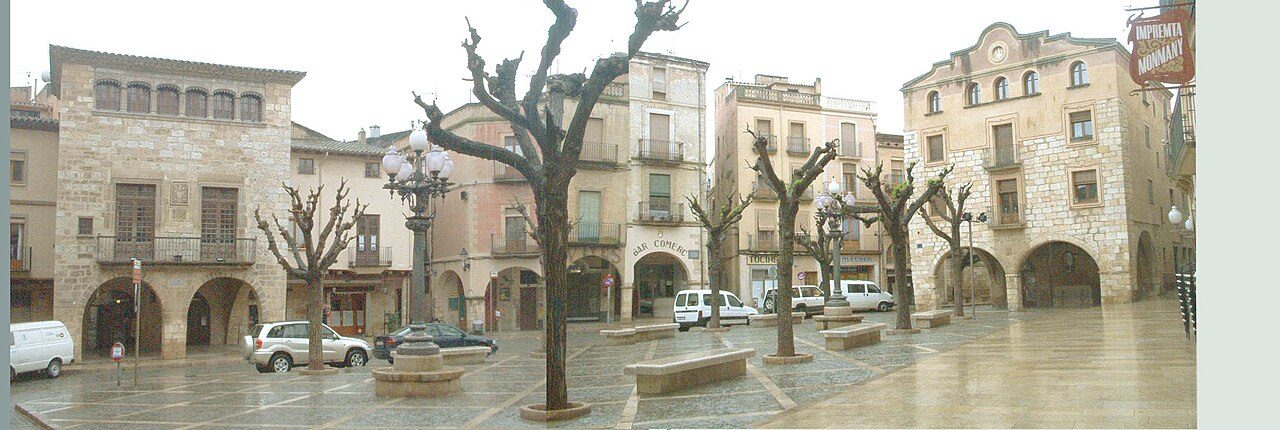
Photo: jordi domènech · CC BY-SA 3.0
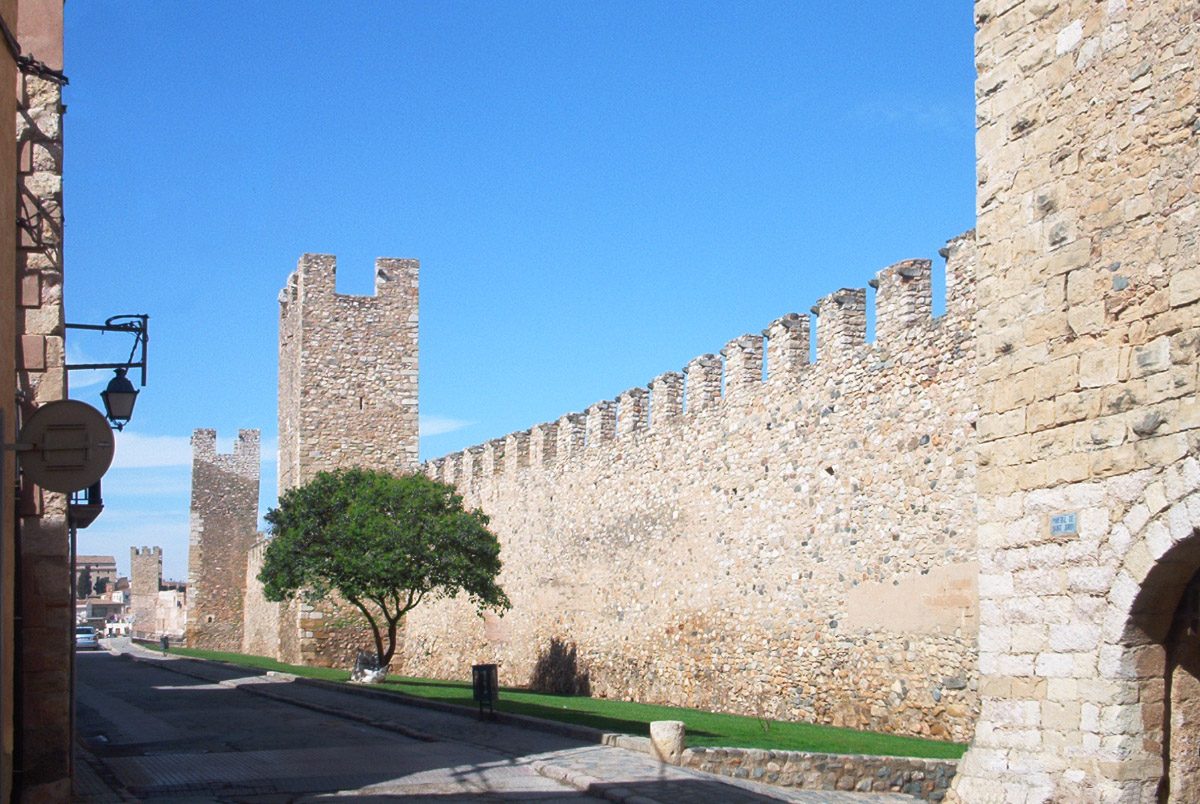
Photo: jordi domènech · CC BY-SA 3.0
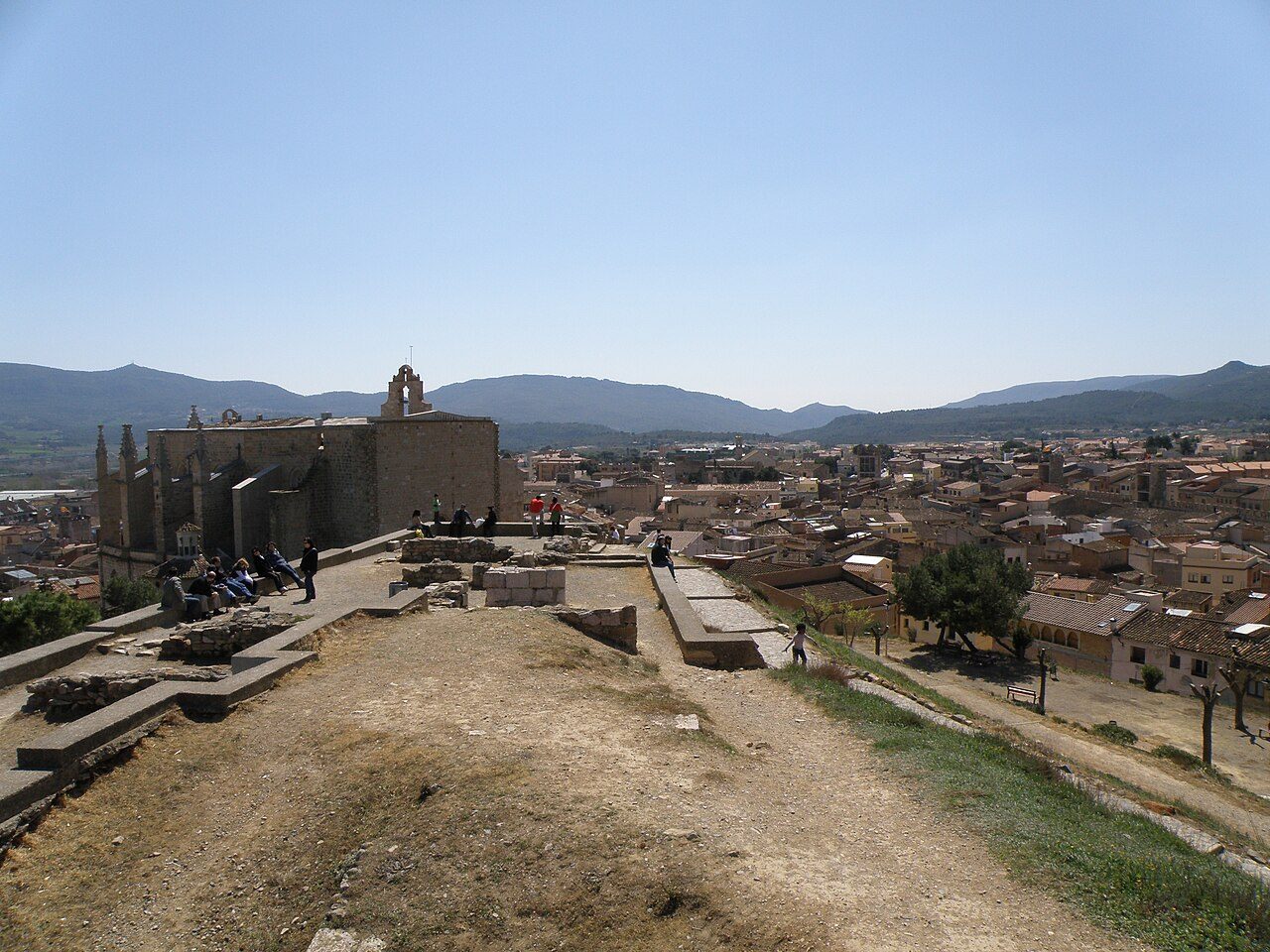
Photo: Santi Gomà · CC BY-SA 3.0 es
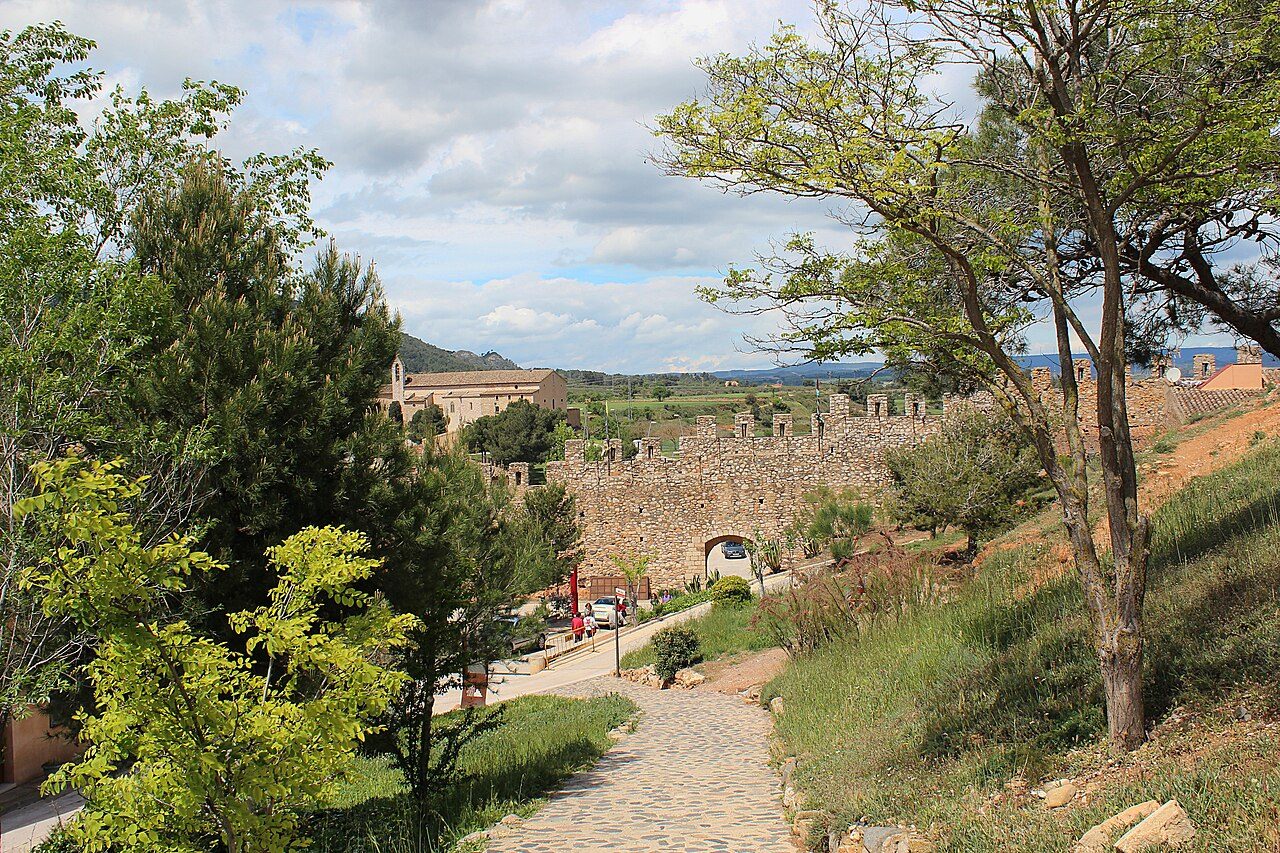
Photo: Albert Torelló · CC BY-SA 2.0
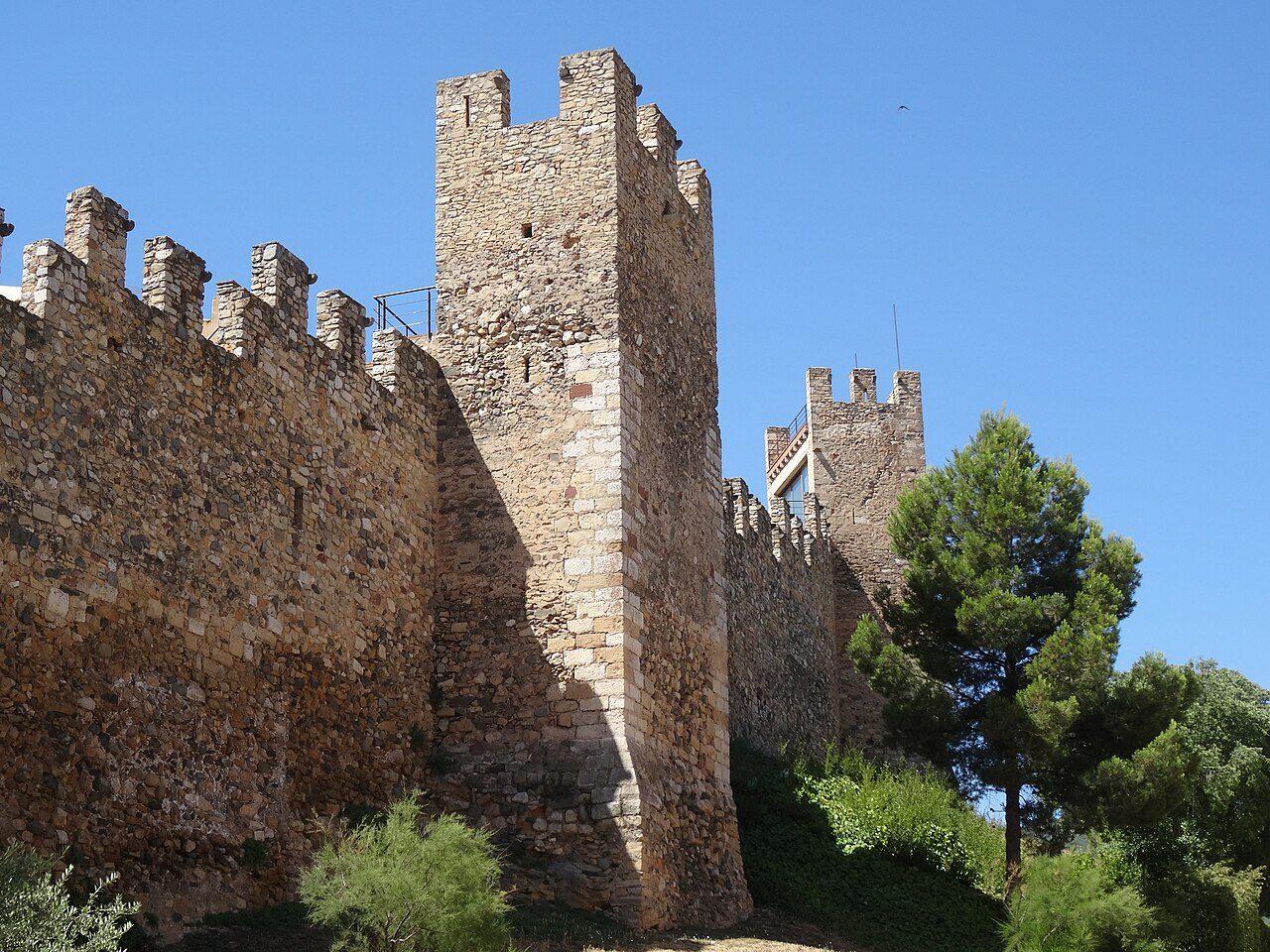
Photo: Mmorell · CC BY-SA 4.0
- 1163
Vilasalva moves to Montblanc
Alfonso I grants a new charter of settlement and has the town, previously between the Francolí and Anguera rivers, move up to the hill of the Pla de Santa Bàrbara.
source: Castells Catalans, Vila murallada de Montblanc - 1161–1170
A small castle and a first wall
The castle on the summit is already standing in 1161 and documented in 1170, but it is small and built of weak materials, and a first wall encloses the cluster of houses.
source: Felip Sánchez, Notes històriques referents a la muralla de Montblanc - 1307
The first General Courts
Montblanc, a royal town, hosts General Courts in 1307, and will do so again in 1333, 1370-71 and 1414.
source: Enciclopèdia Catalana, La vila de Montblanc - 1333
The town grows
The town, the seventh largest in Catalonia, has spread far beyond the 12th-century wall, with the convents, the hospital and the Jewish quarter, and the Mercadal to the south.
source: Castells Catalans, Vila murallada de Montblanc - 1366
Peter III orders the wall sped up
With the war against Castile and the passage of the mercenary companies, the king orders the veguer to push ahead with a new circuit of walls enclosing the whole town.
source: Felip Sánchez, Notes històriques referents a la muralla de Montblanc - 1374
The dressed-stone towers
Guillem Sanoguera oversees the work, Poblet undertakes to turn its house into a tower, and the Barcelona Gate already has doors.
source: Felip Sánchez, Notes històriques referents a la muralla de Montblanc - 1387
The Duchy of Montblanc
The Duchy of Montblanc is created; in 1378 the town has about 450-490 hearths and is at the height of its prosperity.
source: Castells Catalans, Vila murallada de Montblanc - 1396–1397
The wall, completed
The upper half of the towers is completed and the circuit reaches its full height, some thirty years after work began, but almost all of it in rammed earth.
source: Aluja, Ús i ocupació de les torres de la muralla de Montblanc - 1414
Courts during the plague in Tortosa
The Courts of Ferdinand I, begun in Tortosa, move to Montblanc because of the plague.
source: Diari de Tarragona, Montblanc, escenari de les Corts de 1414 - 1462–1470
The civil war and a circuit too large
After the war of John II, with the hearth count down to about 290, a new castle and a smaller circuit are considered, but never built.
source: Felip Sánchez, Notes històriques referents a la muralla de Montblanc - 1651
General Palavicini's troops
At the end of the Reapers' War, the troops tear down many towers and much of the perimeter, with the townspeople forced to help.
source: Felip Sánchez, Notes històriques referents a la muralla de Montblanc - 1947
Monumental and Artistic Ensemble
Montblanc is declared a monumental and artistic ensemble, and the slow restoration of the wall begins, with the Bover gate tower already restored in 1925.
source: Castells Catalans, Vila murallada de Montblanc
- Castells Catalans, Vila murallada de Montblanc
- Felip Sánchez, Notes històriques referents a la muralla de Montblanc
- Aluja, Ús i ocupació de les torres de la muralla de Montblanc
- Enciclopèdia Catalana, La vila de Montblanc
- Viquipèdia, Muralles de Montblanc
- OpenStreetMap, traçat de la muralla i portals
- Diari de Tarragona, Montblanc, escenari de les Corts de 1414