 CASTLE
On a rocky hill between the Cinca and the Sosa, Monzón Castle was first an Islamic fortress and, from 1143, the chief house of the Templars in the Crown of Aragon. The reconstruction shows it in 1217, when the boy James I lived there in the care of Master Guillem de Montredón: the keep, San Nicolás, the chapter house and the dormitories. The brick bastions that surround it today date from the 17th and 18th centuries.
Works in the browser on computers and phones, with nothing to install. Fly with the drone and switch between then and now.
Interpretive recreation: our approach ›
Or fly over it as the centuries go by: from the first settlement to today, with the town growing and the milestones of its history.
Or watch how it was raised: the years of building up to its heyday, with masons, treadwheel cranes, carts and the passing seasons (interpretive recreation).
🏰 Enter the castle in 3D⏳ See how it changed⚒ How they built it⚔ The siege of Monzón (1308-1309)
- Period reconstructed
- c. 1217
- Town
- Monzón
- County
- Cinca Medio
- Province
- Huesca
- Region
- Aragon
- Coordinates
- 41.90895, 0.19163 · Open the map
Leave us your email and we'll send you the poster of this castle at its height, high resolution, ready to print, plus two wallpapers (computer and phone). We'll also tell you about news on this castle. No passwords; unsubscribe any time.
Are you at the castle? Get its stamp for your castle passport. We only check that you are within 300 m; we don't store your location.
Keep
A free-standing square tower about 10 m on each side, with its original door high up; in 1217 it was taller than today, because it was later lowered.
Santa María del Romeral
A former mosque consecrated in 1098 and rebuilt in Romanesque style from 1196; parliaments (Cortes) were held in it.
San Nicolás
A 12th-century Templar church with a single nave; the polygonal apse also served for defense and the south portal has a chrismon.
Chapter house and refectory
A great hall of 35 × 12 m with a pointed barrel vault and a cistern underneath.
Dormitory tower
A tower of 14 × 11 m with two floors, built over an Islamic building; the brethren slept in it.
Tower of James I
A trapezoidal 12th-century tower that served as a prison; tradition places the boy king's room in it.
Parade ground
The central esplanade of the Templar convent-fortress.
Entrance to the enclosure
Today visitors enter at the southeast corner; what the entrance was like in 1217 is hypothetical.
Cistern
A cistern beneath the chapter house, fed by a channel.
Modern bastions (today)
Brick walls, bastions, ditch and ramp from the 17th–18th c.; they did not exist in 1217.
Old bridge over the Sosa
A bridge of medieval origin, rebuilt in the 18th c.; no medieval bridge over the Cinca is documented.
Videos and stories about this place on our account.
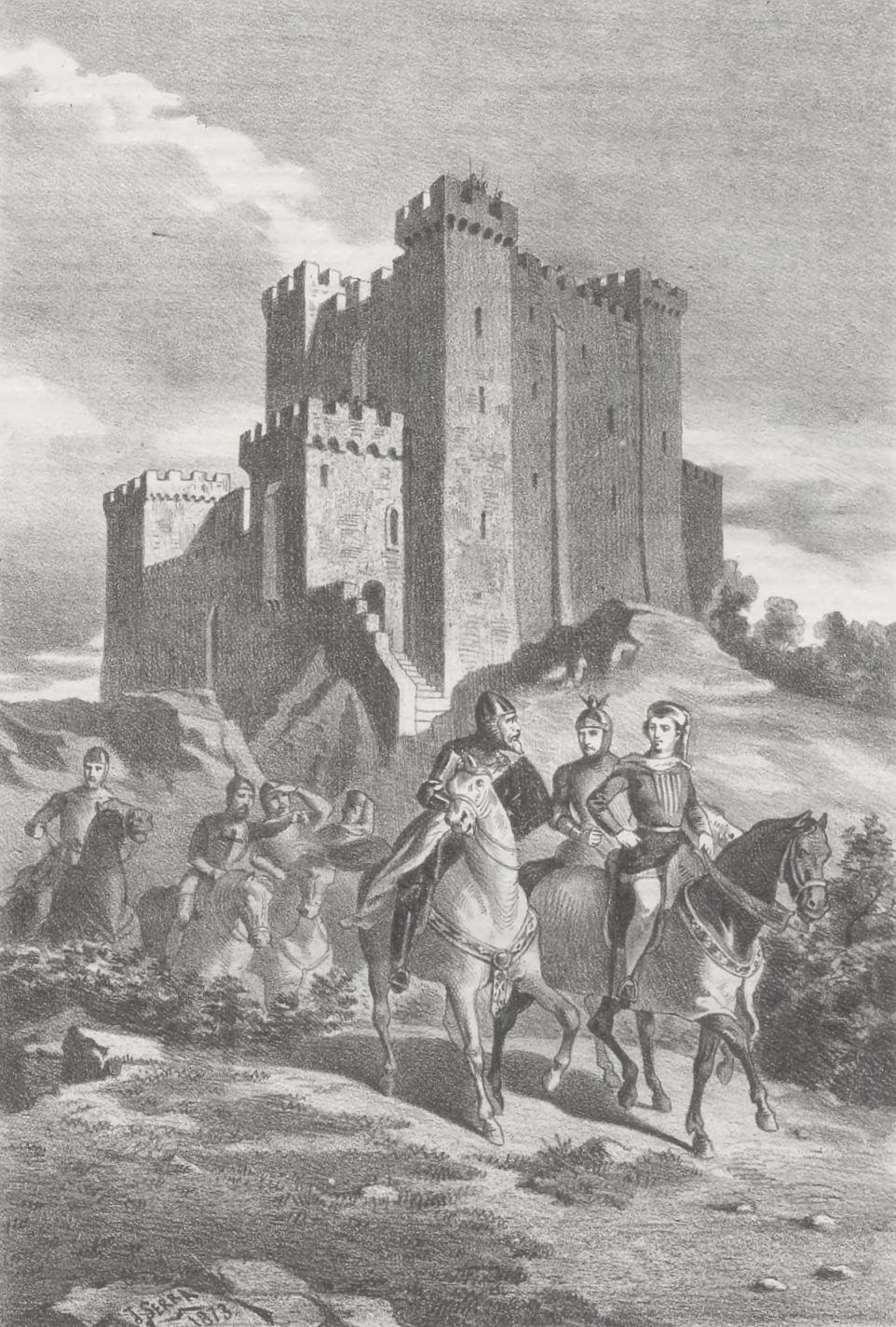
Photo: Josep Serra i Porsón · Public domain
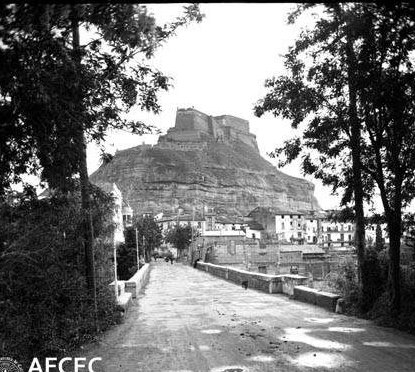
Photo: Carles Fargas · Public domain
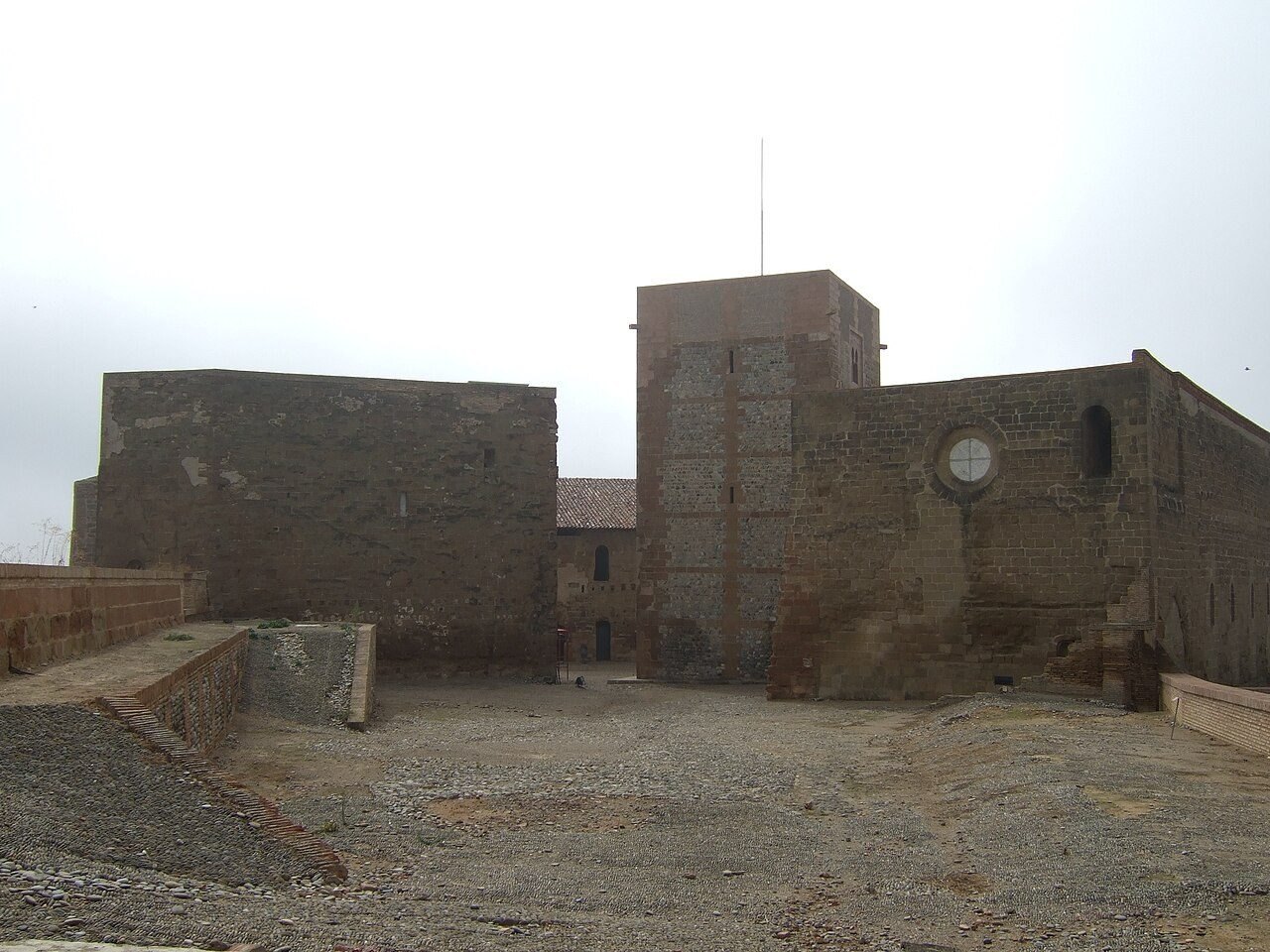
Photo: ecelan (talk) · CC BY 2.5
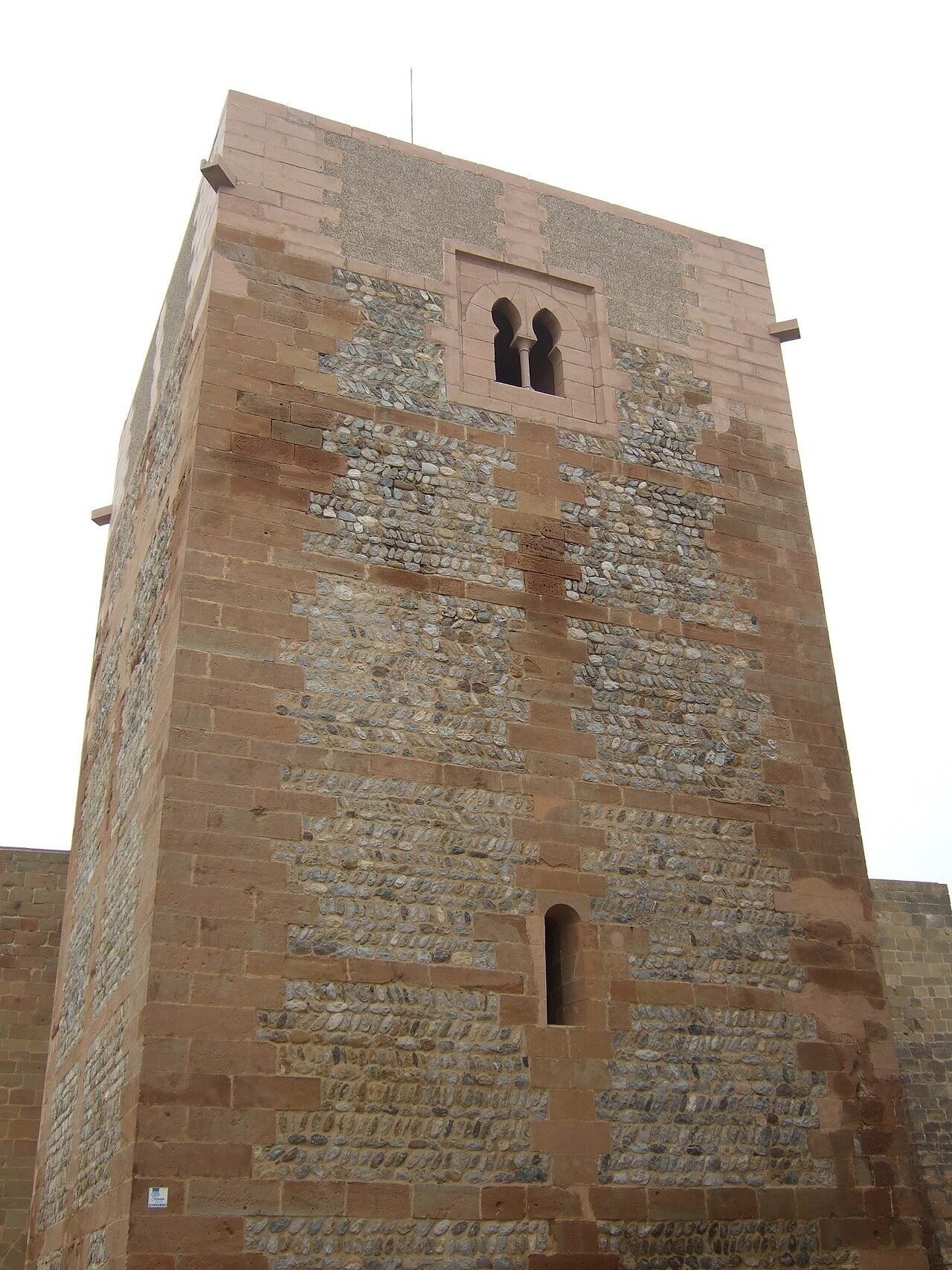
Photo: ecelan (talk) · CC BY 2.5
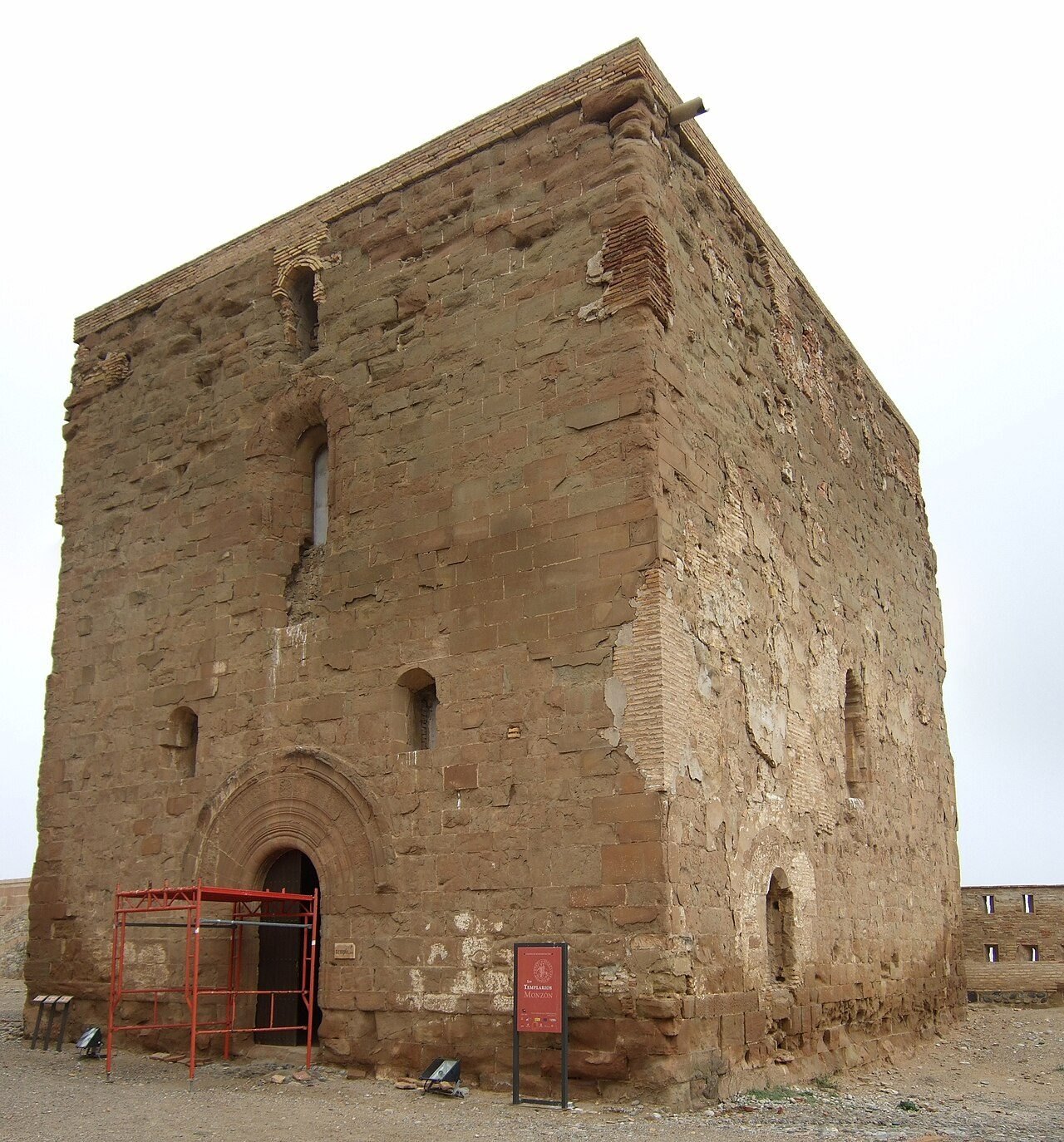
Photo: ecelan (talk) · CC BY 2.5
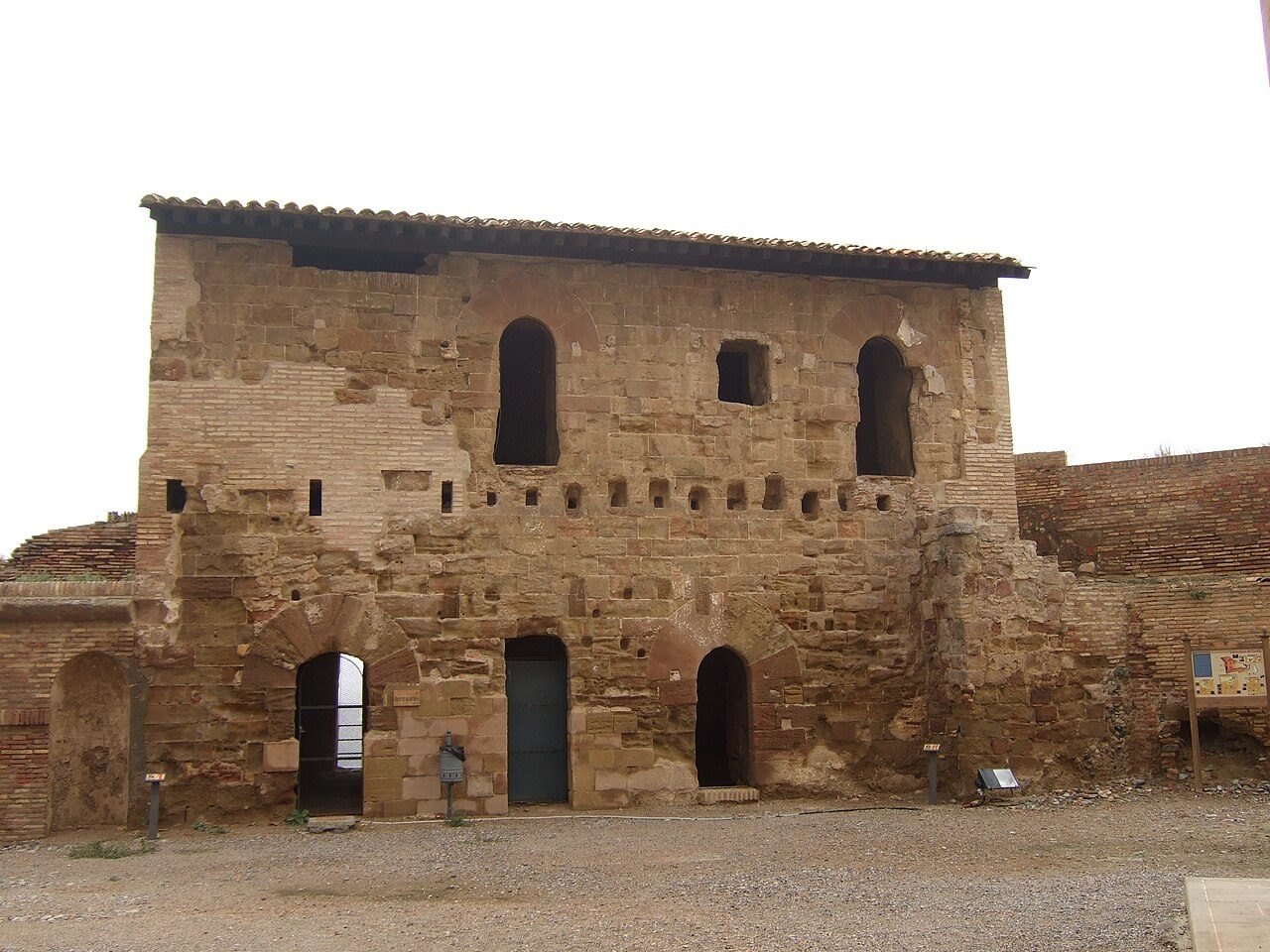
Photo: ecelan (talk) · CC BY 2.5
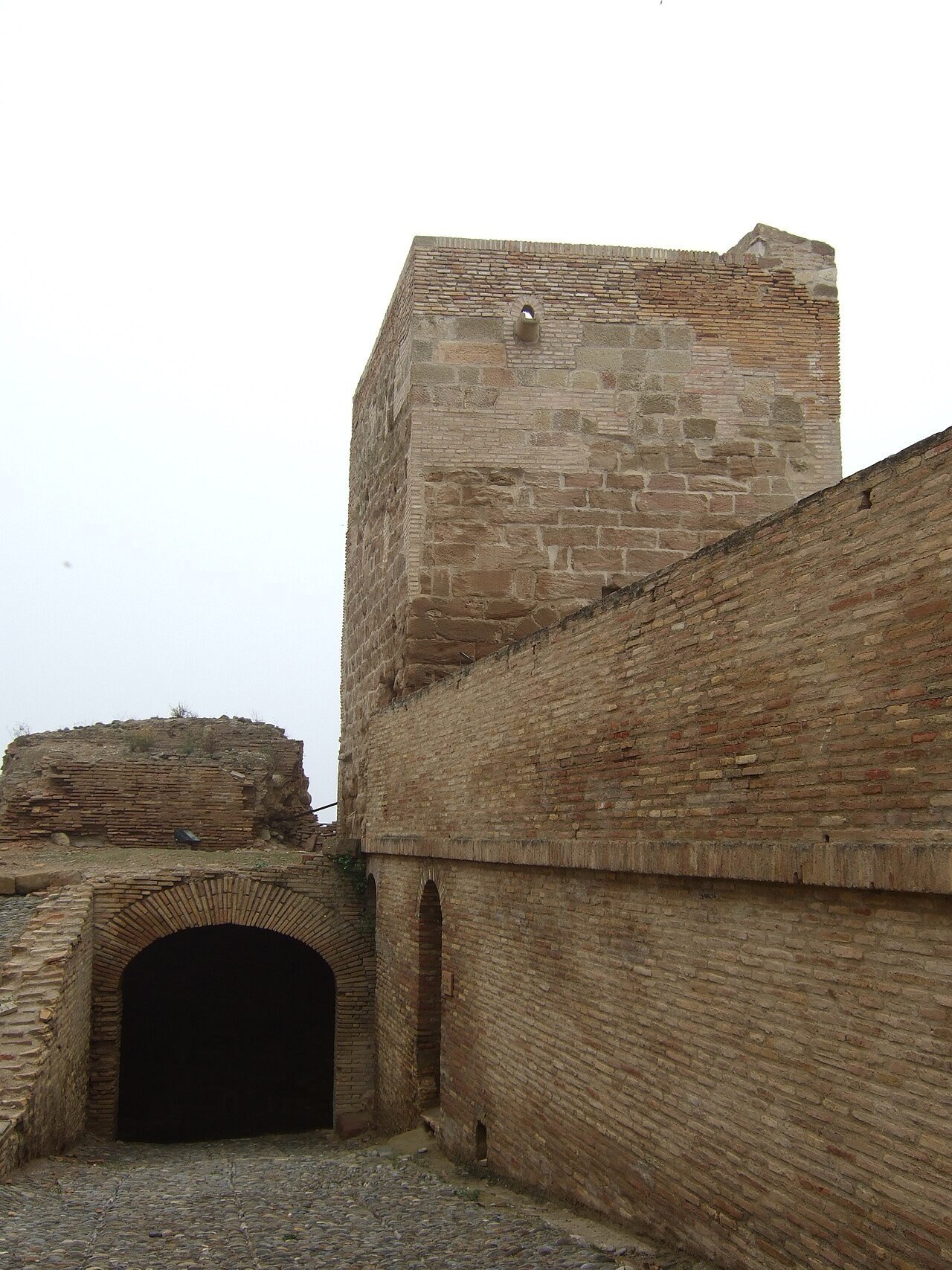
Photo: ecelan (talk) · CC BY 2.5
- 9th–10th c.
Andalusi Muntashun
The Muslims fortify the hill; around 872 it passes to the sons of Musa ibn Musa. The Islamic dating of the keep is disputed.
source: Viquipèdia: Castell de Montsó - 1083
El Cid in Monzón
Rodrigo Díaz de Vivar occupies the town and the castle on behalf of al-Mutamán, taifa king of Zaragoza.
source: Wikipedia: Monzón (Huesca) - 1089
Aragonese conquest
Prince Peter, son of Sancho Ramírez, takes Monzón and a small kingdom is created there; in 1098 the mosque is consecrated as Santa María.
source: Wikipedia: Monzón (Huesca) - 1126–1141
An unstable frontier
Monzón returns to Muslim hands twice before finally remaining under Christian rule.
source: Viquipèdia: Castell de Montsó - 1143
Grant to the Templars
Ramon Berenguer IV cedes Monzón to the Templars, who turn it into a convent-fortress; from 1173 it is their chief house in the Crown of Aragon.
source: Viquipèdia: Castell de Montsó - 1214–1217
The childhood of James I
After Peter II's death at Muret, the boy James lives in the castle from August 1214 until June 1217, in the care of Master Guillem de Montredón. He leaves it at the age of nine to begin his reign.
source: Viquipèdia: Castell de Montsó - 1236–1289
The Cortes of Monzón
James I holds parliaments (Cortes) there; in 1289 Alfonso III summons the first General Cortes of the Crown, in Santa María.
source: Baydal, Aragón en la Edad Media (2020) - 1308–1309
Siege and end of the Temple
The army of James II besieges the castle for about seven months until May 1309; in 1317 it passes to the Order of the Hospital.
source: Viquipèdia: Castell de Montsó - 1642–1643
Reapers' War
Franco-Catalan troops take the castle in 1642 and royal troops recover it in 1643.
source: Wikipedia: Castillo de Monzón - c. 1650–1720
Modern bastions
Brick walls, bastions, sentry boxes, a ditch and a zigzag ramp are built; the keep is lowered.
source: Fascinating Spain: el castillo de Monzón - 1813–1814
Peninsular War
The French garrison withstands a siege with mine warfare and abandons the castle because of Juan Van Halen's ruse.
source: Wikipedia: Castillo de Monzón - 1936–1939
Civil War
With the front line on the Cinca, the stables cut into the rock serve as an air-raid shelter.
source: Fascinating Spain: el castillo de Monzón - 1949–today
Monument and Templar center
Declared a monument, restored from the mid-20th century and home to a Templar interpretation center since 2004.
source: Wikipedia: Castillo de Monzón
Using the 3D model we worked out how big this castle was and what it took to build it. Here is a sample:
- How many people worked, how much stone, lime and carts, year by year
- Work by work and how we calculate it
- The data to download (CSV)
Leave your email and you will see everything, for this castle and all the others. As a gift, the castle poster.
Already signed up? Sign in with your email🏰 Enter the castle in 3D⏳ See how it changed⚒ How they built it⚔ The siege of Monzón (1308-1309)