 CASTLE
Works in the browser on computers and phones, with nothing to install. Fly with the drone and switch between then and now.
Interpretive recreation: our approach ›
Or fly over it as the centuries go by: from the first settlement to today, with the town growing and the milestones of its history.
Or watch how it was raised: the years of building up to its heyday, with masons, treadwheel cranes, carts and the passing seasons (interpretive recreation).
🏰 Enter the castle in 3D⏳ See how it changed⚒ How they built it
- Period reconstructed
- c. 1794
- Town
- Figueres
- County
- Alt Empordà
- Province
- Girona
- Region
- Catalonia
- Coordinates
- 42.27390, 2.94640 · Open the map
Leave us your email and we'll send you the poster of this castle at its height, high resolution, ready to print, plus two wallpapers (computer and phone). We'll also tell you about news on this castle. No passwords; unsubscribe any time.
Are you at the castle? Get its stamp for your castle passport. We only check that you are within 300 m; we don't store your location.
Main gate
First gate, on the north face of the Sant Roc hornwork. It survives, along with the bridge over the moat; in the model it is a simplified volume without the sculpture.
Second gate (hypothesis)
Where the Carrer Major reaches the southeast curtain. Its location and shape are hypotheses: that stretch was lost and we have not found any plan.
Parade ground and cisterns
About 12,000 m². Some 8 m below ground there are four large tanks holding about 9 million liters, according to the most reliable sources.
Stables
Double-naved building for about 450 or 500 horses. On February 1, 1939, the last Republican Cortes met here.
Hospital
Unfinished building destroyed in 1939; today its ruins remain. The height in the model is a hypothesis.
Sant Miquel hornwork
The largest of the three hornworks, to the northwest, with the Sant Miquel ravelin in front.
Videos and stories about this place on our account.
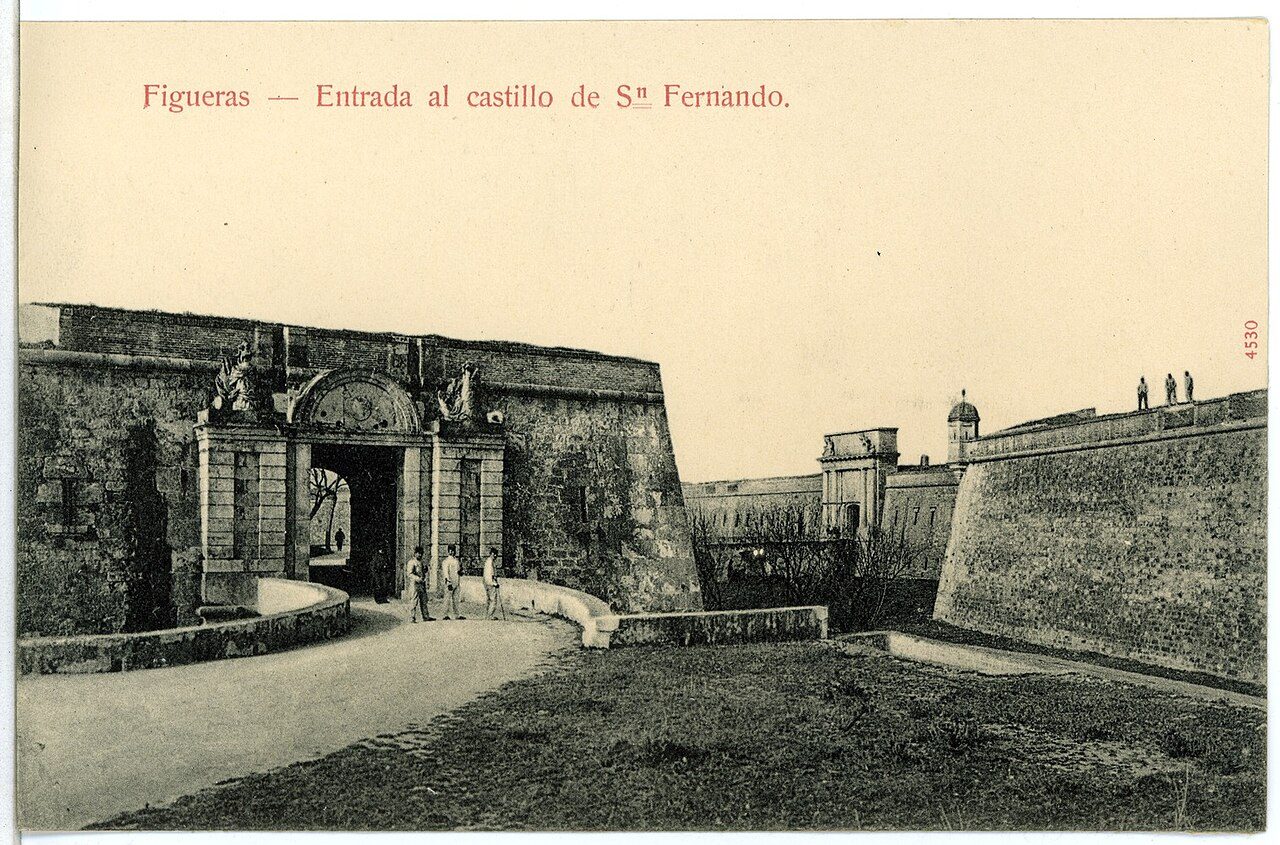
Photo: Brück & Sohn Kunstverlag Meißen · CC0
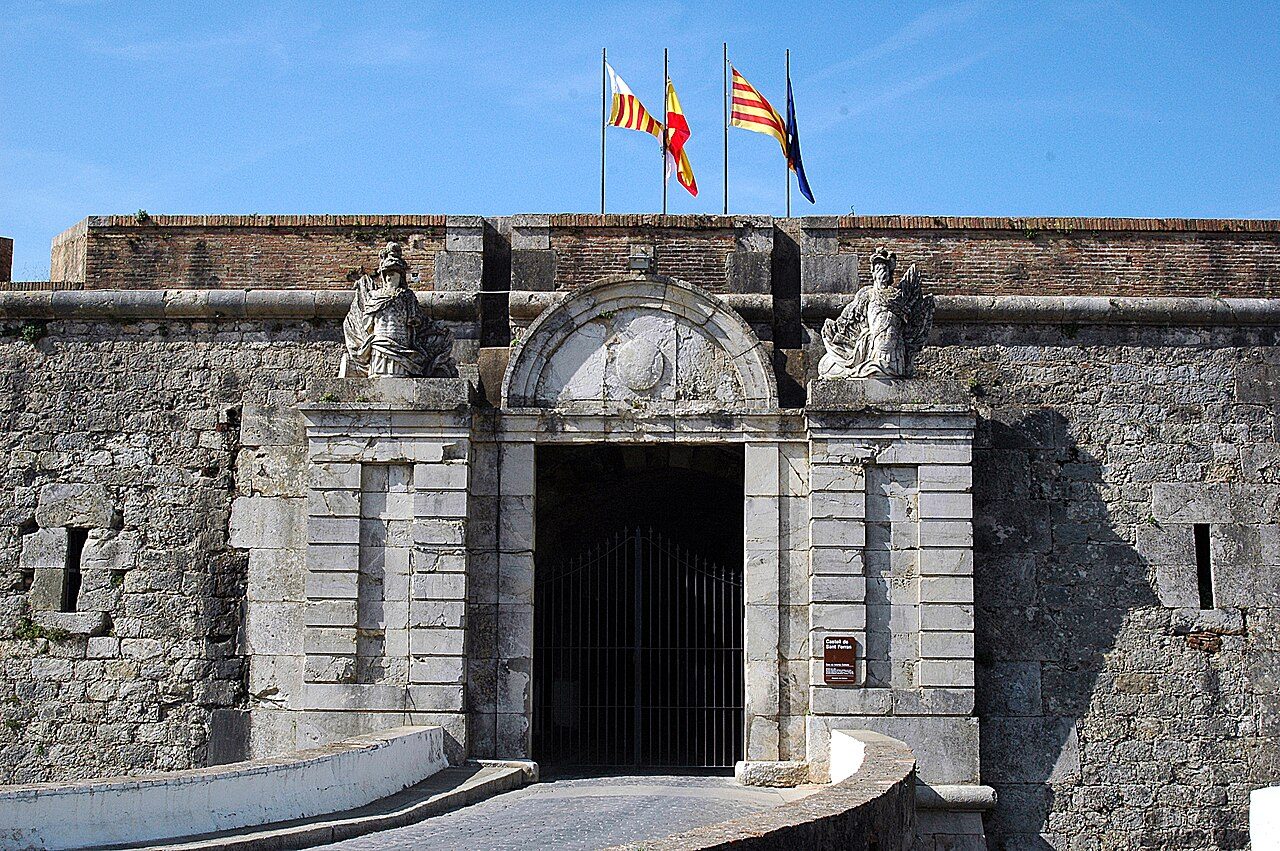
Photo: Enfo · CC BY-SA 3.0
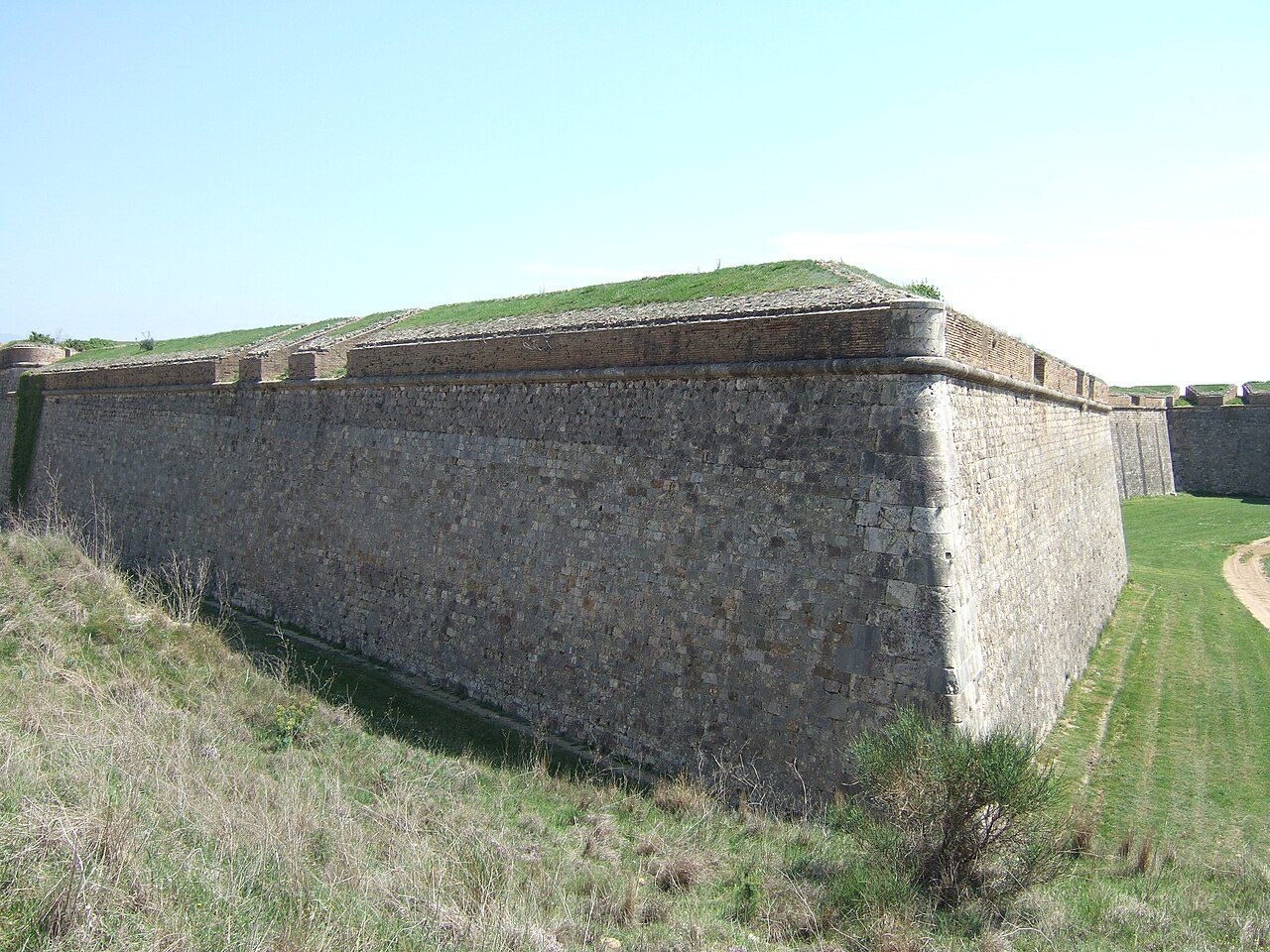
Photo: Francesc Vernet López · CC BY-SA 3.0
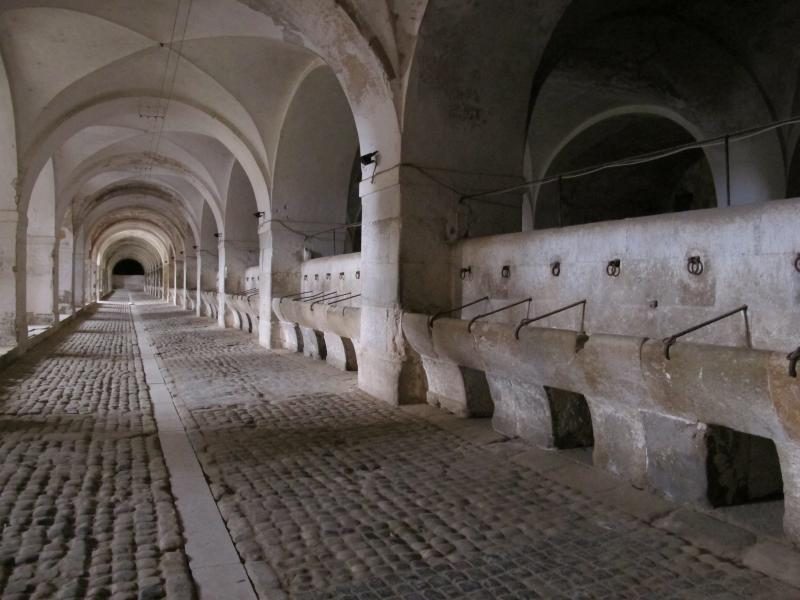
Photo: Igor González Martín from Madrid, Spain · CC BY-SA 2.0
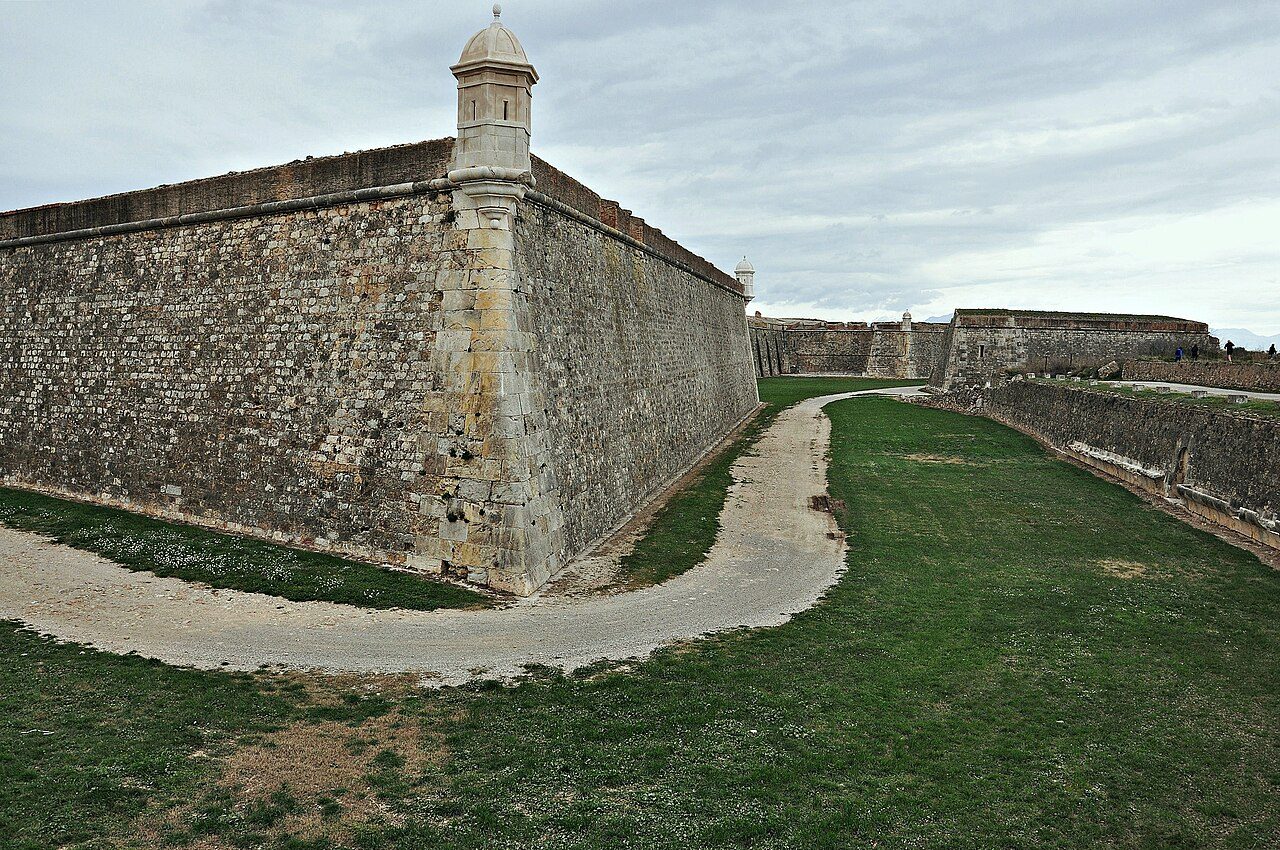
Photo: Alberto-g-rovi · CC BY-SA 3.0
- 1659
A new border
The Treaty of the Pyrenees leaves Bellaguarda castle in the hands of France and the Empordà is left without a major stronghold.
source: Viquipèdia, Castell de Sant Ferran - Dec 13, 1753
The first stone
Following plans by Juan Martín Cermeño, the first stone is laid on the plain of the Capuchins, from which a friary had to be moved.
source: Gran Enciclopèdia Catalana - 1766
The fortress is inaugurated
Six bastions, seven ravelins and three hornworks already outline a stronghold for thousands of men, although work will continue.
source: Viquipèdia, Castell de Sant Ferran - 1794
The surrender
In the War of the Pyrenees, Governor Andrés de Torres hands the stronghold over to the French almost without a fight.
source: Gran Enciclopèdia Catalana - 1808
The French, again
Napoleonic troops occupy the castle at the start of the Peninsular War.
source: Gran Enciclopèdia Catalana - Apr–Aug 1811
The surprise raid
A surprise raid by the Pou brothers and Joan Marquès takes the castle in April, and the French besiege it and retake it in August.
source: Gran Enciclopèdia Catalana - Sep 26, 1823
The Hundred Thousand Sons of Saint Louis
Besieged by the French army that restores Ferdinand VII, the castle surrenders on September 26.
source: Viquipèdia, Castell de Sant Ferran - 1892
The works are completed
Almost a century and a half after the first stone, the works are declared finished.
source: Patrimoni Gencat - 1906–1933
Civil prison
Part of the fortress serves as a civil prison for almost three decades.
source: Gran Enciclopèdia Catalana - Feb 1939
The last Cortes and the explosion
On February 1 the last Republican Cortes in Spain meet here, and on the 8th the Republicans blow up the armaments and damage part of the castle.
source: Viquipèdia, Castillo de San Fernando - 1940–1991
Concentration camp and prison
It is a Francoist concentration camp until 1942 and from 1965 a military prison, where conscientious objectors and those convicted for the 23-F coup attempt end up.
source: Gran Enciclopèdia Catalana - 1997
Open to the public
It opens for guided tours and since 2003 it has been managed by a consortium of the Ministry of Defense, the Generalitat and Figueres Town Council.
source: Gran Enciclopèdia Catalana
Using the 3D model we worked out how big this castle was and what it took to build it. Here is a sample:
- How many people worked, how much stone, lime and carts, year by year
- Work by work and how we calculate it
- The data to download (CSV)
Leave your email and you will see everything, for this castle and all the others. As a gift, the castle poster.
Already signed up? Sign in with your email- Gran Enciclopèdia Catalana, castell de Sant Ferran
- Viquipèdia, Castell de Sant Ferran
- Wikipedia, Castillo de San Fernando (Figueras)
- Patrimoni Gencat, Castell de Sant Ferran
- Portal Gironí, El castell de Sant Ferran
- OpenStreetMap, geometria de les obres exteriors i edificis (© col·laboradors d'OpenStreetMap, ODbL)
🏰 Enter the castle in 3D⏳ See how it changed⚒ How they built it