 CASTLE
The reconstruction shows Sos around 1452, the year Juana Enríquez gave birth in the town to the future Ferdinand II, in the midst of the Navarrese civil war. The town, a royal border town, climbs a spur of the Sierra de Peña up to the Peña Feliciana, where the castle, rebuilt by master Jordán in 1137, stands close to San Esteban. The town council has had charge of its guard since 1440. The footprints of the tower, the enclosure and the church, and the location of the gates are real; the elevations, the course of the wall between the gates and the corner tower are hypotheses. The houses are a generated sample, not the actual plots.
Works in the browser on computers and phones, with nothing to install. Fly with the drone and switch between then and now.
Interpretive recreation: our approach ›
Or fly over it as the centuries go by: from the first settlement to today, with the town growing and the milestones of its history.
- Period reconstructed
- c. 1452
- Town
- Sos del Rey Católico
- County
- Cinco Villas
- Province
- Zaragoza
- Region
- Aragon
- Coordinates
- 42.49720, -1.21521 · Open the map
Leave us your email and we'll send you the poster of this castle at its height, high resolution, ready to print, plus two wallpapers (computer and phone). We'll also tell you about news on this castle. No passwords; unsubscribe any time.
Are you at the castle? Get its stamp for your castle passport. We only check that you are within 300 m; we don't store your location.
Keep
Square plan of 6 m, ashlar masonry and battlements, with semicircular-arched doors to the north and south. The ARCA inventory believes it was the gate tower of the enclosure. The height in the model is estimated from photos.
Watch turret
Circular tower with arrow slits at the northwest corner of the enclosure. The model makes it octagonal and estimates its height.
Great corner tower
Excavations found a large tower forming a corner, with a wall resting against the church. Its position and elevation in the model are hypotheses.
San Esteban
Parish church begun with the donations of Queen Estefanía (1055), above the crypt of Santa María del Perdón. The model only gives its volume: the footprint is real, the heights are not.
Palacio de Sada
Fortified 15th-c. palace where, according to tradition, Ferdinand the Catholic was born on March 10, 1452. The model is a block on the present footprint.
Portal de la Reina
Battlemented gate tower, formerly called de la Fuente Alta or de Maya. Juana Enríquez is said to have entered through here, according to tradition.
Portal de Zaragoza
South gate flanked by two towers. The course of the wall between the gates is a hypothesis.
The Jewish quarter
About thirty houses around the Plaza de la Sartén. The authorities asked for the quarter to be closed off in 1301; in 1492, 88 people remained.
Plaza de la Villa
Site of the medieval market. The town hall dates from the late 16th c. and does not appear in the 1452 model.
Videos and stories about this place on our account.
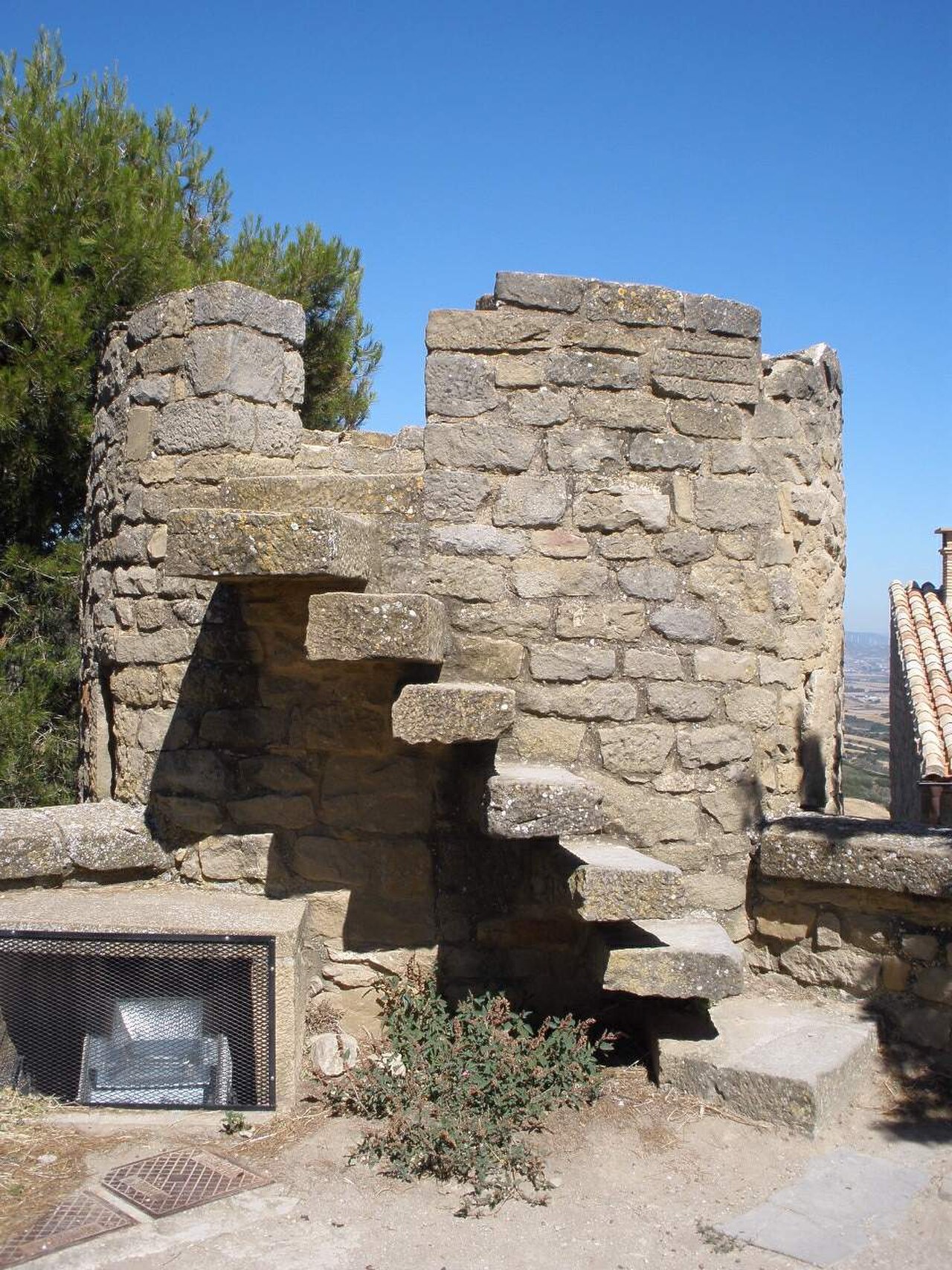
Photo: Zarateman · CC BY-SA 3.0
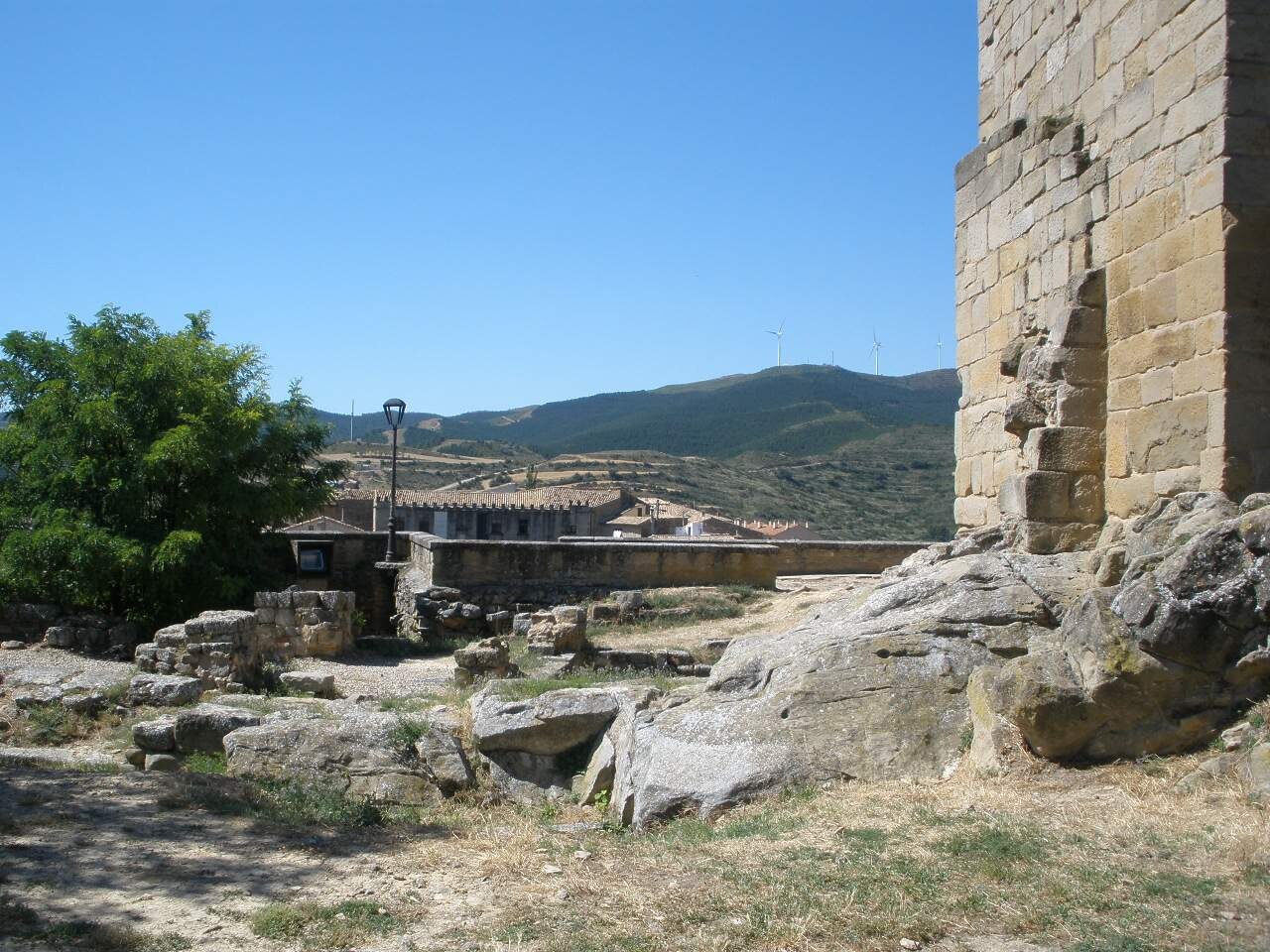
Photo: Zarateman · CC BY-SA 3.0
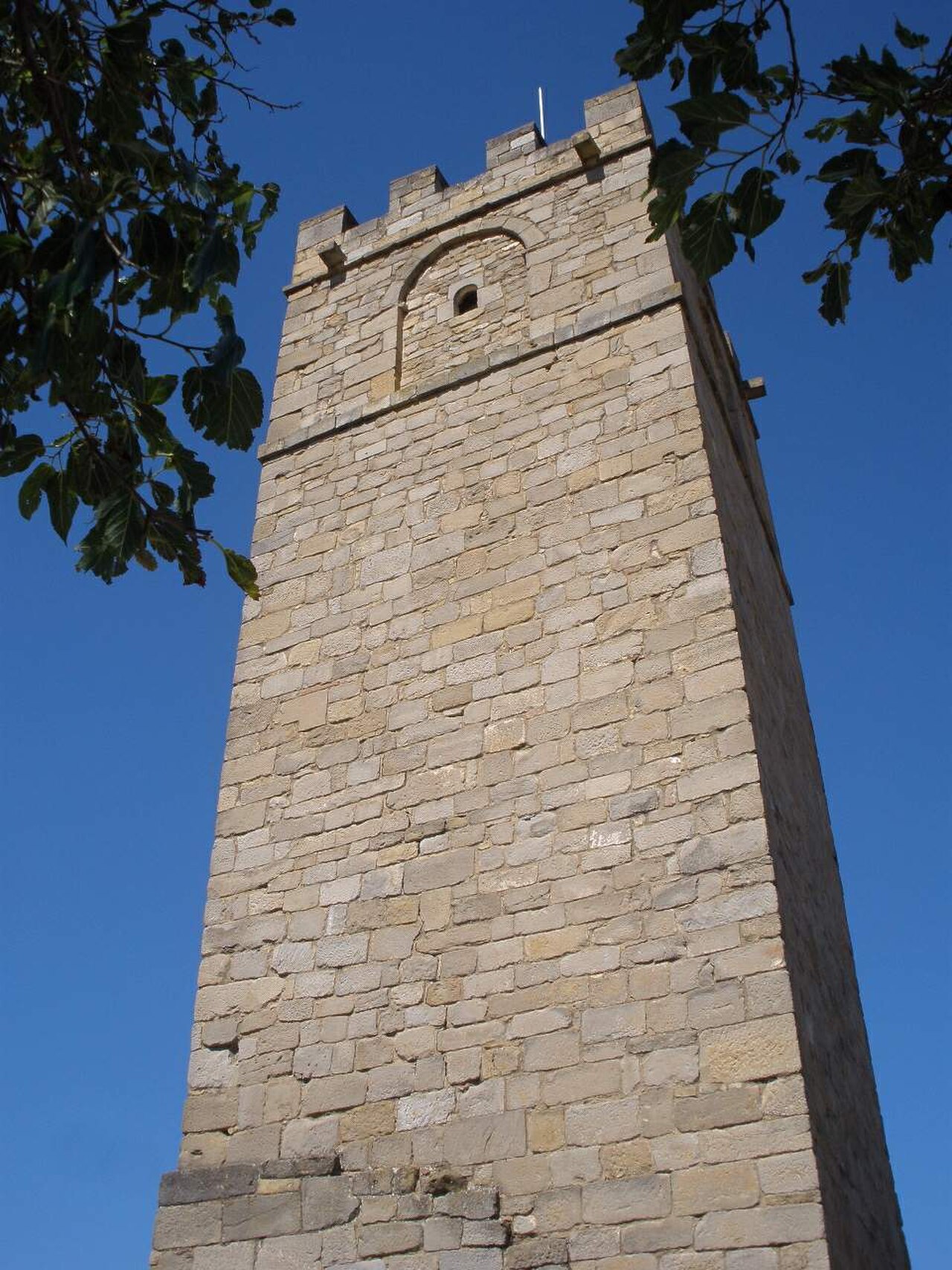
Photo: Zarateman · CC BY-SA 3.0
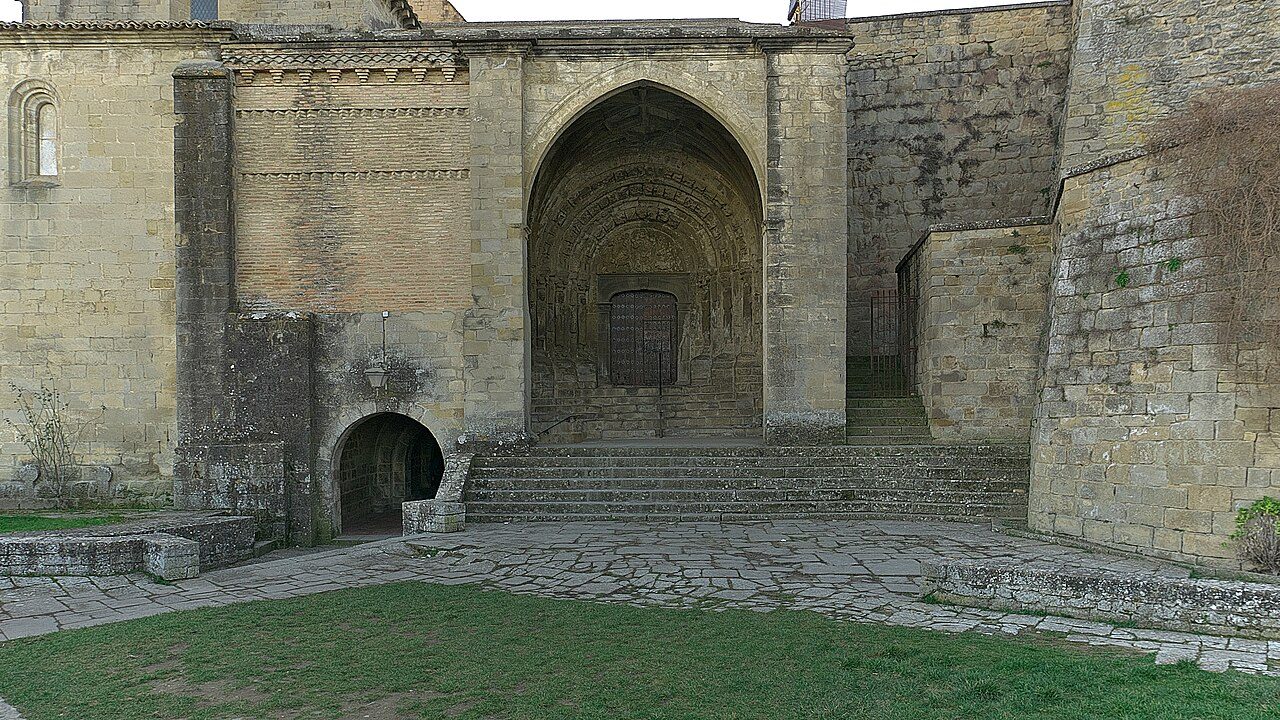
Photo: Jl FilpoC · CC BY-SA 4.0
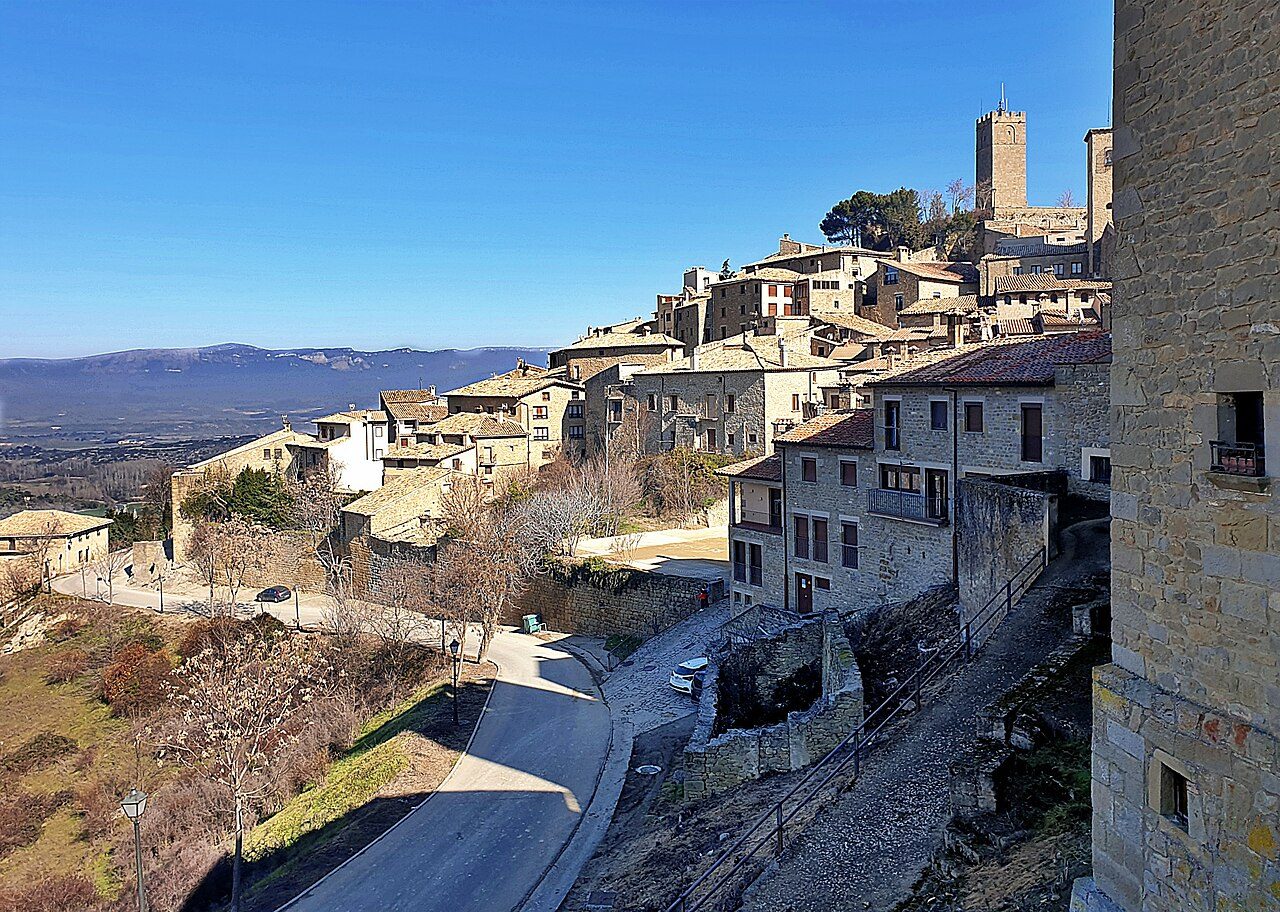
Photo: Txemari · CC0
- c. 908
Sos is resettled
According to Madoz, Sancho Garcés I of Pamplona restores Sos in an area depopulated by the border war.
source: Ayuntamiento de Sos, Historia de Sos - c. 970
A castle on the Peña Feliciana
Sancho Garcés II builds a strong castle on the summit and Sancho III improves it in 1012; nothing visible remains of this fortress.
source: Ayuntamiento de Sos, Historia de Sos - 1043
From Navarre to Aragon
Ramiro I loses Sos at Tafalla, but that same year a pact with his brother García returns the town to him.
source: Ayuntamiento de Sos, Historia de Sos - 1055–1124
The church of San Esteban
Queen Estefanía's donations begin in 1055, construction in 1059, and by 1124 the church must already have been in use.
source: Ayuntamiento de Sos, Historia de Sos - 1137
Master Jordán rebuilds the castle
With Aragon and Navarre now separated, Ramiro II commissions master Jordán with the improvements that make Sos the great bastion against Navarre.
source: Ayuntamiento de Sos, Historia de Sos - Late 13th c.
The town wall
Under Alfonso III, who in 1288 has to hand the castle over to the Unionists, the town is apparently enclosed by walls.
source: Ayuntamiento de Sos, Arquitectura civil - 1362
Charles II takes Sos
In the midst of the War of the Two Peters, the King of Navarre occupies the town; in 1364 he swears peace there with Peter IV.
source: Ayuntamiento de Sos, Historia de Sos - Late 14th c.
A shorter wall
The Crown orders part of the walls torn down, as they are too long for the town; the exact section is unknown.
source: Ayuntamiento de Sos, Arquitectura civil - Mar 10, 1452
Ferdinand the Catholic is born
Juana Enríquez, fleeing the war in Navarre, gives birth to the future Ferdinand II in the Palacio de Sada.
source: Ayuntamiento de Sos, Historia de Sos - 1492
The expulsion of the Jews
Sos loses perhaps a sixth of its population and a good part of its craftsmen; in 1495 it counts 124 hearths.
source: Ayuntamiento de Sos, Los judíos en Sos - 1810–1813
The French in Sos
The French occupy the town and fortify themselves there, until Espoz y Mina's guerrillas drive them out in March 1813.
source: Ayuntamiento de Sos, Historia de Sos - 1968
Historic-artistic ensemble
The decree of June 6 protects the town, which opens its Parador in 1975; the castle tower has already been restored.
source: Toponimia hispánica, Sos del Rey Católico
- Ayuntamiento de Sos, Historia de Sos
- Ayuntamiento de Sos, Arquitectura civil
- Ayuntamiento de Sos, Arte religioso
- Ayuntamiento de Sos, Los judíos en Sos
- ARCA, ficha CV.28 (castillosenaragon.es)
- Motis Dolader, Los judíos de las Cinco Villas en la Edad Media
- Comarca de las Cinco Villas, Castillo
- Comarca de las Cinco Villas, Portales y muralla
- Turespaña, Castillo y murallas de Sos
- Toponimia hispánica, Sos del Rey Católico
- OpenStreetMap, huellas y portales