 CASTLE
The reconstruction shows Tossa around 1450: the town of fishermen and farmers that the monastery of Ripoll turned into a walled town, with the wall rebuilt in the 14th century after the French attack of 1285. The wall, the towers, the church and the bailiff's house follow the real remains. Of the castle, torn down in 1917 to build the lighthouse, only the site and an inventory are known, so its plan and heights are hypotheses.
Works in the browser on computers and phones, with nothing to install. Fly with the drone and switch between then and now.
Interpretive recreation: our approach ›
Or fly over it as the centuries go by: from the first settlement to today, with the town growing and the milestones of its history.
- Period reconstructed
- c. 1450
- Town
- Tossa de Mar
- County
- La Selva
- Province
- Girona
- Region
- Catalonia
- Coordinates
- 41.71590, 2.93400 · Open the map
Leave us your email and we'll send you the poster of this castle at its height, high resolution, ready to print, plus two wallpapers (computer and phone). We'll also tell you about news on this castle. No passwords; unsubscribe any time.
Are you at the castle? Get its stamp for your castle passport. We only check that you are within 300 m; we don't store your location.
Torre de les Hores
Also called the Clock Tower, it is one of the three large towers, next to the gateway. It had three floors with stone vaults and was entered from the wall walk.
Town gateway
A double round-arched gate with a portcullis that opened onto a square. Its exact position in the model is approximate.
Torre del Codolar
Or the Keep, to the west, above the Codolar cove. The bailiff's house is built against it.
Torre d'en Joanàs
The easternmost of the seven, almost over the sea. It closes the northern front of the wall.
Bailiff's house
Residence of the bailiffs (bailes de saco) of the abbots of Ripoll, the finest building in the enclosure. Today it is the Municipal Museum, opened in 1935.
Church of Sant Vicenç
A single-nave Gothic parish church with a polygonal apse, now in ruins. The model simplifies its shape, without the chapel or sacristy.
Castle (hypothesis)
It stood where the lighthouse now rises. An inventory of 1606 describes a hall, kitchen, granary, stable and chambers. The plan and the tower in the model are hypotheses.
Stepped wall
About 300 m of wall with battlements and a wall walk climbing in steps up the hill. The sea side was defended by the cliff.
Videos and stories about this place on our account.
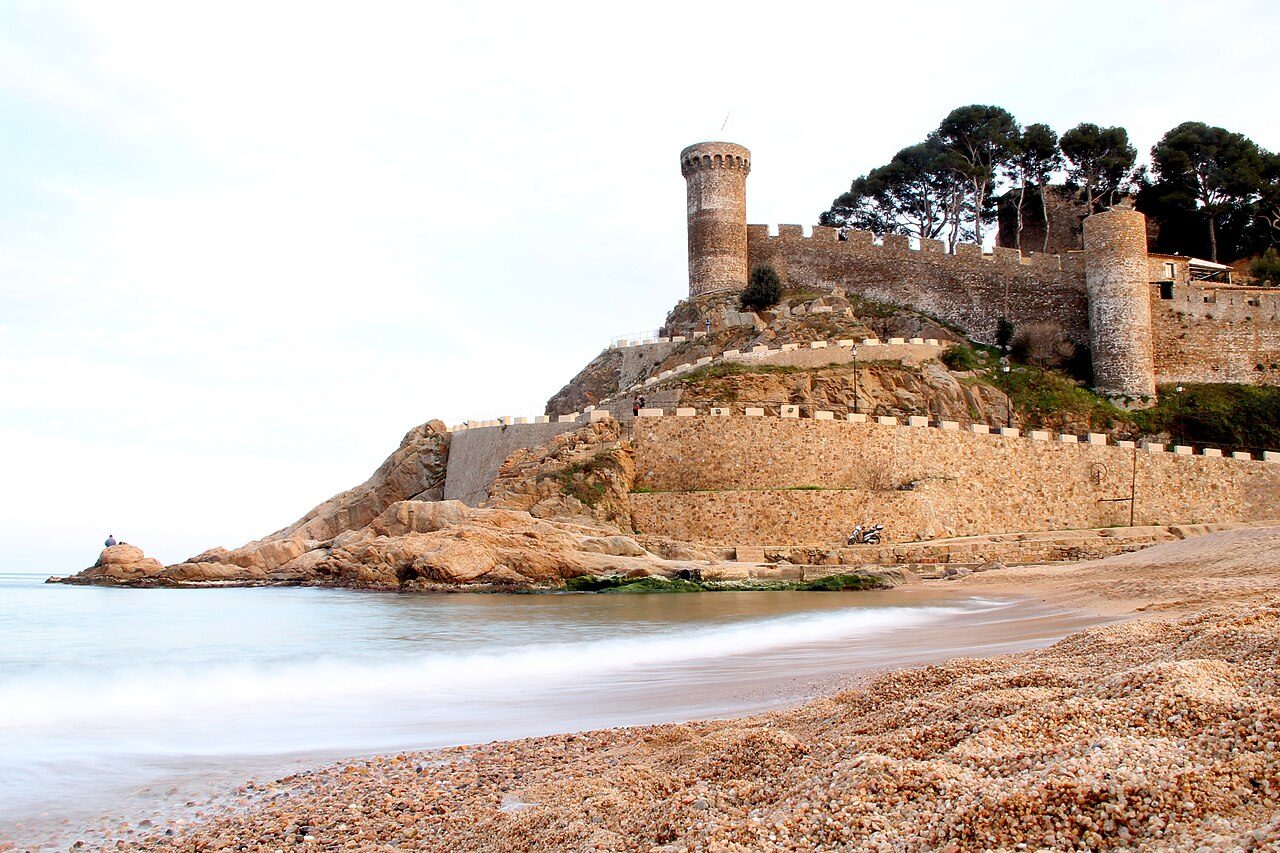
Photo: Merx · CC BY-SA 3.0 es
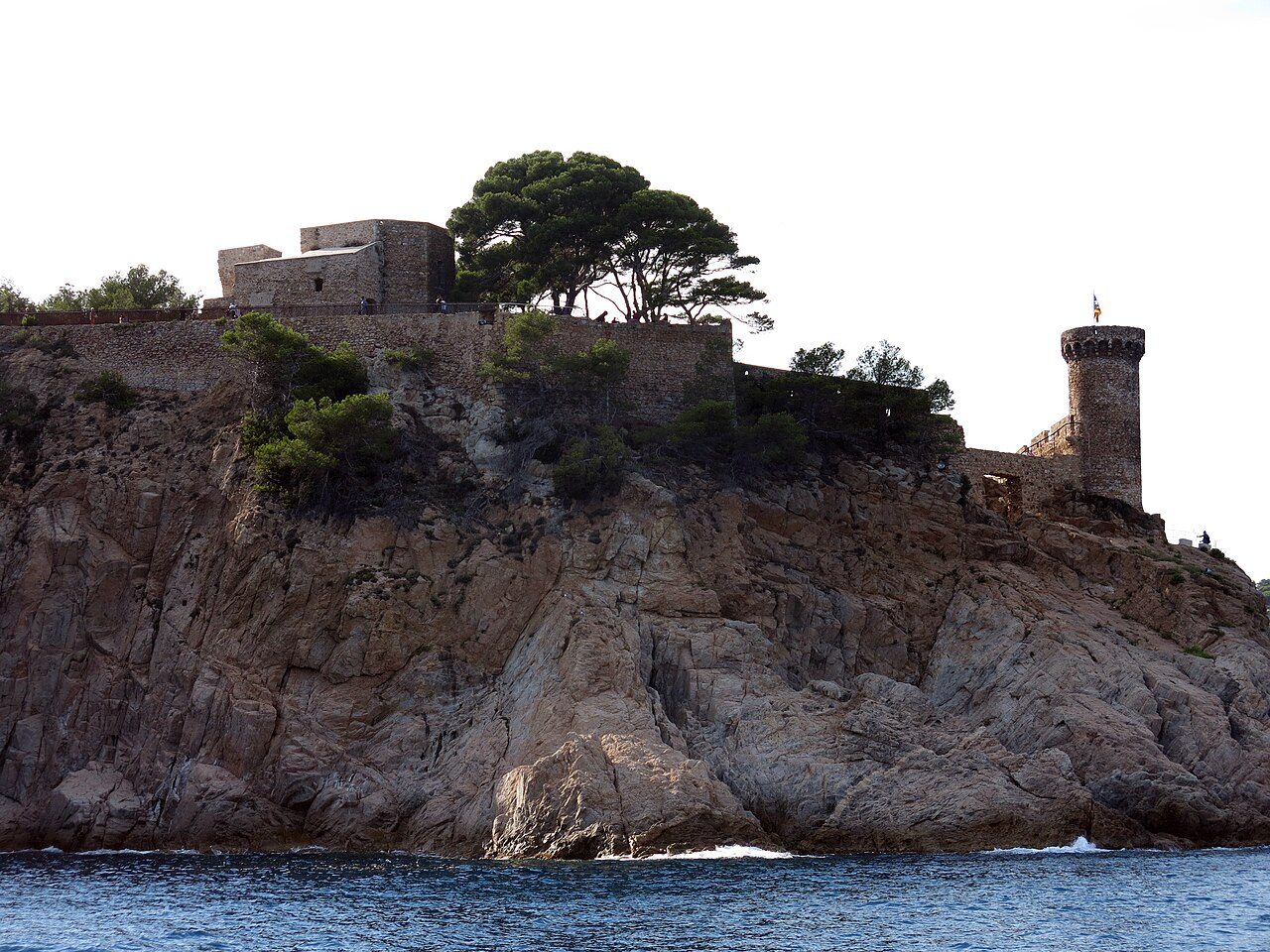
Photo: Enric · CC BY-SA 4.0
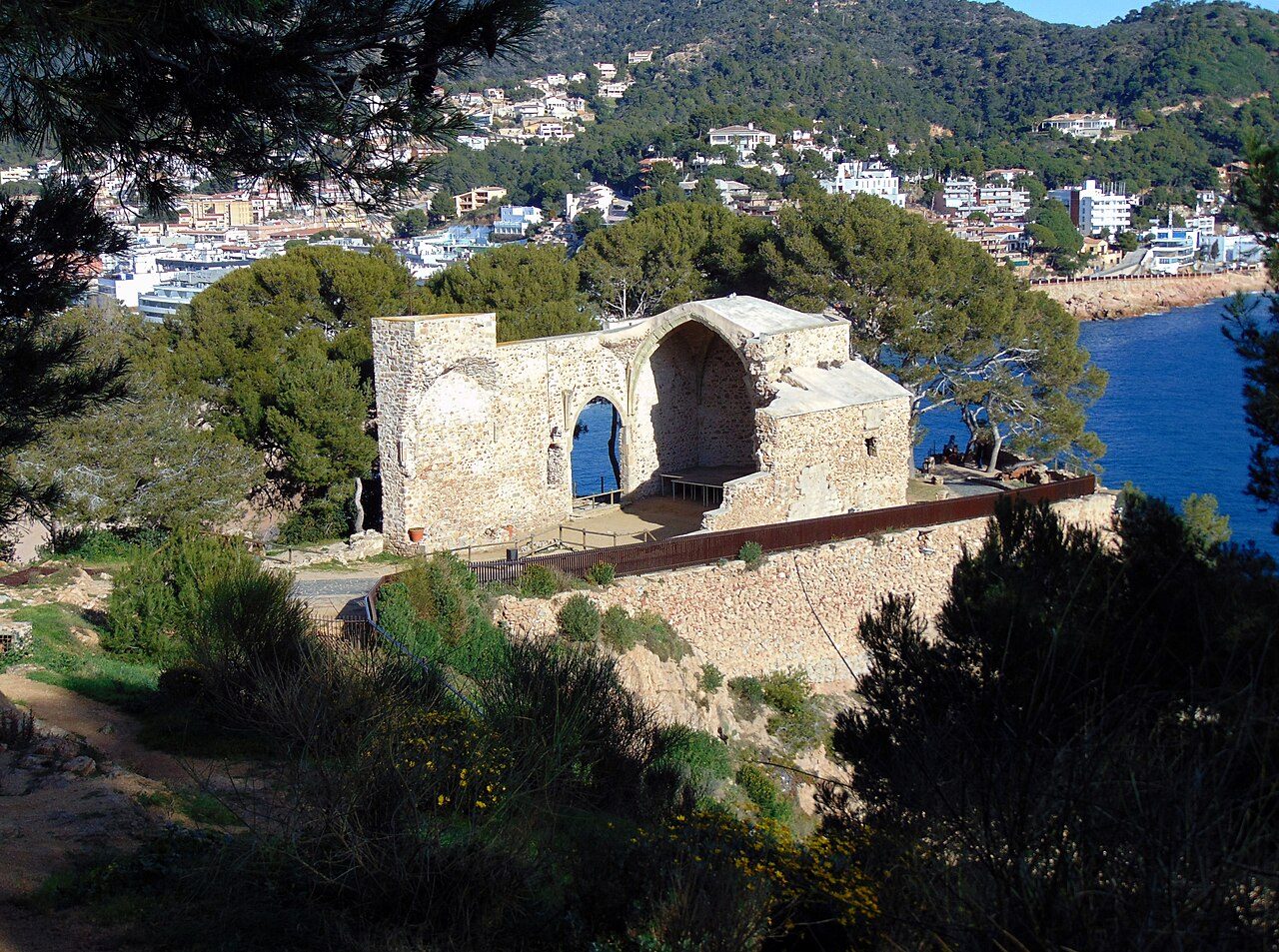
Photo: Josep Maria Viñolas Esteva · CC BY-SA 4.0
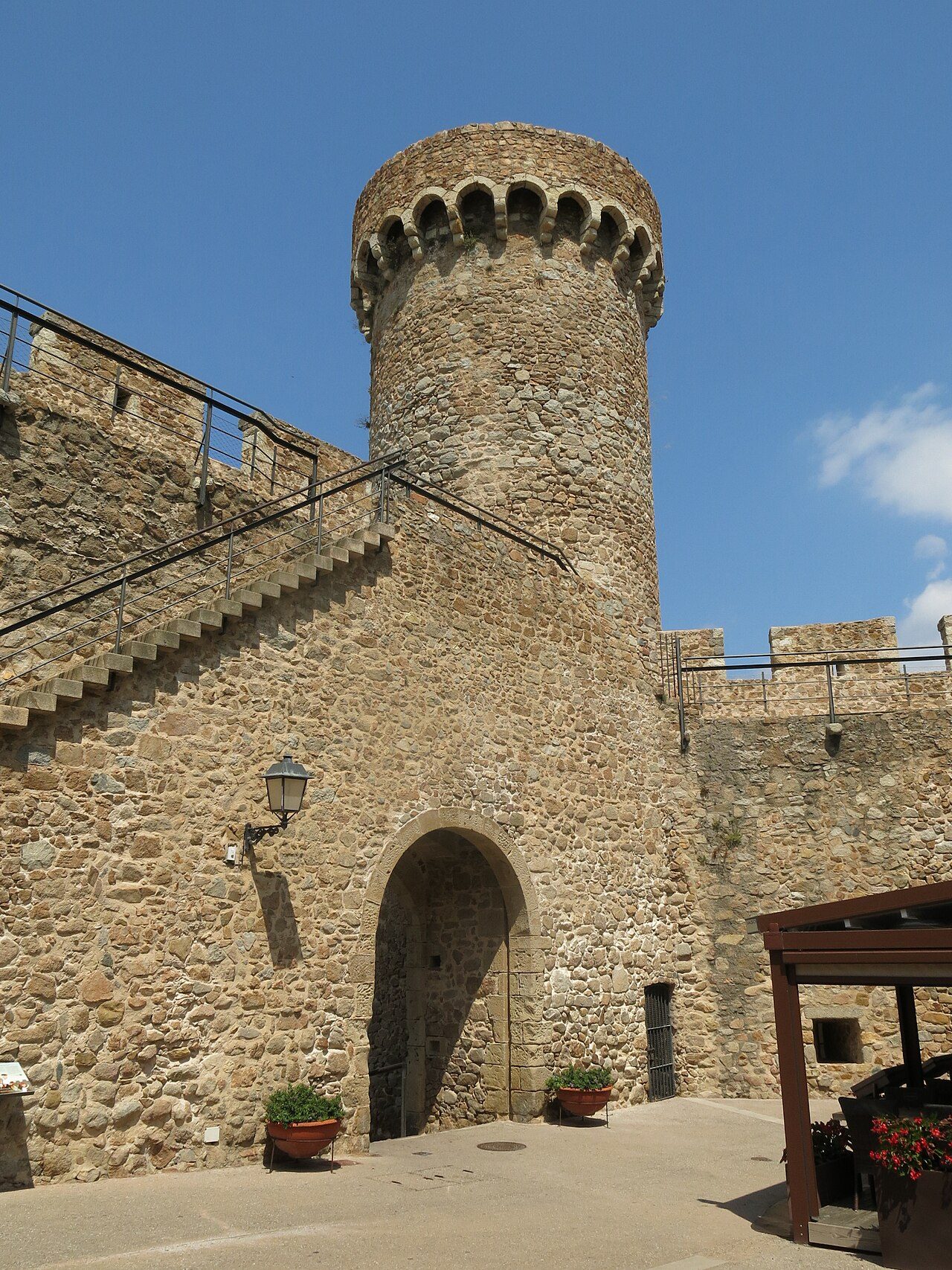
Photo: Enric · CC BY-SA 4.0
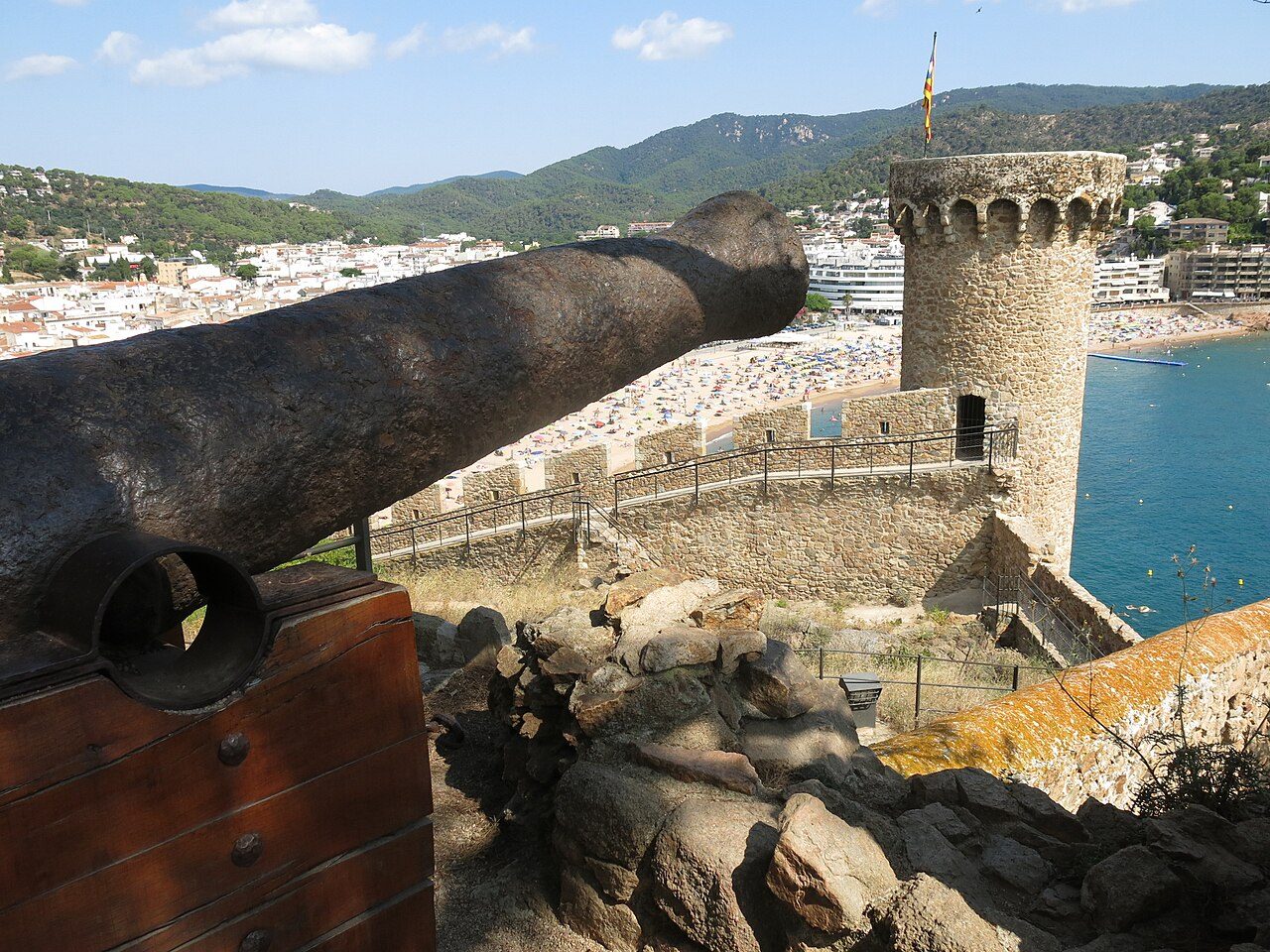
Photo: Enric · CC BY-SA 4.0
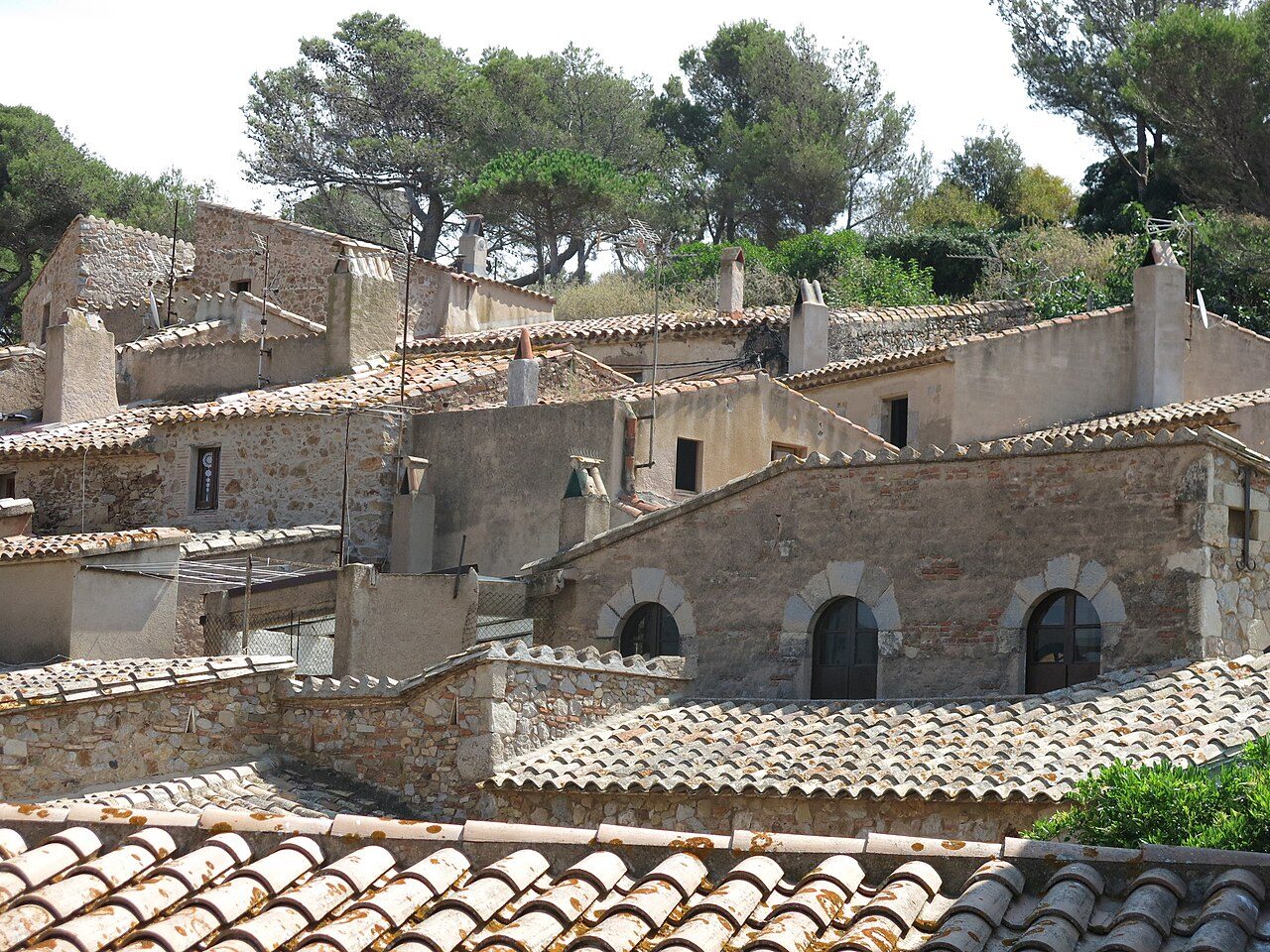
Photo: Enric · CC BY-SA 4.0
- Antiquity
Iberian village and Turissa
There may have been an Iberian village on the headland and perhaps a Roman enclosure, and a Roman mosaic from the valley gives the name Turissa.
source: Catalunya Romànica (Enciclopèdia Catalana) - 966
The allod passes to Ripoll
The executors of Count Miró grant the allod of Tossa to the monastery of Santa Maria de Ripoll, which will be its lord until the end of the Ancien Régime.
source: Catalunya Romànica (Enciclopèdia Catalana) - 1158
Abbot Jofre's franchises
Abbot Jofre grants franchises to the men of Tossa, a community that already has a prior and a bailiff and lives from hunting, farming and fishing.
source: Catalunya Romànica (Enciclopèdia Catalana) - 1186–1187
Settlement charter
Abbot Ramon grants the settlement charter and plans a castle on Mont Guardí, perhaps over a watchtower, with houses inside and outside the enclosure.
source: Catalunya Romànica (Enciclopèdia Catalana) - 1285
The French burn Tossa
During Philip the Bold's crusade against Catalonia, the French tear down and burn the town.
source: Castells Catalans (La Selva, Catalunya Romànica) - 14th c.–1387
The wall we see today
Ripoll rebuilds the enclosure, with works documented in 1387, and the town counts 81 households in the hearth census of 1365–1370.
source: Catalunya Romànica (Enciclopèdia Catalana) - 15th c.
Gothic church and bailiff's house
The Gothic church of Sant Vicenç and the bailiff's palace, built against the Torre del Codolar, go up, and the streets of the enclosure fill with houses.
source: Femturisme, Una passejada per Tossa de Mar - 16th c.
Corsairs and houses outside the walls
Corsair raids mark the century, Tossa reaches 102 households in 1553 and the first houses spread beyond the enclosure.
source: Gran Enciclopèdia Catalana, Tossa de Mar - 1775–1778
The parish moves down to the Vila Nova
The old church is no longer big enough and a new parish church is completed outside the walls, where the Vila Nova is growing.
source: Catalunya Romànica, Sant Vicenç de Tossa - c. 1810
The old church in ruins
The church is left in ruins during the Peninsular War, perhaps by a gunpowder explosion, and the castle tower ends up serving as a mill.
source: Románico Digital, Vila Vella de Tossa de Mar - 1917
The lighthouse replaces the castle
The mill and the remains of the castle are torn down to build the lighthouse, which opens on 29 August.
source: Viquipèdia, Far de Tossa - 1931–1935
National monument and museum
The enclosure is declared a national monument in 1931, and in 1935 the municipal museum opens in the bailiff's house.
source: Viquipèdia, Museu Municipal de Tossa de Mar
- Catalunya Romànica (Enciclopèdia Catalana)
- Castells Catalans (La Selva, Catalunya Romànica)
- Femturisme, Una passejada per Tossa de Mar
- Gran Enciclopèdia Catalana, Tossa de Mar
- Catalunya Romànica, Sant Vicenç de Tossa
- Románico Digital, Vila Vella de Tossa de Mar
- Viquipèdia, Far de Tossa
- Viquipèdia, Museu Municipal de Tossa de Mar
- Viquipèdia, Castell de Tossa de Mar
- Viquipèdia, Tossa de Mar
- Visit Costa Brava, La Vila Vella
- OpenStreetMap, muralles de Tossa