 CASTLE
The reconstruction shows Tudela around 1390, when Charles III the Noble turned the castle into a palace and made the town a city. On top of the hill of Santa Bárbara, a stronghold with a free-standing central tower and four corner towers; on the southern slope, the Jewish quarter, inside the outer wall; at its foot, the walled medina stretching to the Queiles. The castle was torn down in the 16th century and almost nothing survives today: the plan is based on the archaeological sectors and the excavator's description, and is largely hypothetical.
Works in the browser on computers and phones, with nothing to install. Fly with the drone and switch between then and now.
Interpretive recreation: our approach ›
Or fly over it as the centuries go by: from the first settlement to today, with the town growing and the milestones of its history.
- Period reconstructed
- c. 1390
- Town
- Tudela
- County
- Ribera de Navarra
- Province
- Navarre
- Region
- Navarre
- Coordinates
- 42.06680, -1.60630 · Open the map
Leave us your email and we'll send you the poster of this castle at its height, high resolution, ready to print, plus two wallpapers (computer and phone). We'll also tell you about news on this castle. No passwords; unsubscribe any time.
Are you at the castle? Get its stamp for your castle passport. We only check that you are within 300 m; we don't store your location.
Torre de Don Mejón
Free-standing central tower, the tallest in the castle. Its base measures about 19 × 17 m; the height is hypothetical. The hermitage of 1611 and the monument of 1942 were built on its remains.
Parade ground and palace
A platform held up by thick terracing walls, with palace rooms, garrison quarters and storerooms around the perimeter. The exact layout is hypothetical.
Sector of the Wells
Medieval structures with wells, visible today. The 1985 excavations identified an Islamic service area with rubble-masonry and rammed-earth walls.
Puerta Ferrenna
The main entrance, facing the city and the San Miguel quarter. In front of it was a square and the Porch, where the kings dispensed justice. The exact location is hypothetical.
New Jewish Quarter
From 1170 the Jews live in this space, between the stronghold and the outer wall, and maintain its fortifications. The houses are generated, not documented one by one.
Outer wall
12th–14th centuries. Towers with sloping walls and a moat with earthen banks about 7 m wide, not drawn here.
East wall and tower
Remains from the 13th–14th centuries at the southeast end of the hill.
Andalusi wall
A 9th-century stretch on the northwest slope, with well-squared ashlars in its lower part.
Carlist blockhouse
Tower, passage and cobbled paving from the 19th century. It did not exist in 1390.
Ebro bridge
Stone bridge of 17 arches, about 360 m long, already standing in medieval times. Not drawn: the model has no bridges. The Ebro is shown in its present course; before the 17th c. it ran right against the hill.
Santa María
From the second half of the 12th c., the church that is now the cathedral was built over the great mosque. Here it is an approximate volume.
Puerta del Mercado
The only passage between the medina and the Moorish quarter, which lay outside the wall and is not drawn here.
Torre Monreal
Rectangular watchtower (9.85 × 8.20 m) within sight of the alcazaba, documented between 1237 and 1429. The height is hypothetical.
Videos and stories about this place on our account.
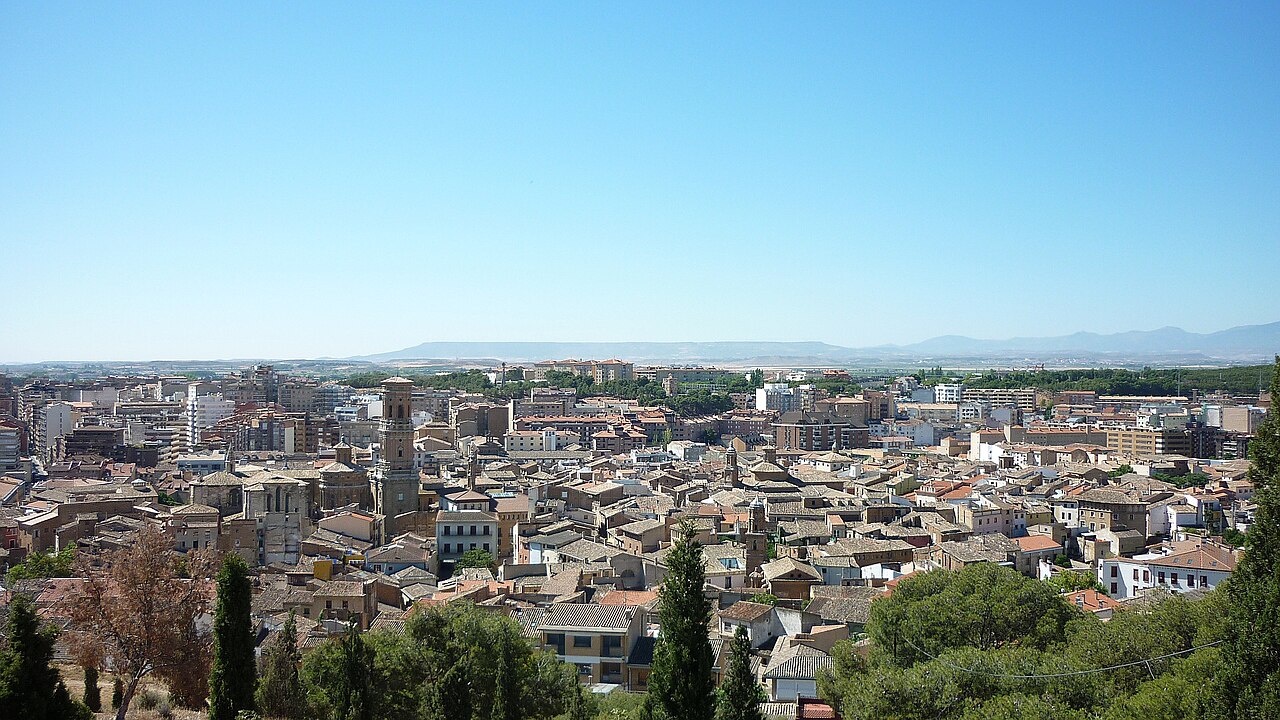
Photo: Albert Torelló · CC BY-SA 2.0
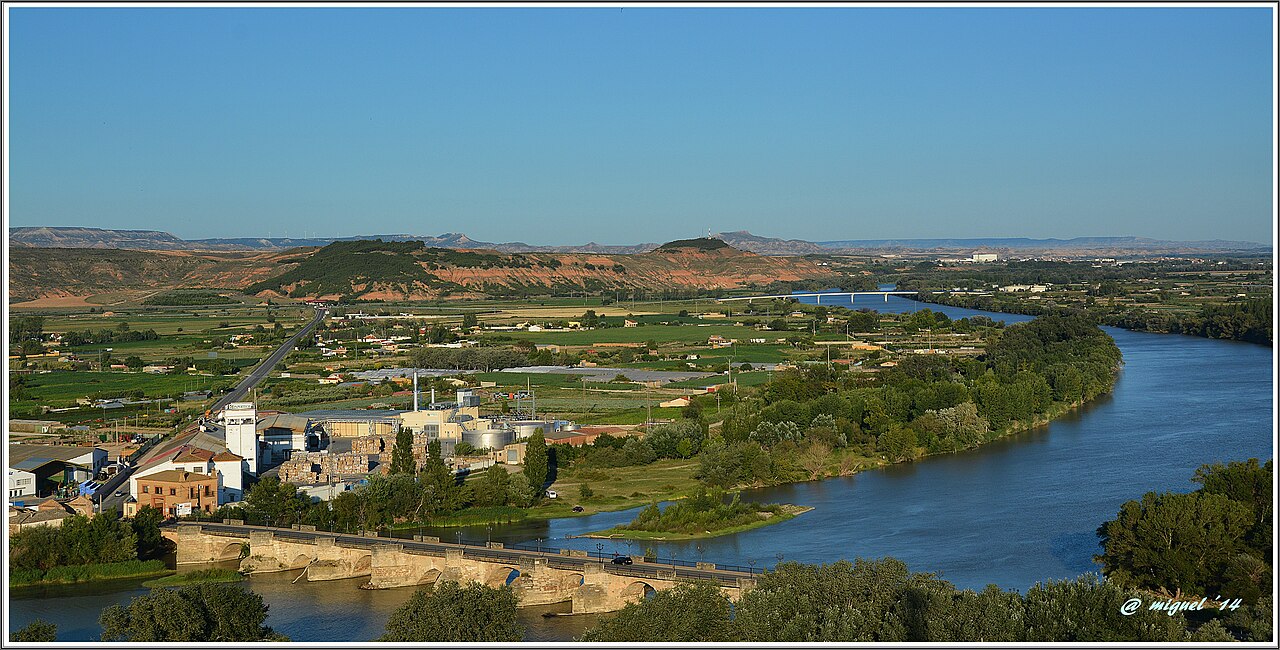
Photo: Miguel Ángel García · CC BY 2.0
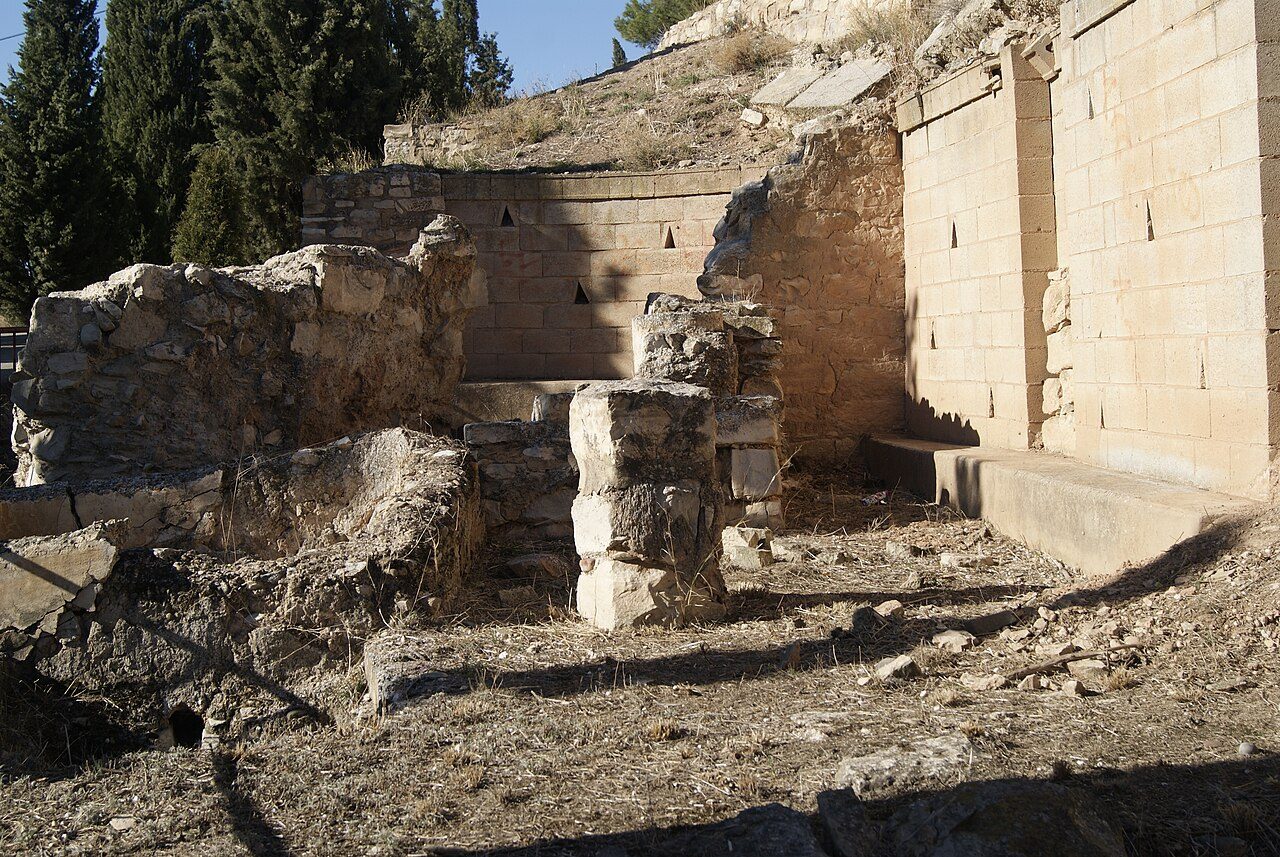
Photo: Jialxv · CC BY-SA 4.0
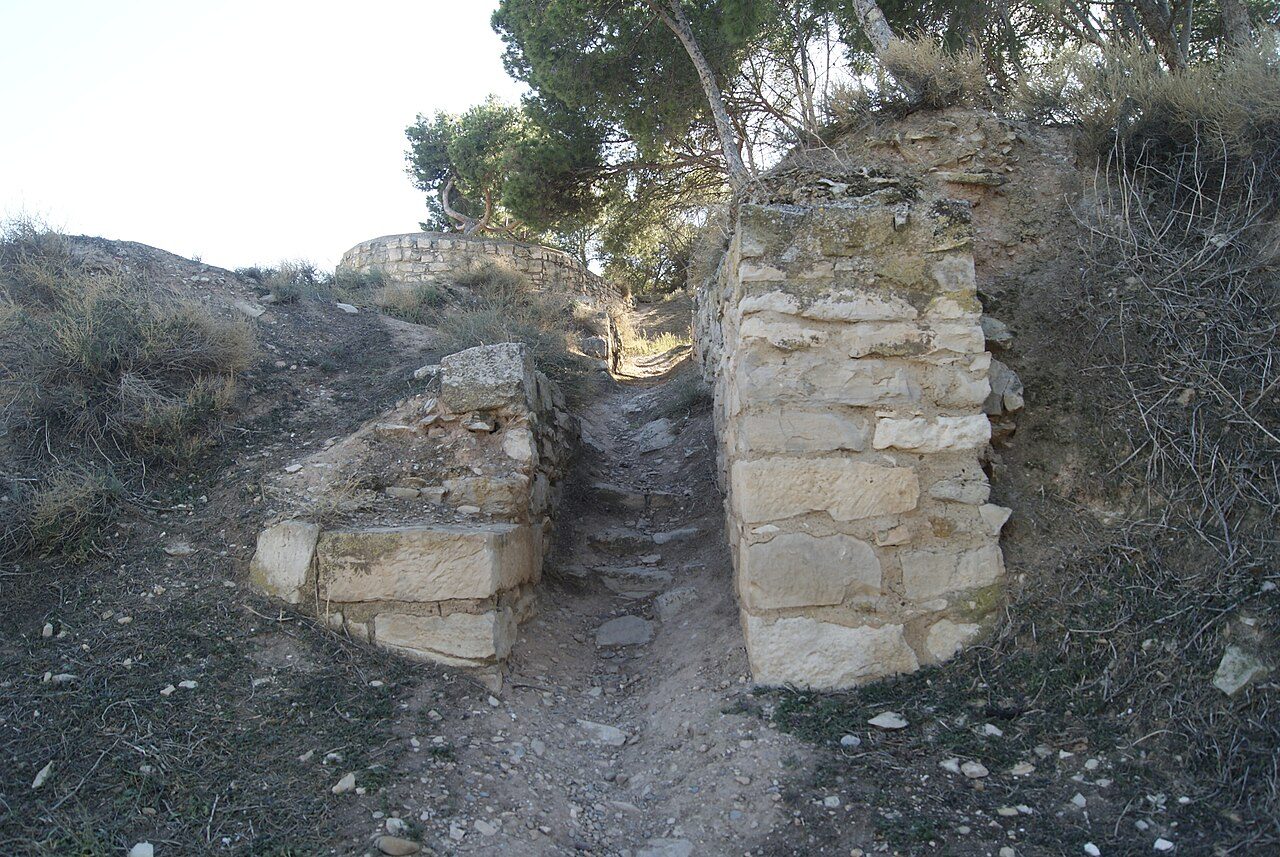
Photo: Jialxv · CC BY-SA 4.0
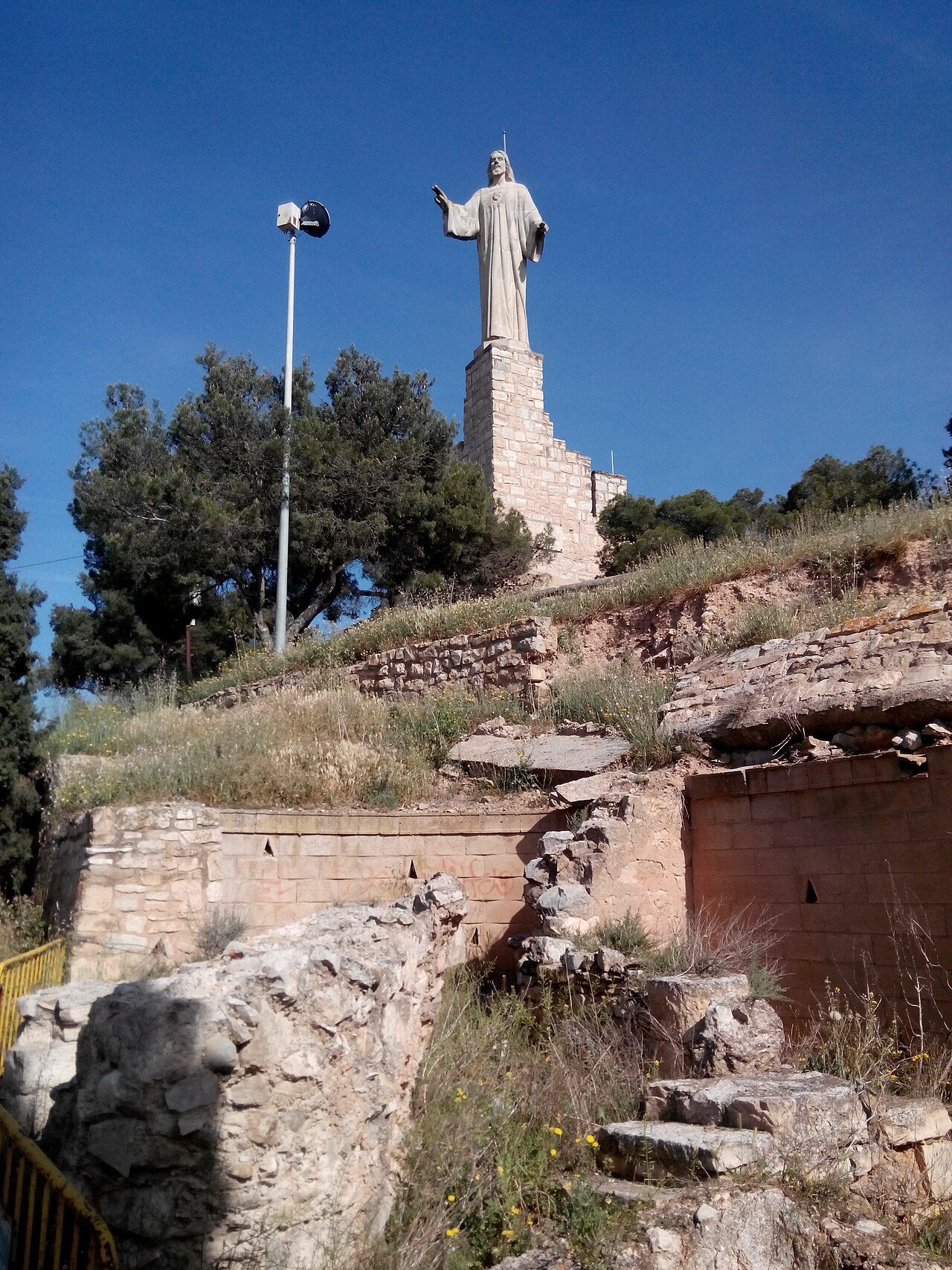
Photo: Jialxv · CC BY-SA 4.0
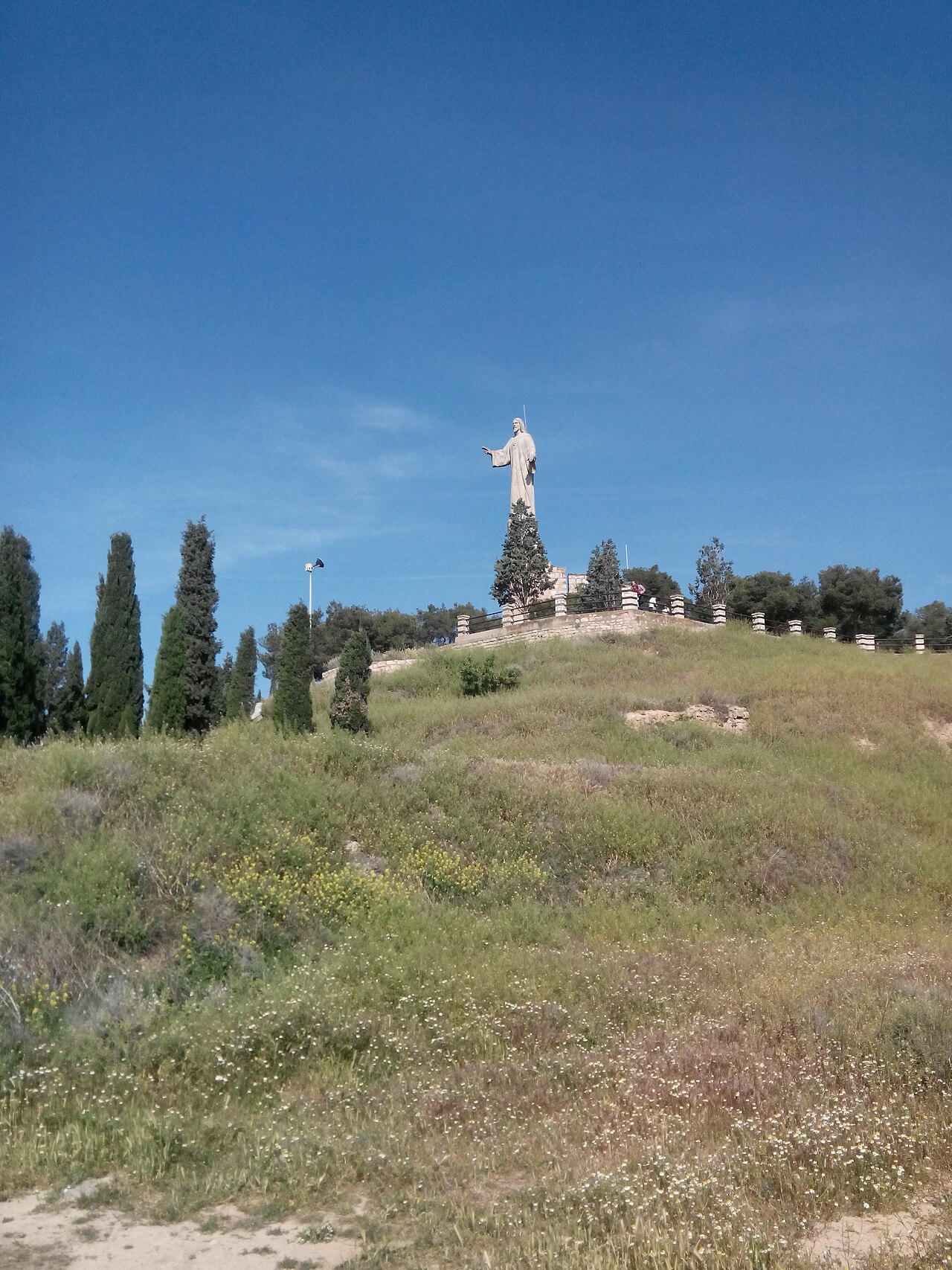
Photo: Jialxv · CC BY-SA 4.0
- 9th c. BC
The first inhabitants
Excavations on the hill of Santa Bárbara have found traces of settlers from the 9th c. BC.
source: Trabajos de Arqueología Navarra 27 (2015) - 802
Amrus founds the medina
Amrus ibn Yusuf, envoy of al-Hakam I, fortifies the upper part of the hill and strengthens the wall of the new medina.
source: Ayuntamiento de Tudela, folleto Torre Monreal (E. Laita) - 9th c.
The medina reaches the Queiles
Under the Banu Qasi the city grows from the Mediavilla to the Queiles, with a new wall and a great mosque at its center.
source: Navas y Martínez, La Mezquita Mayor de Tudela (1994) - 1119
Alfonso I takes Tudela
Alfonso the Battler conquers the city in February; a pact governs the defeated population, and the Muslims must go to live outside the walls.
source: J. A. Lema, Las relaciones entre moros y cristianos en Tudela (1991) - 1170
The Jewish quarter inside the castle
Sancho VI assigns the castle enclosure to the Jews as their quarter, in exchange for maintaining their stretch of the fortifications.
source: History of the Jews in Tudela, Wikipedia - 1388–1393
Palace of Charles III
Charles III the Noble builds new wings, great halls and galleries with fireplaces, and in 1390 grants Tudela the title of city.
source: Alcazaba y Castillo de Tudela, Wikipedia (Marín Royo 2002) - 1498
End of the Jewish quarter
The monarchs of Navarre order the Jews to be baptized or leave, and in Tudela 180 families are baptized.
source: History of the Jews in Tudela, Wikipedia - 1512–1522
The demolition of the castle
Tudela surrenders to Ferdinand the Catholic in 1512; Charles V orders its defenses torn down in 1521 and in 1522 gives the stone to the city.
source: Ayuntamiento de Tudela, folleto Torre Monreal (E. Laita) - 1611
The hermitage of Santa Bárbara
A hermitage is built with the remains of the Torre de Don Mejón, giving the hill its present name.
source: Alcazaba y Castillo de Tudela, Wikipedia (Marín Royo 2002) - 1808
Battle of Tudela
On 23 November Marshal Lannes routs Castaños's army outside the city.
source: Battle of Tudela, Wikipedia - 1942
The Sacred Heart
On 25 October the monument by Víctor Eusa and the Buzzi brothers is inaugurated on the summit, over the old tower.
source: Cátedra de Patrimonio, Universidad de Navarra - 1985
Archaeology returns to the hill
Excavations by Juan José Bienes uncover an Islamic service area with walls, wells and storage pits.
source: Alcazaba y Castillo de Tudela, Wikipedia (Marín Royo 2002)
- J. J. Bienes, El castillo (Ciudad de Tudela)
- Alcazaba y Castillo de Tudela, Wikipedia
- Murallas de Tudela, Wikipedia
- Trabajos de Arqueología Navarra 27 (2015)
- Navas y Martínez, La Mezquita Mayor de Tudela (1994)
- Ayuntamiento de Tudela, folleto Torre Monreal
- J. A. Lema, Moros y cristianos en Tudela (1991)
- Cátedra de Patrimonio, Universidad de Navarra
- Sectores arqueológicos del cerro, OpenStreetMap (ODbL)
- Edificios actuales: Catastro de Navarra (IDENA)