 CASTLE
The reconstruction shows Alquézar around 1540, when Juan de Segura's church has just replaced the Romanesque one and the walls of the 15th and 16th centuries already enclose the crag. The plan follows the orthophoto, but the volumes of the church and the cloister are approximated with generic pieces, and the tower heights are estimated. The town spreads to the south and west; to the north, the gorges of the Vero act as a wall. Nothing visible remains of the Andalusi castle.
Works in the browser on computers and phones, with nothing to install. Fly with the drone and switch between then and now.
Interpretive recreation: our approach ›
Or fly over it as the centuries go by: from the first settlement to today, with the town growing and the milestones of its history.
Or watch how it was raised: the years of building up to its heyday, with masons, treadwheel cranes, carts and the passing seasons (interpretive recreation).
🏰 Enter the castle in 3D⏳ See how it changed⚒ How they built it
- Period reconstructed
- c. 1540
- Town
- Alquézar
- County
- Somontano de Barbastro
- Province
- Huesca
- Region
- Aragon
- Coordinates
- 42.17227, 0.02792 · Open the map
Leave us your email and we'll send you the poster of this castle at its height, high resolution, ready to print, plus two wallpapers (computer and phone). We'll also tell you about news on this castle. No passwords; unsubscribe any time.
Are you at the castle? Get its stamp for your castle passport. We only check that you are within 300 m; we don't store your location.
Church of Santa María la Mayor
Late Gothic, by Juan de Segura, 1525–1532: a nave of three bays and a choir, with a star vault and a south portal; it replaced the Romanesque church consecrated in 1099.
Trapezoidal cloister
The north wing is the Romanesque atrium, with historiated capitals from the first half of the 12th century; the other three are from 1313 and are adapted to the rock.
Bell tower
A tower of Sancho Ramírez's enclosure, converted into a bell tower; its lower part may preserve 11th-century wall. The height is estimated.
Watchtower (albarrana)
A freestanding tower of rough-hewn stone, about 4.74 × 5.22 m, with a raised door; it could be the one built by Abbot Banzo de Fanlo in 1067. Photos on Commons, however, call it the Esconjuradero tower.
Gate and ramp
The path climbs in a zigzag, hemmed in between two walls, from the Cruz de Buil to the second gate.
15th–16th-century wall
Almost all of the visible enclosure is from this campaign, with loopholes and pyramidal merlons; the model makes them rectangular because the engine does not have that shape.
Wall tower
A square tower built against the wall, later raised in brick with a hipped roof; the 18th-century esconjuradero stands on a tower of this wall.
Signal tower
A freestanding 11th-century tower of which only the north face remains, 6.65 m long and 1.6 m thick, next to a cistern. The model shows it complete (hypothesis).
Santa María Magdalena (hypothesis)
Remains of a small chapel, perhaps Romanesque, at the top of the hill; we identify it with the rectangular plan visible in the orthophoto.
Barranco de la Fuente and the Vero
The crag drops in cliffs to the Barranco de la Fuente and, beyond, the Vero: it can only be reached with some ease from the southeast. The real canyon is much narrower than the one in the model.
Videos and stories about this place on our account.
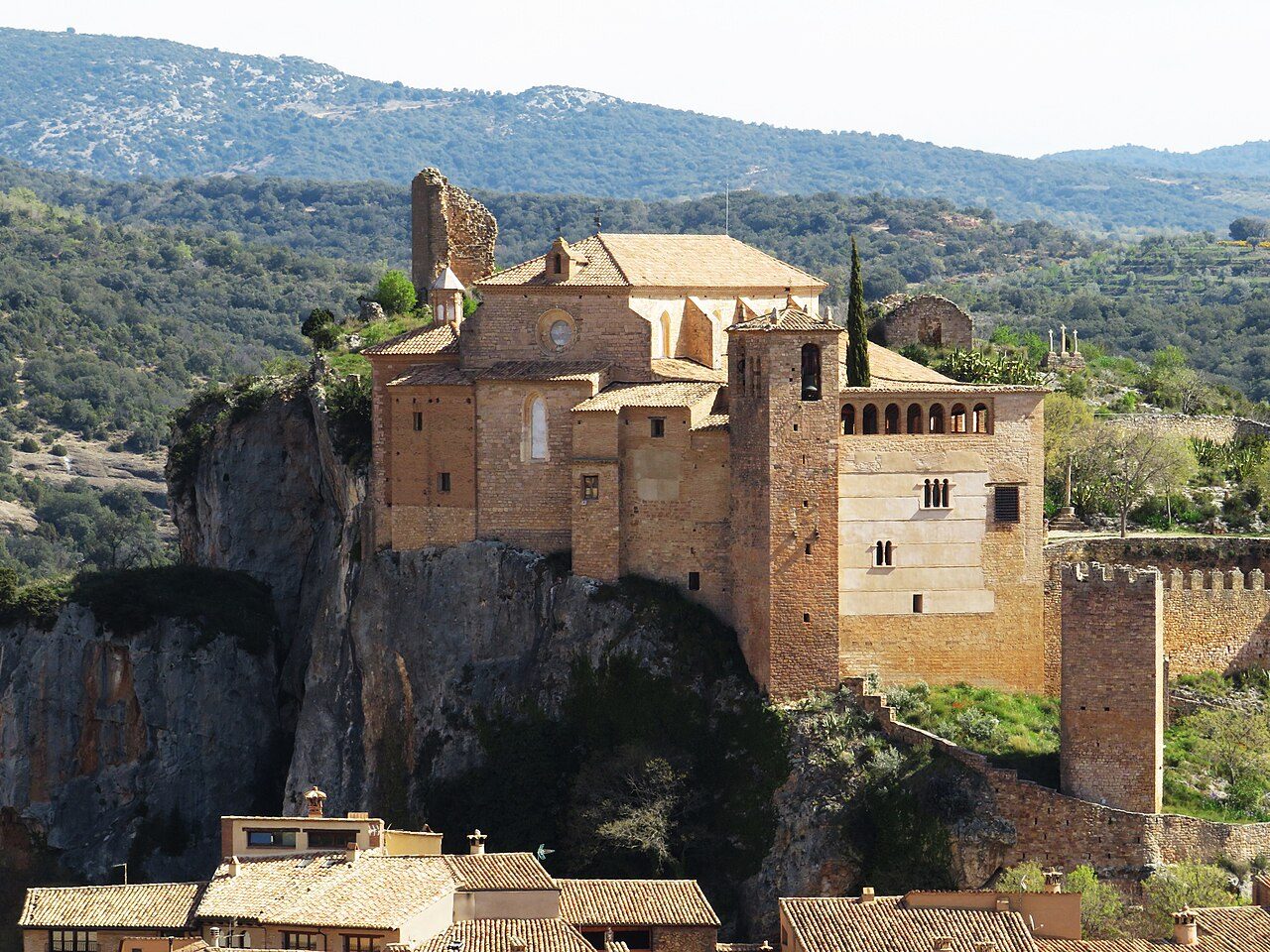
Photo: Enric · CC BY-SA 4.0
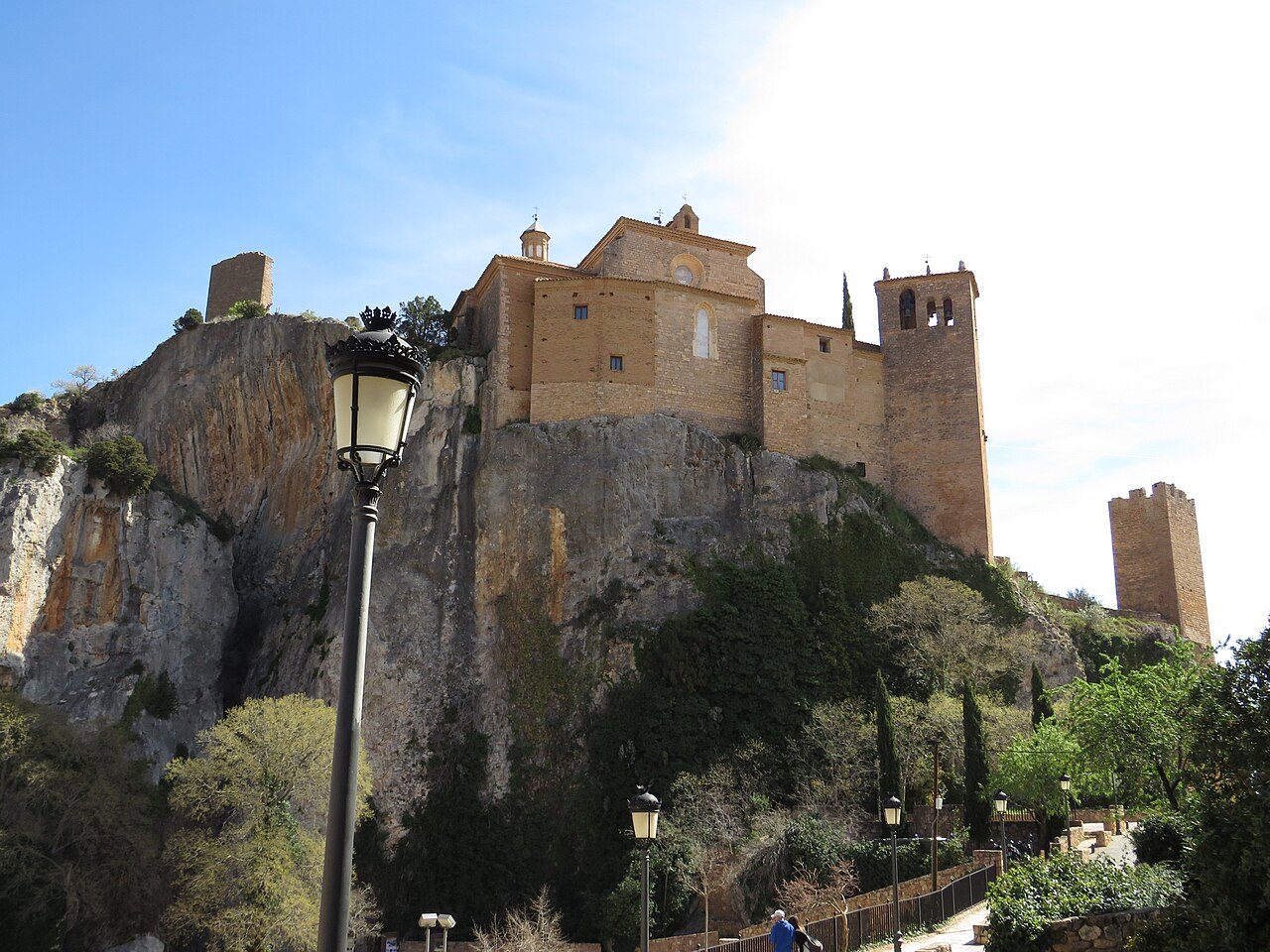
Photo: Enric · CC BY-SA 4.0
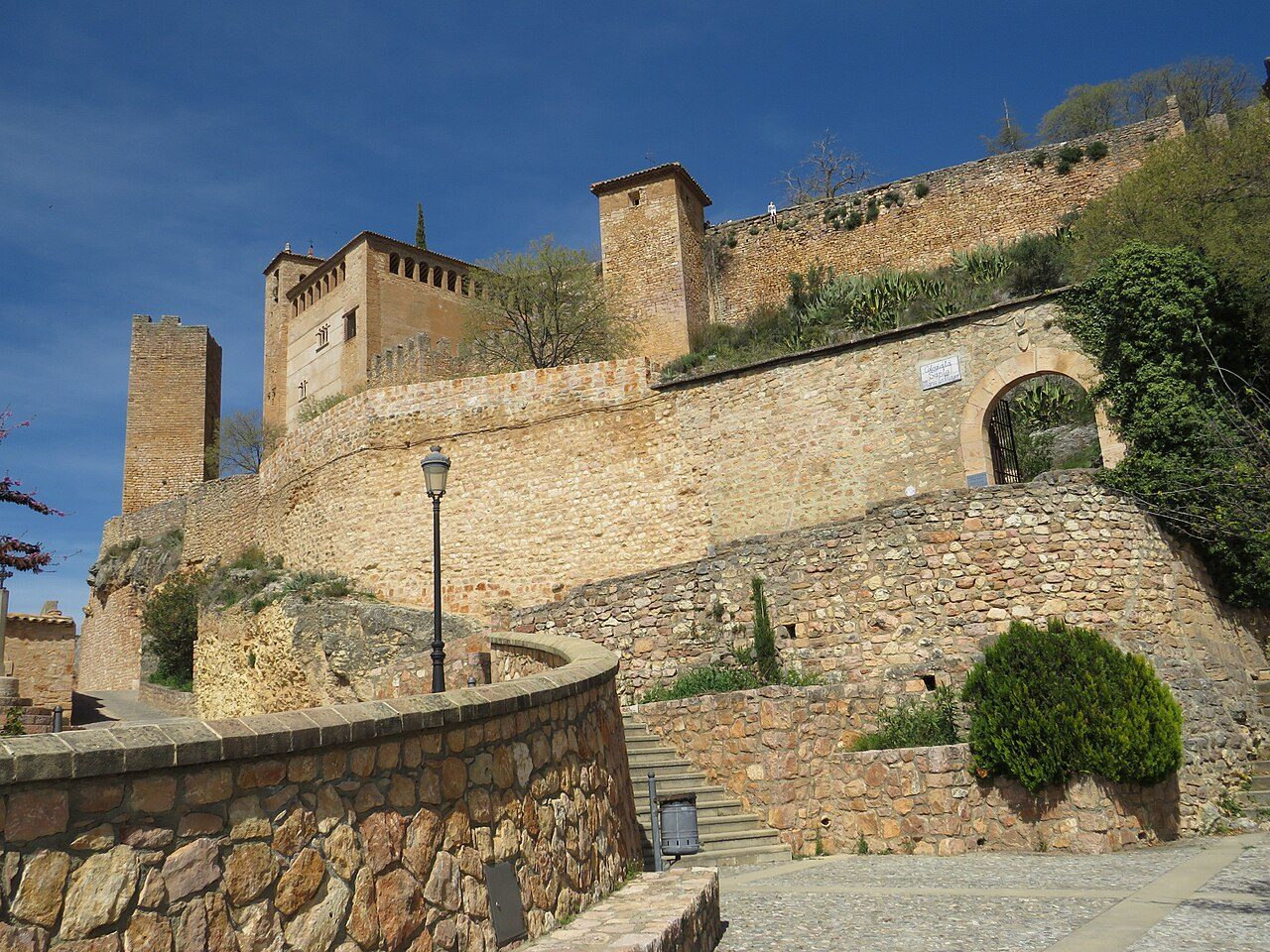
Photo: Enric · CC BY-SA 4.0
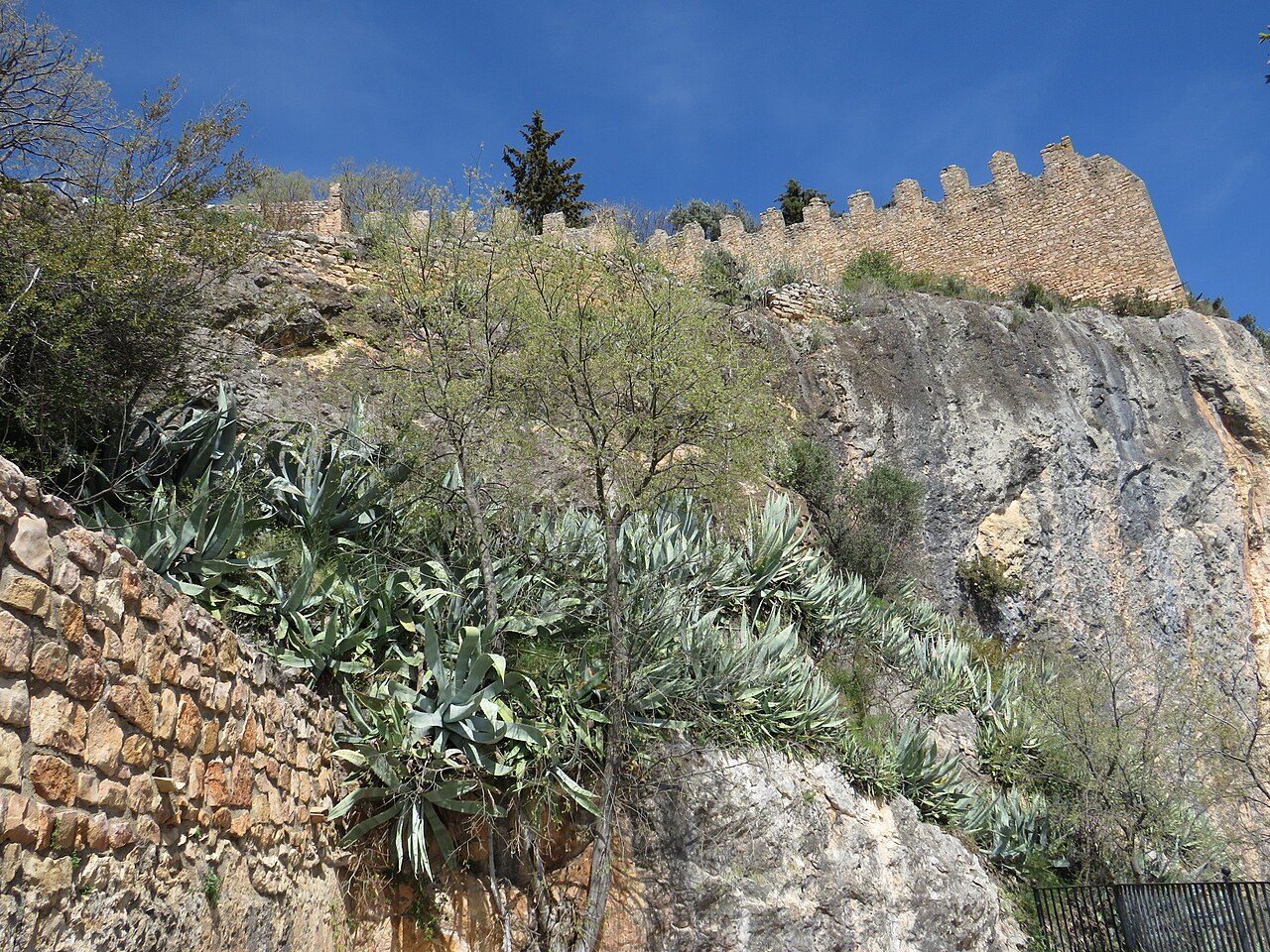
Photo: Enric · CC BY-SA 4.0
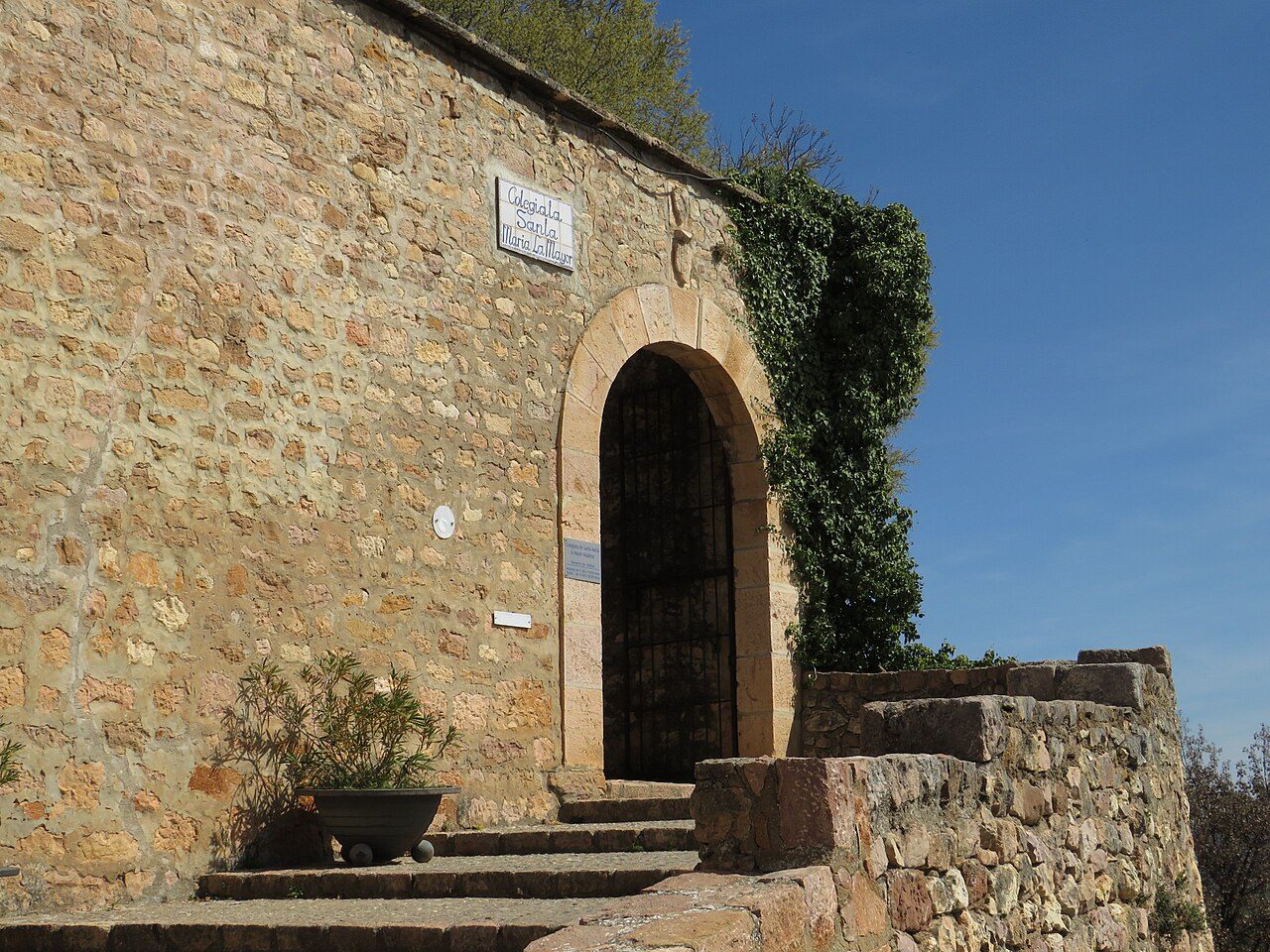
Photo: Enric · CC BY-SA 4.0
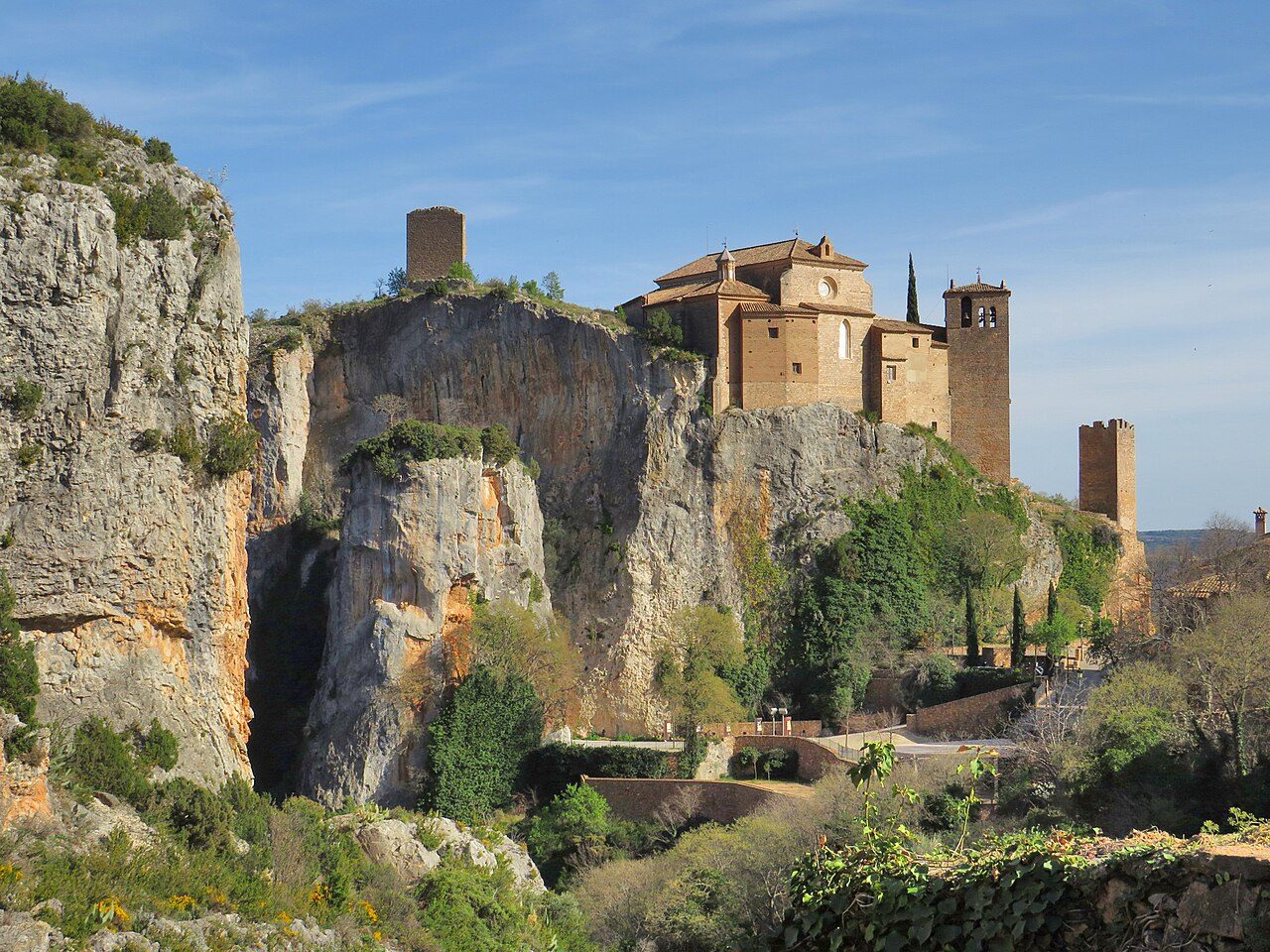
Photo: Enric · CC BY-SA 4.0
- early 9th c.
Andalusi foundation
Jalaf ibn Rashid founds Al-Qasr to protect Barbastro; the sources spell the name in different ways.
source: Prames, La Magia de Viajar por Aragón 74 - c. 1064–1067
Conquest
Sancho Ramírez wins it: Prames says around 1064, Románico Aragonés 1065 and Durán Gudiol 1067.
source: Marín Chaves et al., Lucas Mallada 6 (1994) - 1099
Consecration
Consecration of the church, with Abbot Galindo and an endowment from Peter I.
source: SIPCA, Colegiata de Alquézar - 1149–1252
Tortosa, Huesca and secularization
Placed under Tortosa in 1149, it passes to Huesca in 1242 and is secularized in 1252.
source: Monestirs de Catalunya - 1233
Artal de Foces
James I cedes the castle and the town to him.
source: Wikipedia, Alquézar - 1525–1532
New church
Juan de Segura builds the present church, at the town council's initiative; the main altarpiece dates from 1536.
source: Patrimonio Cultural de Aragón - 1931
Monument
Declared a historic monument; the town has been a historic ensemble since 1982.
source: Patrimonio Cultural de Aragón
Using the 3D model we worked out how big this castle was and what it took to build it. Here is a sample:
- How many people worked, how much stone, lime and carts, year by year
- Work by work and how we calculate it
- The data to download (CSV)
Leave your email and you will see everything, for this castle and all the others. As a gift, the castle poster.
Already signed up? Sign in with your email🏰 Enter the castle in 3D⏳ See how it changed⚒ How they built it