 CASTLE
The reconstruction shows Clavijo around 1177, when Navarre was claiming it from Alfonso VIII. On a great conglomerate rock, a curtain wall with round bastions closes off the eastern side, the only accessible one; at the top are the tower and a small enclosure. The plan comes from the orthophoto and a published plan; the height of the tower, the upper enclosure and the village are hypotheses. The battle of 844 with Saint James is a legend unsupported by the chronicles: the castle is real, the battle is not recorded.
Works in the browser on computers and phones, with nothing to install. Fly with the drone and switch between then and now.
Interpretive recreation: our approach ›
Or fly over it as the centuries go by: from the first settlement to today, with the town growing and the milestones of its history.
Or watch how it was raised: the years of building up to its heyday, with masons, treadwheel cranes, carts and the passing seasons (interpretive recreation).
🏰 Enter the castle in 3D⏳ See how it changed⚒ How they built it
- Period reconstructed
- c. 1177
- Town
- Clavijo
- County
- Rioja Media
- Province
- La Rioja
- Region
- La Rioja
- Coordinates
- 42.35047, -2.42740 · Open the map
Leave us your email and we'll send you the poster of this castle at its height, high resolution, ready to print, plus two wallpapers (computer and phone). We'll also tell you about news on this castle. No passwords; unsubscribe any time.
Are you at the castle? Get its stamp for your castle passport. We only check that you are within 300 m; we don't store your location.
The gate
The horseshoe arch dates from the 1970 restoration: before that no voussoirs remained and the original form is unknown. The model shows a simple arch.
Keep
Rectangular, with three floors with wooden floors, judging by the joist holes. It has lost its top: the height and crowning in the model are hypotheses.
Upper enclosure
Courtyard and rooms at the top of the rock. Much of the layout is a dashed line on Ruiz-Navarro's plan: it is a hypothesis.
West Room
About 70 m² in two rooms, excavated in 2001. The roof and the last use are late; from the Middle Ages only two postholes remain.
Cistern
Carved into the rock, on the north platform, to collect rainwater. It has not been modeled: it can be seen in today's view.
North tower
The thickest bastion, at the end of the curtain, together with the southern one.
Wall and wall walk
It closes only the eastern side, the only accessible one; to the west the cliff does the job. It is about 85 m long and 1.3–1.5 m thick; the engine makes it thicker.
South bastion
Southern end of the curtain. The sources disagree on the number of bastions: four surviving, five on the plan, six according to Acha.
Videos and stories about this place on our account.
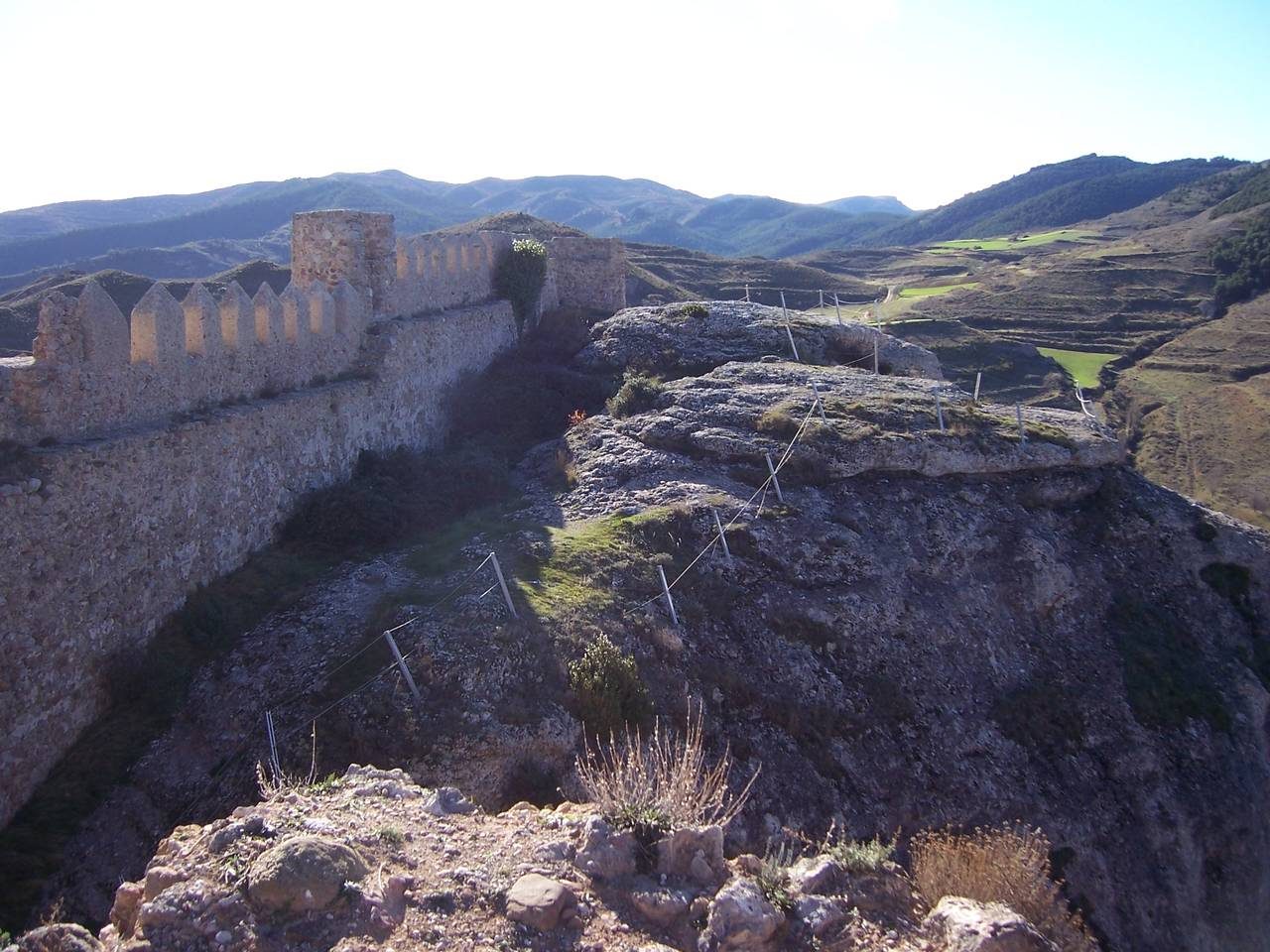
Photo: BigSus · CC BY 2.5
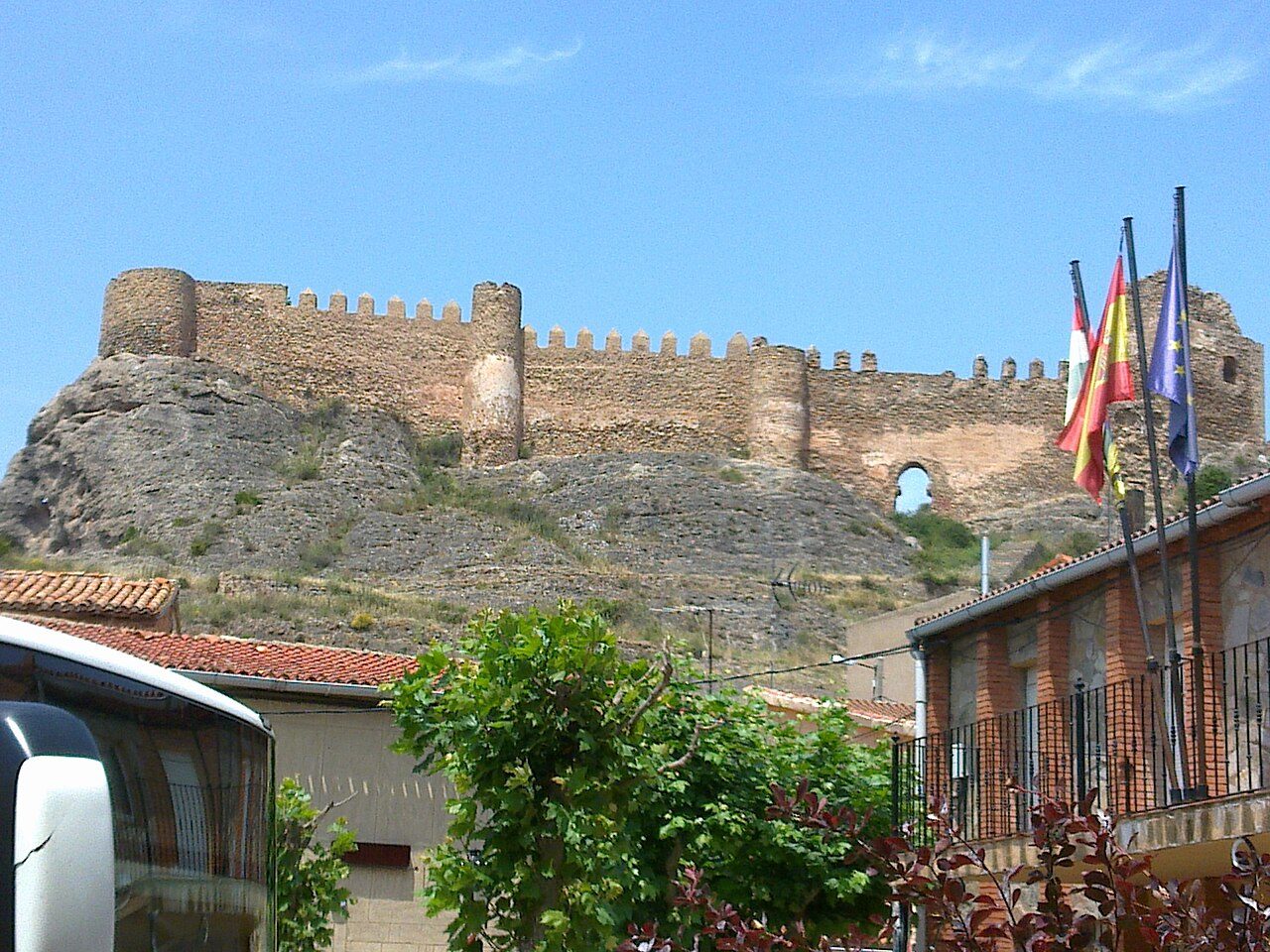
Photo: Rverendo · CC BY-SA 4.0
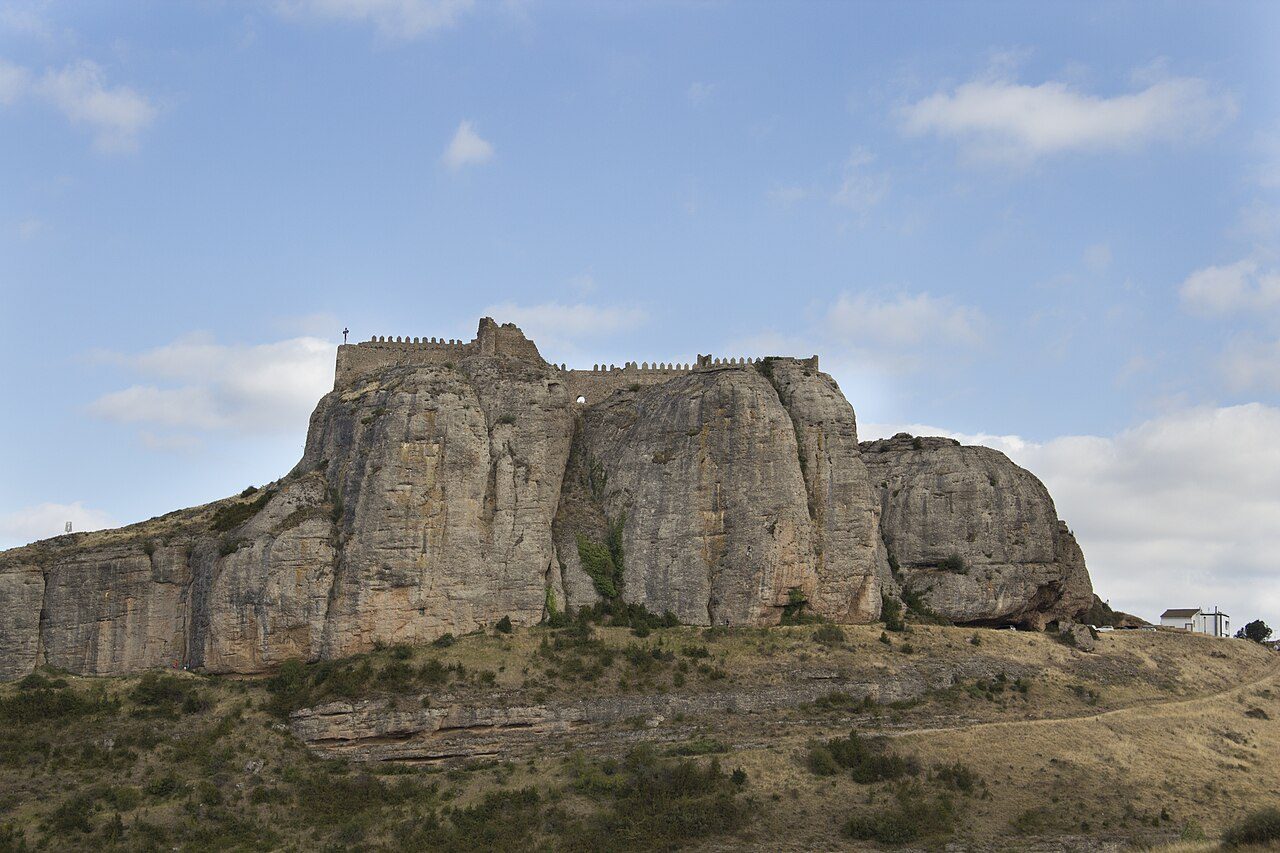
Photo: Bea.miau · CC0
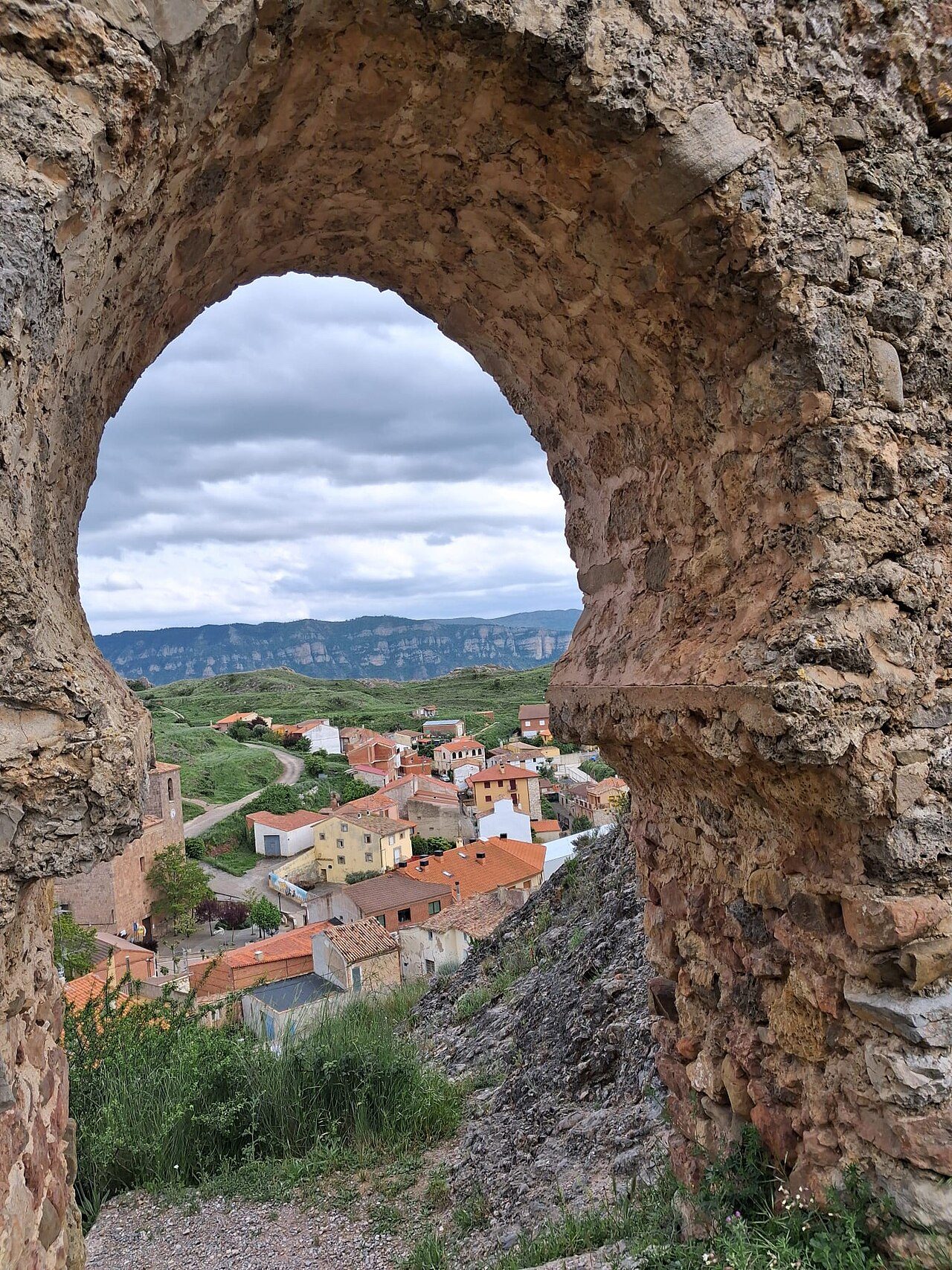
Photo: Azahara00 · CC BY-SA 4.0
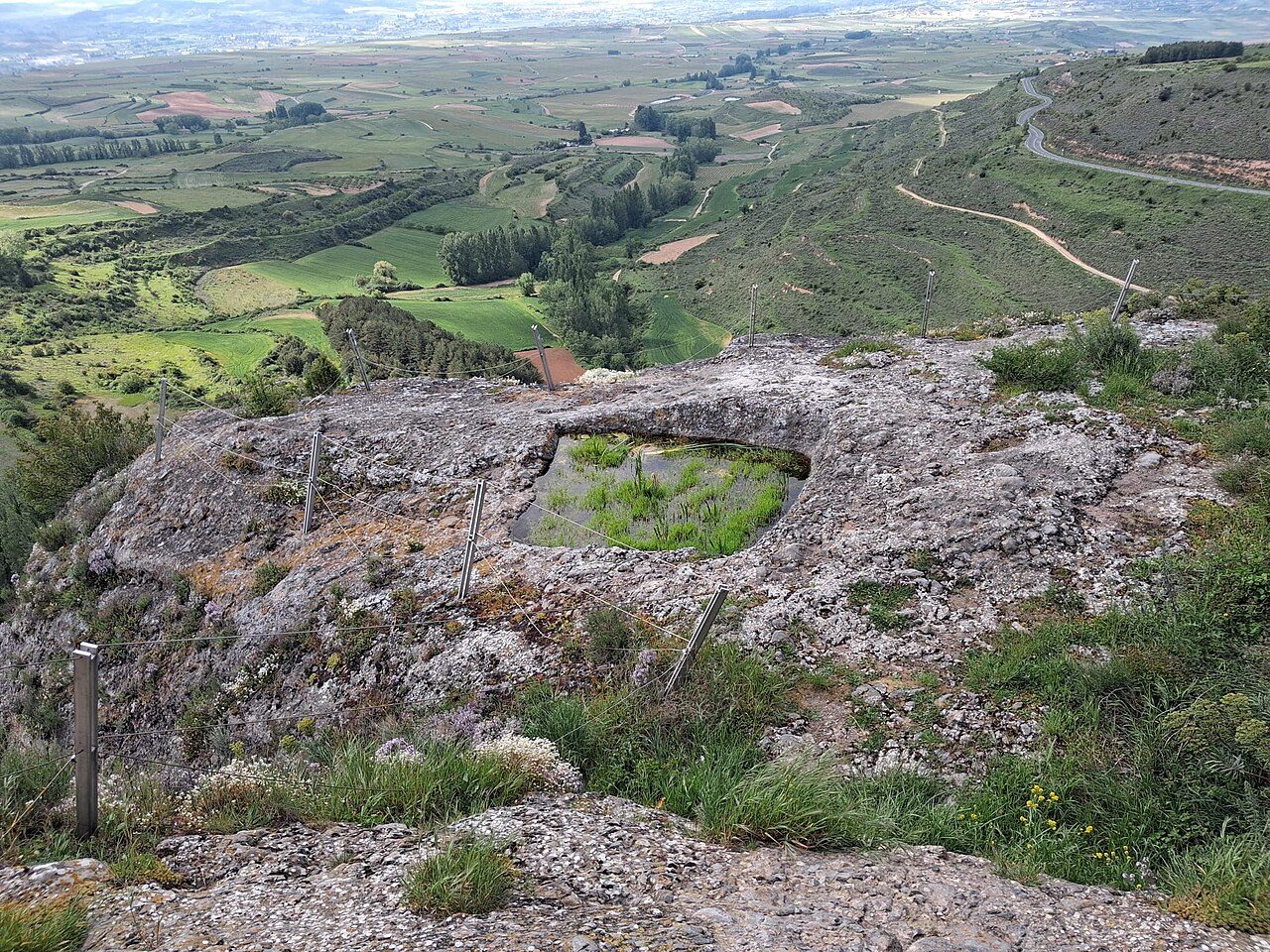
Photo: Azahara00 · CC BY-SA 4.0
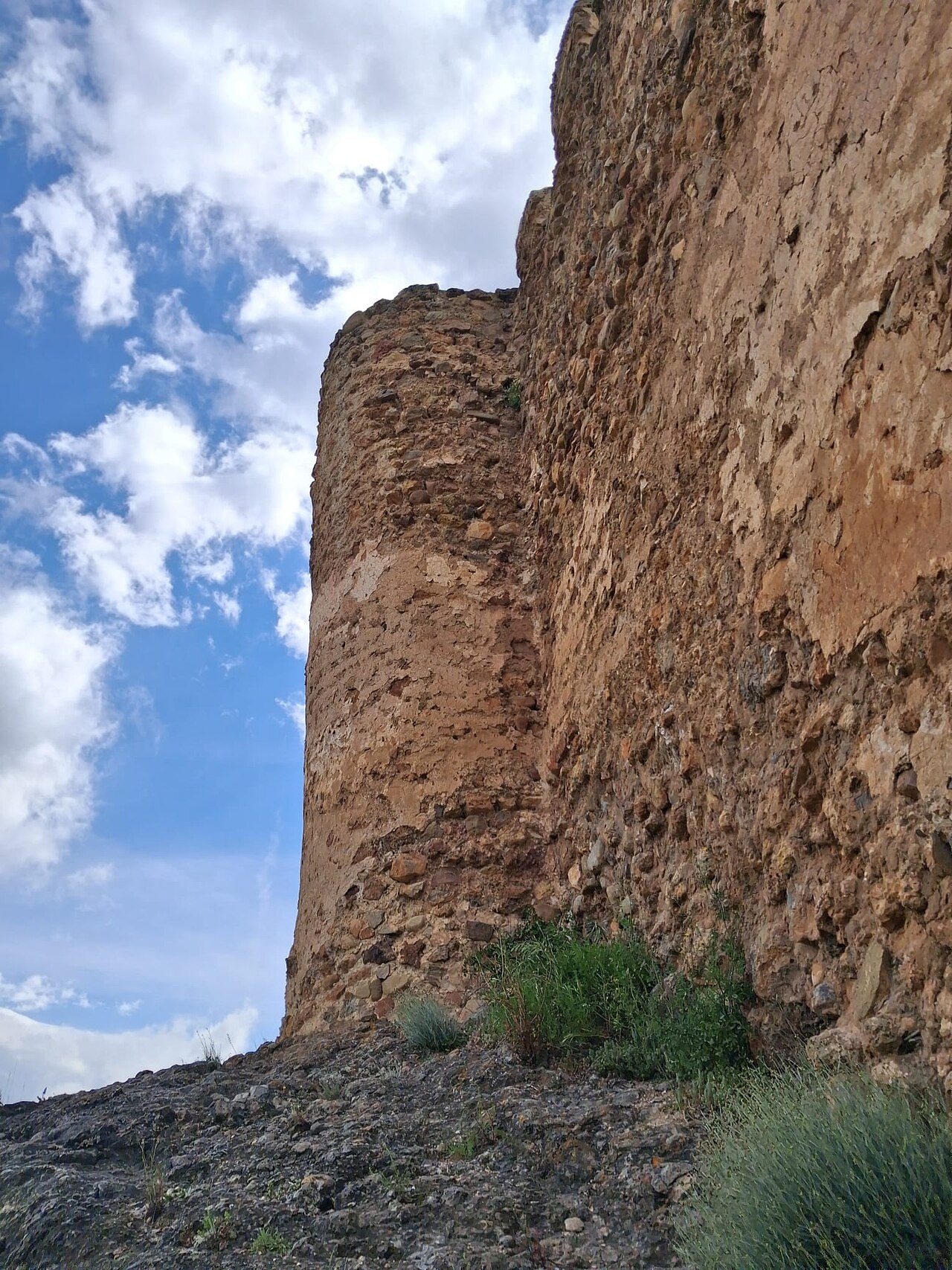
Photo: Azahara00 · CC BY-SA 4.0
- 844?
The battle that is not recorded
Tradition places Ramiro I here, with Saint James on horseback and the hundred maidens, but no contemporary chronicle mentions it and the charter that tells the story is a 12th-century forgery.
source: Falque, Habis 33 (2002) - 859–860
Albelda and Monte Laturce
Ordoño I and García Íñiguez defeat Musa ibn Musa near Albelda: a real battle that contributed elements to the legend.
source: Wikipedia: Battle of Monte Laturce - 9th–10th c.
Disputed origin
Ruiz-Navarro believes it was a Muslim hisn built before 923; Sabrás sees a 9th-century tower and a Christian wall from the first third of the 10th c.
source: Ruiz-Navarro, «El castillo de Clavijo», Brocar 16 (1990) - 923
La Rioja changes hands
Sancho Garcés I of Pamplona and Ordoño II of León take Viguera and Nájera, and the area passes into Christian hands.
source: Ruiz-Navarro, «El castillo de Clavijo», Brocar 16 (1990) - c. 960
Fernán González, prisoner
García Sánchez of Pamplona captures the Count of Castile at Cirueña and confines him in Clavijo: this is the first record of the castle.
source: Ruiz-Navarro, «El castillo de Clavijo», Brocar 16 (1990) - 1033
Grant to Albelda
Sancho III the Great grants the castle to the monastery of San Martín de Albelda, according to the catalog of Abbot Mirón.
source: Ruiz-Navarro, «El castillo de Clavijo», Brocar 16 (1990) - 1046–1085
Lords of Clavijo
Eneco López and Fortún López are recorded; in 1085 Urraca Íñiguez cedes the castle to the monastery of San Prudencio.
source: Ayuntamiento de Clavijo - 1167–1177
Frontier stronghold
Ferrán Garcés is castle governor in 1167; in 1170 it is placed in the trust of the lord of Cameros, and in 1177 Navarre claims it from Alfonso VIII.
source: Ayuntamiento de Clavijo - 1285
To the council of Logroño
Sancho IV confirms the castle and the town to Logroño, which had recovered them from Juan Alfonso de Haro.
source: Ruiz-Navarro, «El castillo de Clavijo», Brocar 16 (1990) - 1396–1476
In seigneurial hands
It passes through the Zúñigas and Juan de Luna, and in 1476 is sold to the counts of Aguilar for 400,000 maravedís.
source: Ruiz-Navarro, «El castillo de Clavijo», Brocar 16 (1990) - 19th c.
Last use and abandonment
The excavation points to a military reoccupation, perhaps during the Peninsular War, and to abandonment after 1844.
source: Ayuntamiento de Clavijo: intervención arqueológica de 2001 - 1931
Monument
The castle is declared a monument on 3 June.
source: Ayuntamiento de Clavijo - 1970–2002
Restorations
The Provincial Council rebuilds the wall and the gate in 1970, with the present horseshoe arch; between 1999 and 2002 it is consolidated and excavated.
source: Ayuntamiento de Clavijo
Using the 3D model we worked out how big this castle was and what it took to build it. Here is a sample:
- How many people worked, how much stone, lime and carts, year by year
- Work by work and how we calculate it
- The data to download (CSV)
Leave your email and you will see everything, for this castle and all the others. As a gift, the castle poster.
Already signed up? Sign in with your email🏰 Enter the castle in 3D⏳ See how it changed⚒ How they built it