 CASTLE
The reconstruction shows Morella around 1414, when Ferdinand I, Benedict XIII and Saint Vincent Ferrer met there to try to end the Western Schism. The line of the walls, the castle ring, the upper level and the churches come from the orthophoto and open mapping. The medieval state of the castle is largely hypothetical: the oldest description we have been able to read is from 1832, the houses are a sample generated on the contour lines, and the upper level has been raised above the official relief, which lowers it.
Works in the browser on computers and phones, with nothing to install. Fly with the drone and switch between then and now.
Interpretive recreation: our approach ›
Or fly over it as the centuries go by: from the first settlement to today, with the town growing and the milestones of its history.
Or watch how it was raised: the years of building up to its heyday, with masons, treadwheel cranes, carts and the passing seasons (interpretive recreation).
🏰 Enter the castle in 3D⏳ See how it changed⚒ How they built it
- Period reconstructed
- c. 1414
- Town
- Morella
- County
- Els Ports
- Province
- Castellón
- Region
- Valencian Community
- Coordinates
- 40.61970, -0.10174 · Open the map
Leave us your email and we'll send you the poster of this castle at its height, high resolution, ready to print, plus two wallpapers (computer and phone). We'll also tell you about news on this castle. No passwords; unsubscribe any time.
Are you at the castle? Get its stamp for your castle passport. We only check that you are within 300 m; we don't store your location.
Upper level
The castle's third level, with the cistern. The 1832 description places barracks and an oven there, largely later; the buildings of 1414 are hypothetical.
Torre Celoquia
The castle's great tower, with a rectangular plan of 10 × 8 varas and rounded corners, three floors and a chapel in the basement. Approximate position: it has disappeared today.
Second level
An irregular elliptical ring around the crag, on a plateau of bare rock. The old part is of ordinary ashlar.
Torre de la Pardala
Tower on the west wall. The name recalls the legend of Josefa Bosch; its exact position in the model is approximate.
Entrance to the second level
In 1832 a masonry drum covered this gate. The medieval route of the approach is unknown and the model only shows it schematically.
Possible albacar
Hypothesis: the space without houses between the town and the castle would be the old albacar of the hisn, the Andalusi refuge enclosure.
Rammed-earth wall
This stretch and the northern one, up to the Pantó, are considered the oldest in the enclosure, with a plinth and rammed earth attributed to the Islamic period.
Convent of San Francisco
Founded in 1272, with a single-nave church with diaphragm arches consecrated in 1390. A popular work places the 1414 talks here; we have not been able to confirm this in an academic source.
Santa María la Mayor
A three-nave Gothic church, built between 1265 and 1343, with Pedro Segarra's raised choir under construction in 1414. The engine only approximates its volume.
Portal de San Miguel
Main entrance to the town, between two 14th-century towers.
Portal de San Mateo
One of the two main gates, to the southeast of the town.
Torre del Pantó
A 12.5 m rectangular tower, documented from the 15th century, of masonry with dressed-stone corners.
Arches of Santa Lucía
14th-century Gothic aqueduct, outside the model: only the point of interest remains.
Videos and stories about this place on our account.
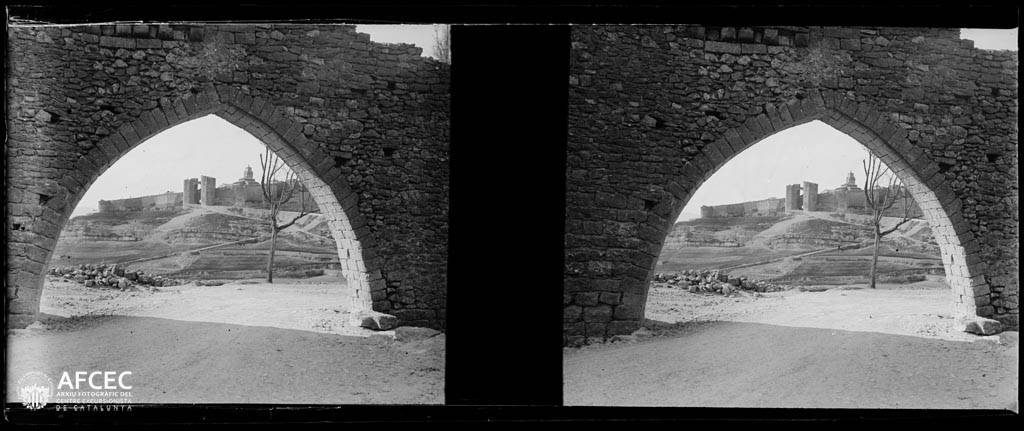
Photo: Marcel·lí Gausachs i Gausachs · Public domain
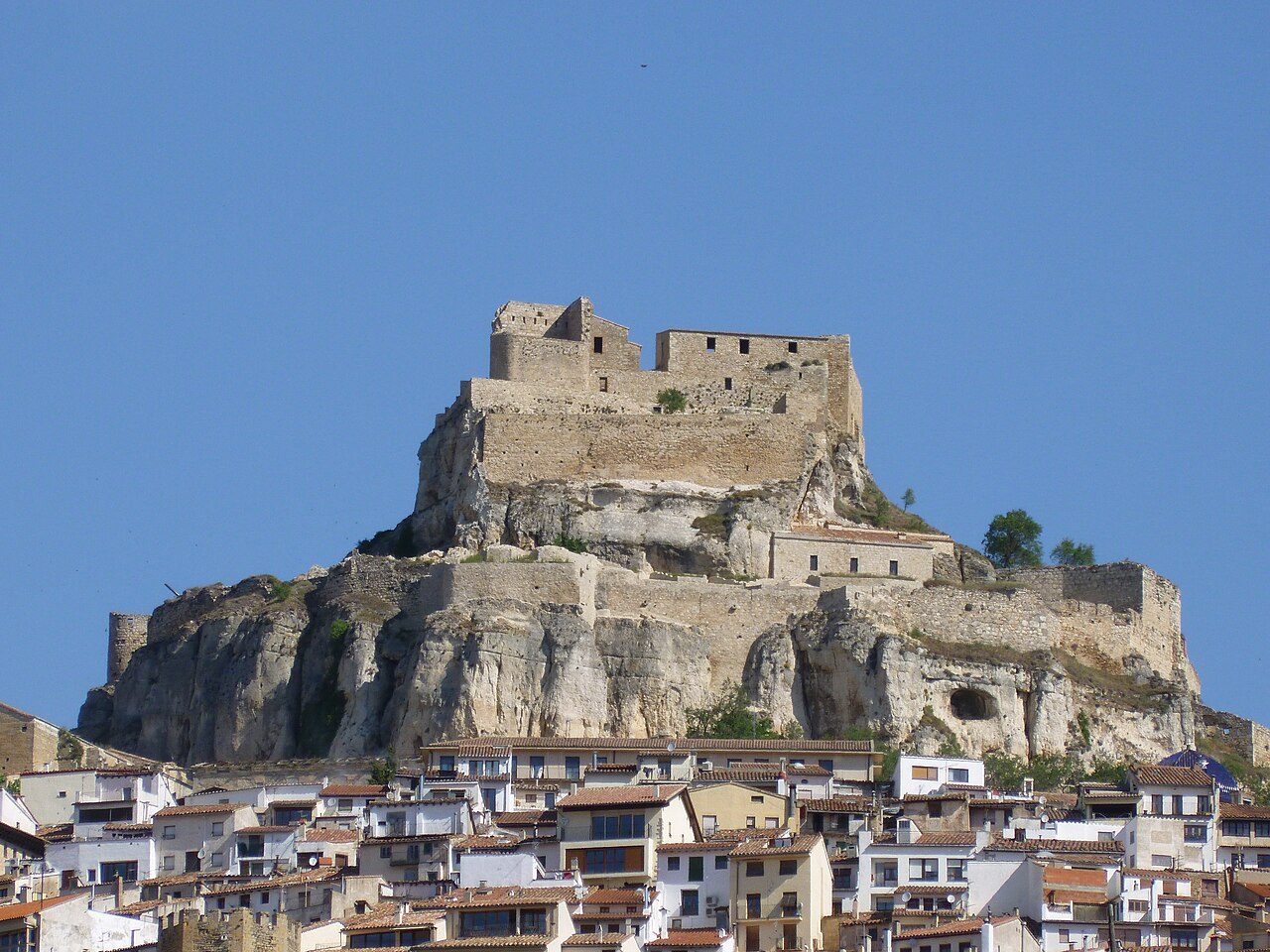
Photo: Millars · CC BY-SA 3.0 es
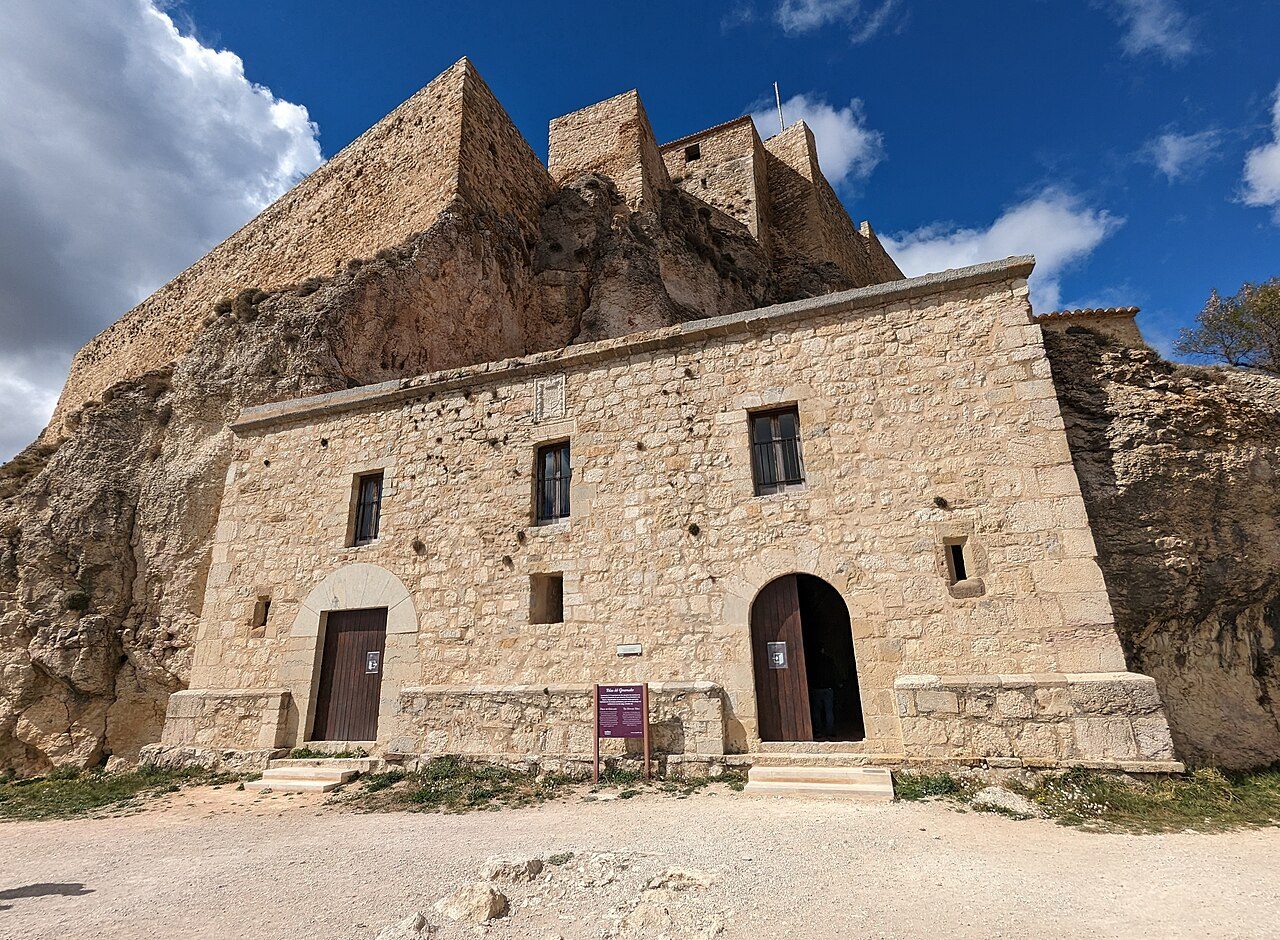
Photo: Rodelar · CC BY-SA 4.0
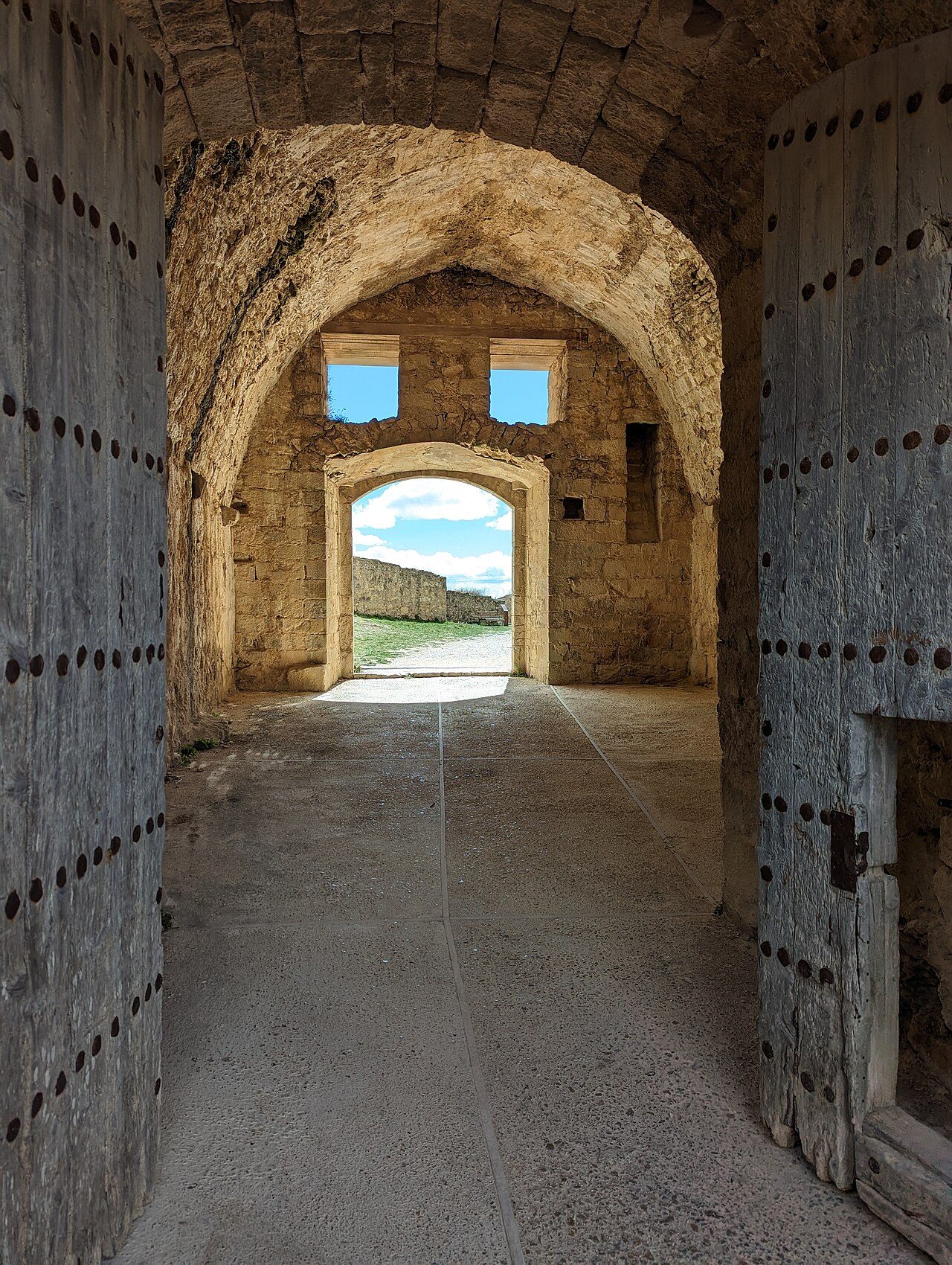
Photo: Rodelar · CC BY-SA 4.0
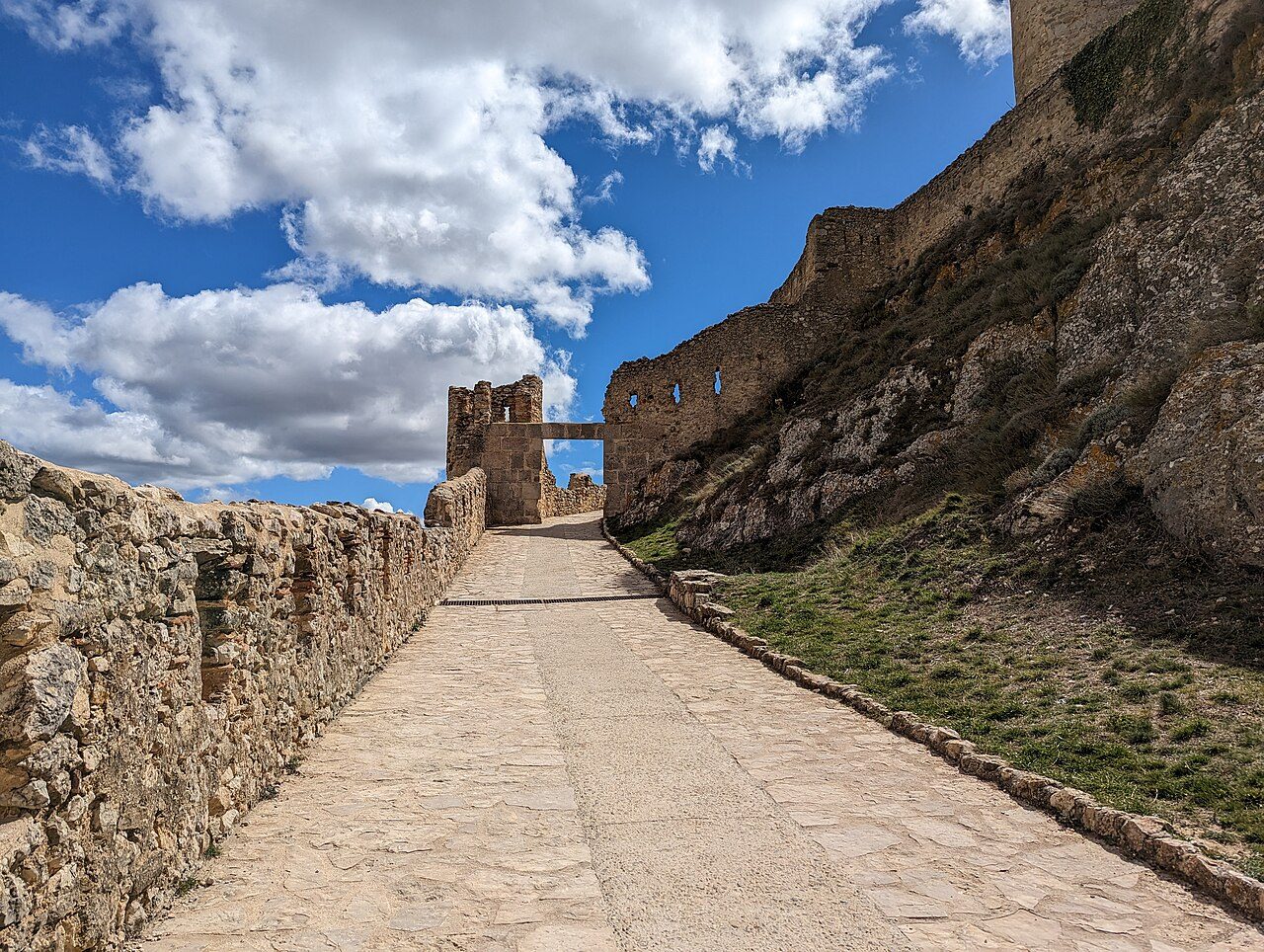
Photo: Rodelar · CC BY-SA 4.0
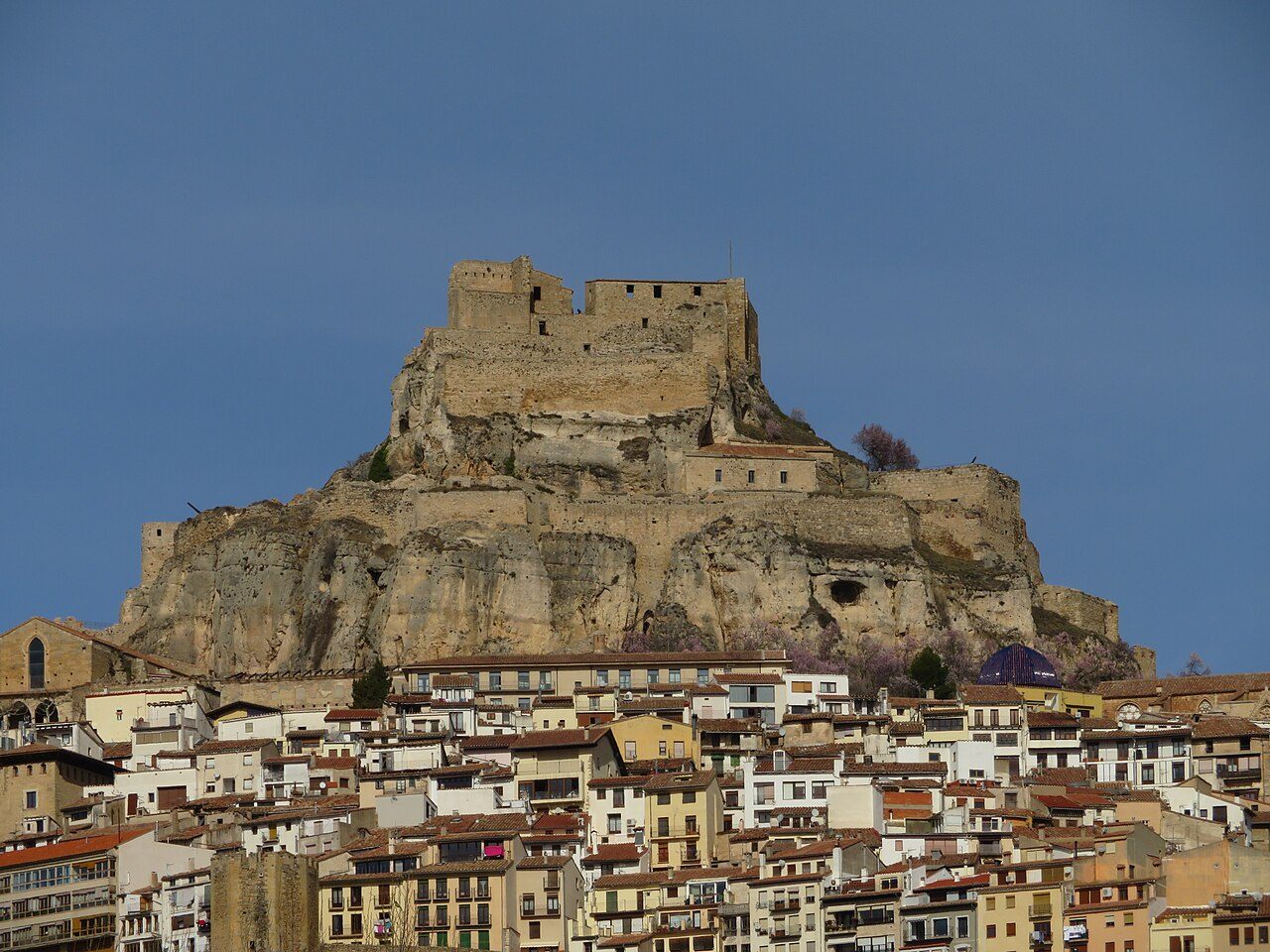
Photo: Juan Emilio Prades Bel · CC BY 4.0
- 3rd millennium BC
The first inhabitants of the mesa
The Neolithic pottery collected on the castle mesa is the oldest human trace found so far at the site.
source: J. Andrés Bosch, El Castell de Morella. Una aproximació als seus orígens - 11th c.
The hisn and its albacar
Under the taifa of Tortosa, Morella is an important stronghold, and the oldest rammed-earth stretches of wall could belong to the albacar of the hisn.
source: F. Falomir, Quad. Preh. Arq. Cast. 25 (2006) - 1084
El Cid at Morella
El Cid attacks the stronghold and on 14 August defeats Sancho I of Aragon and al-Mudhaffar at the Battle of Morella.
source: Gran Enciclopèdia Catalana - 1232
Blasco de Alagón takes Morella
The Aragonese noble Blasco de Alagón occupies the stronghold, which an 1832 military report recalls as handed over by treachery, and in 1233 grants a settlement charter there.
source: Gran Enciclopèdia Catalana - 1249–1250
Royal town
After the dispute with Blasco de Alagón, Morella passes to the Crown and James I ratifies the settlement charter.
source: Gran Enciclopèdia Catalana - 1272–1390
San Francisco, at the foot of the castle
The Franciscans settle below the castle in 1272 and their single-nave church is consecrated in 1390.
source: F. Falomir, Quad. Preh. Arq. Cast. 25 (2006) - 14th c.
The great wall
Work begins around 1330 and the main part is built under Peter the Ceremonious, with about 2,400 m of wall and fourteen towers.
source: Spain.info, Murallas de Morella - 1414
The Morella talks
Ferdinand I, Benedict XIII and Saint Vincent Ferrer meet in Morella to try to end the Western Schism, without success.
source: Gran Enciclopèdia Catalana - 1707–1711
The War of the Spanish Succession
The castle suffers two long sieges and falls in both for lack of supplies, while the upper part is remodeled.
source: F. Aparici, Informe sobre Morella (1832) - 1813
Cannon against the French
Elío's 24-pounders bring down the supply store, almost all the rooms of the castle and the top floor of the great tower.
source: F. Aparici, Informe sobre Morella (1832) - 1838–1840
Cabrera's capital
The Carlists get in through the latrines in January 1838 and, after Von Rahden's alterations, Espartero bombards it in 1840 and hits the powder magazine.
source: Castells Catalans - 1931–2021
Monument and visitable ruin
Declared a monument in 1931, the town council recovers its management in 2007 and the Ministry of Culture consolidates the towers of San Francisco and the Pardala.
source: Revista Poble
Using the 3D model we worked out how big this castle was and what it took to build it. Here is a sample:
- How many people worked, how much stone, lime and carts, year by year
- Work by work and how we calculate it
- The data to download (CSV)
Leave your email and you will see everything, for this castle and all the others. As a gift, the castle poster.
Already signed up? Sign in with your email- F. Aparici, Informe sobre Morella (1832)
- F. Falomir, Dels convents de Sant Francesc i les Agustines… (2006)
- J. Andrés Bosch, El Castell de Morella. Una aproximació als seus orígens
- Gran Enciclopèdia Catalana
- Castells Catalans
- Spain.info, Murallas de Morella
- Comunitat Valenciana, Castillo y murallas
- OpenStreetMap (traça de muralles i edificis)
🏰 Enter the castle in 3D⏳ See how it changed⚒ How they built it