 CASTLE
The reconstruction shows the rock around 1415: the castle of the Templars and of Montesa, newly remodeled as a palace for Benedict XIII, crowning a town enclosed by the medieval wall. The rock was joined to the mainland only by a low sand tombolo that storms could submerge, and the sea reached the foot of the walls. The Renaissance bastions of Philip II (1576–1579) did not yet exist.
Works in the browser on computers and phones, with nothing to install. Fly with the drone and switch between then and now.
Interpretive recreation: our approach ›
Or fly over it as the centuries go by: from the first settlement to today, with the town growing and the milestones of its history.
Or watch how it was raised: the years of building up to its heyday, with masons, treadwheel cranes, carts and the passing seasons (interpretive recreation).
🏰 Enter the castle in 3D⏳ See how it changed⚒ How they built it
- Period reconstructed
- c. 1415
- Town
- Peníscola
- County
- Baix Maestrat
- Province
- Castellón
- Region
- Valencian Community
- Coordinates
- 40.35887, 0.40762 · Open the map
Leave us your email and we'll send you the poster of this castle at its height, high resolution, ready to print, plus two wallpapers (computer and phone). We'll also tell you about news on this castle. No passwords; unsubscribe any time.
Are you at the castle? Get its stamp for your castle passport. We only check that you are within 300 m; we don't store your location.
Parade ground
The open courtyard of the main floor, surrounded by the chapel, the hall and the palace. In 1415 it was also enclosed by the Templar living quarters on the east side, now gone.
Church of Santa María
A parish church of Romanesque origin, rebuilt with Gothic elements after a fire in the mid-14th c. Benedict XIII and Clement VIII held ceremonies in it.
Templar portal
The main entrance between two towers, with a frieze of coats of arms of the Temple and its leaders. The bastion that stands in front of it today is from the 16th c.
Templar church
A single nave with a slightly pointed barrel vault and a semicircular apse. It occupies the mighty north tower and was the castle's tallest volume.
Gothic hall
The castle's great hall. A wooden gallery ran alongside the courtyard, of which only the corbels remain.
Papal quarters
Benedict XIII's main chamber, library and study, with windows onto the sea and the papal coat of arms above the door. The library is now scattered between the Vatican and Paris.
Conclave Hall
A large vaulted cellar on the ground floor. Tradition places the election of Clement VIII here in 1423.
Cistern
The castle cistern, vital on an isolated rock; the rock also had a spring of drinking water.
Stables and guardroom
Vaulted rooms on the ground floor for the horses and the garrison, just behind the entrance hall.
Portal de Sant Pere
A gate opened by the Papa Luna (1414) as a landing stage at sea level. It is the only surviving stretch of the medieval wall.
The tombolo
A narrow tongue of sand, the only access by land. In storms the sea washed over it and Peñíscola became an island.
Papa Luna's Stairway
A stairway cut into the rock, on the outside of the east wall, for embarking directly from the castle. There are many legends about this stairway.
Videos and stories about this place on our account.
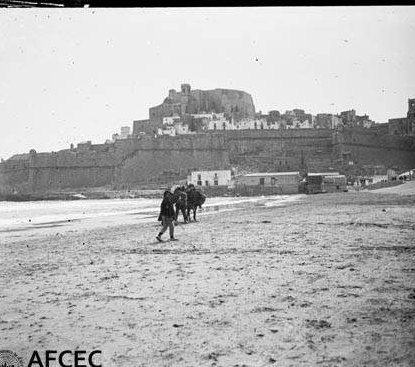
Photo: Marcel·lí Gausachs i Gausachs · Public domain
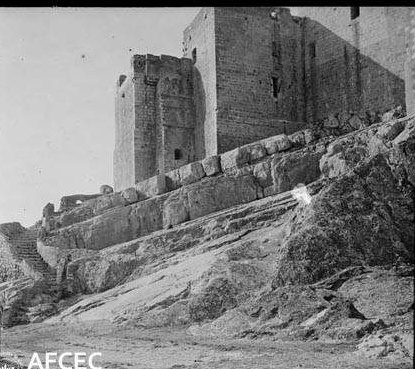
Photo: Marcel·lí Gausachs i Gausachs · Public domain
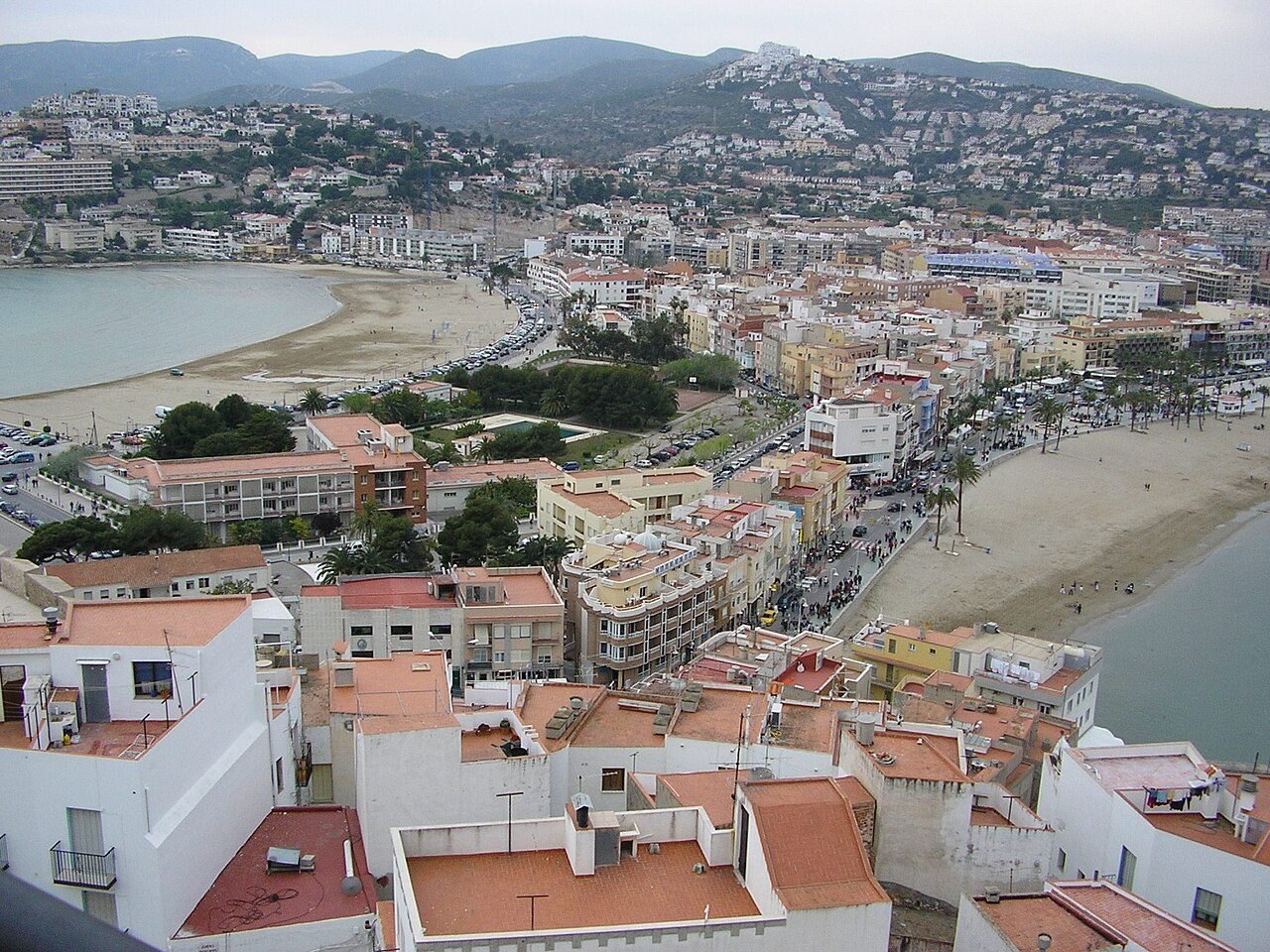
Photo: (vegeu la fitxa a Commons) · CC BY-SA 3.0
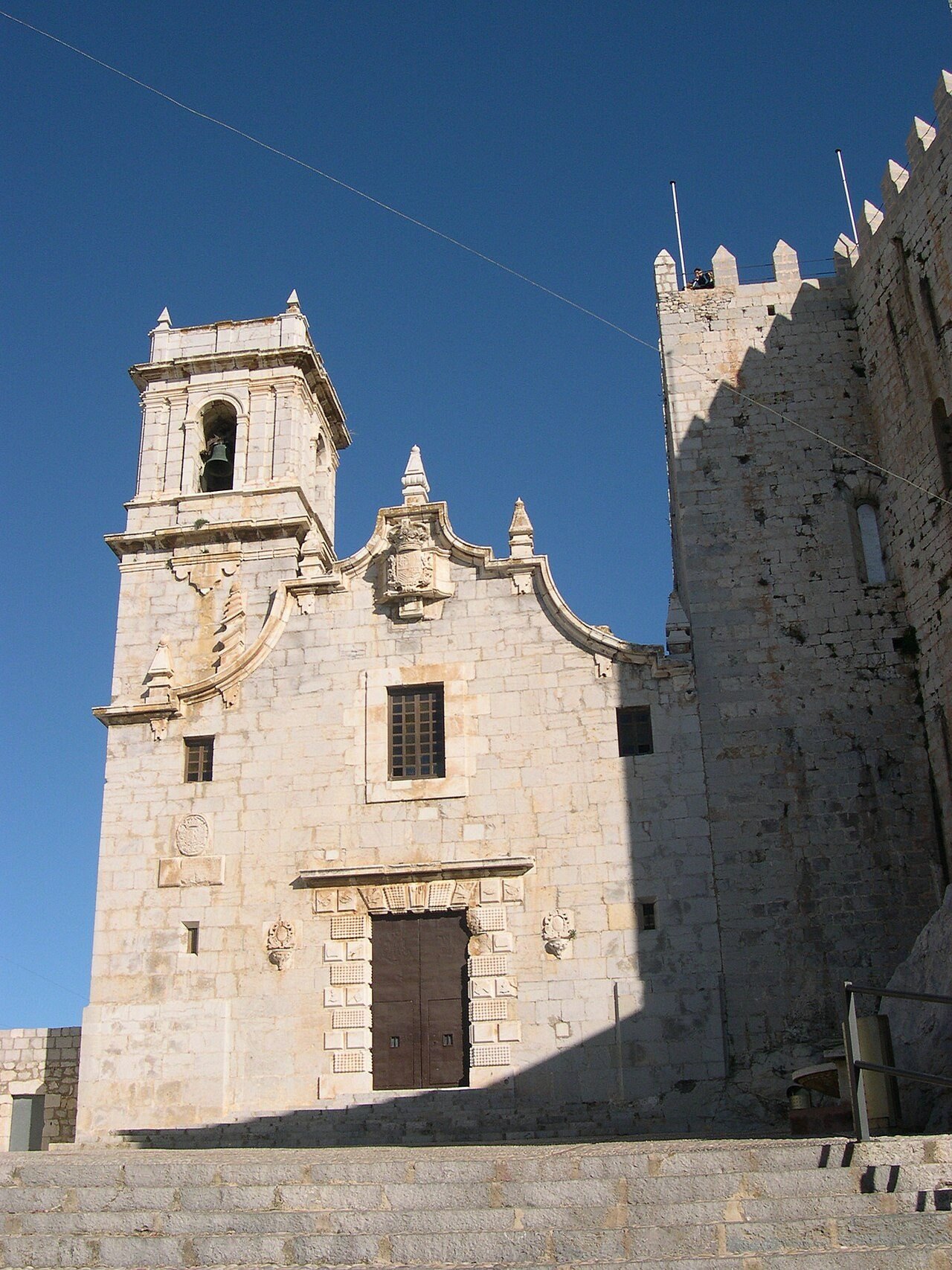
Photo: Pere prlpz · CC BY-SA 3.0
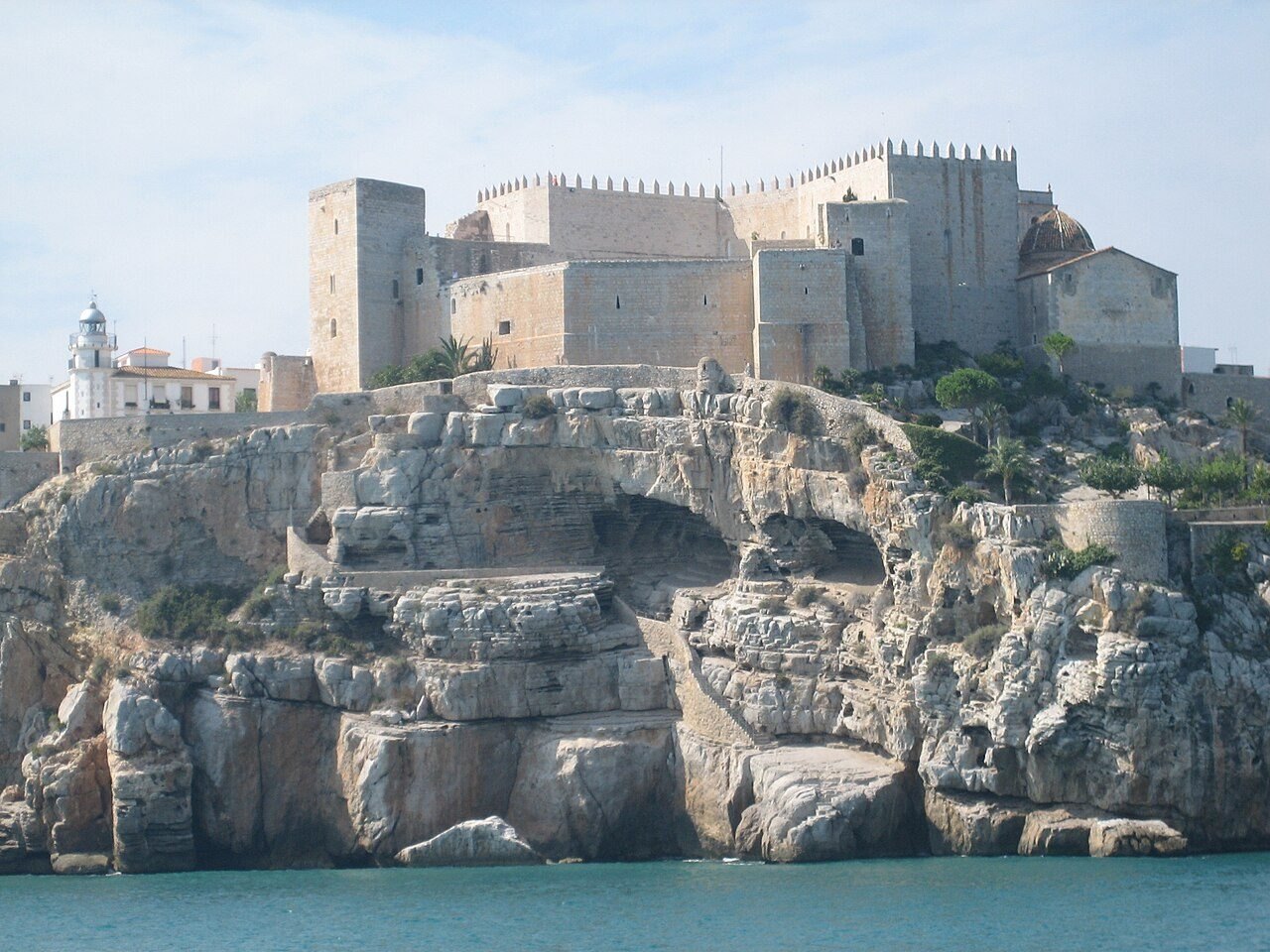
Photo: Millars · CC BY-SA 3.0 es
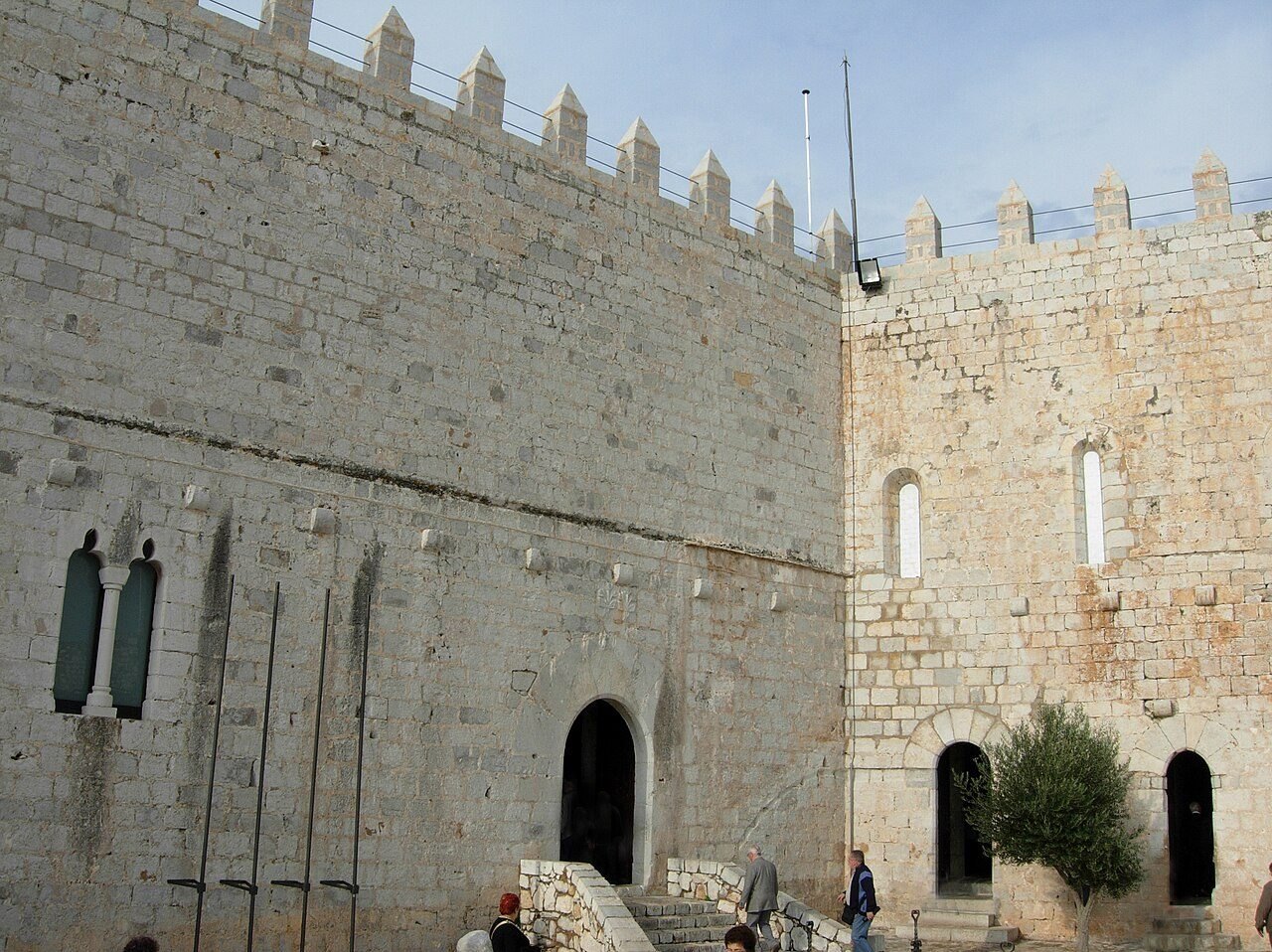
Photo: Fagairolles 34 · CC BY-SA 4.0
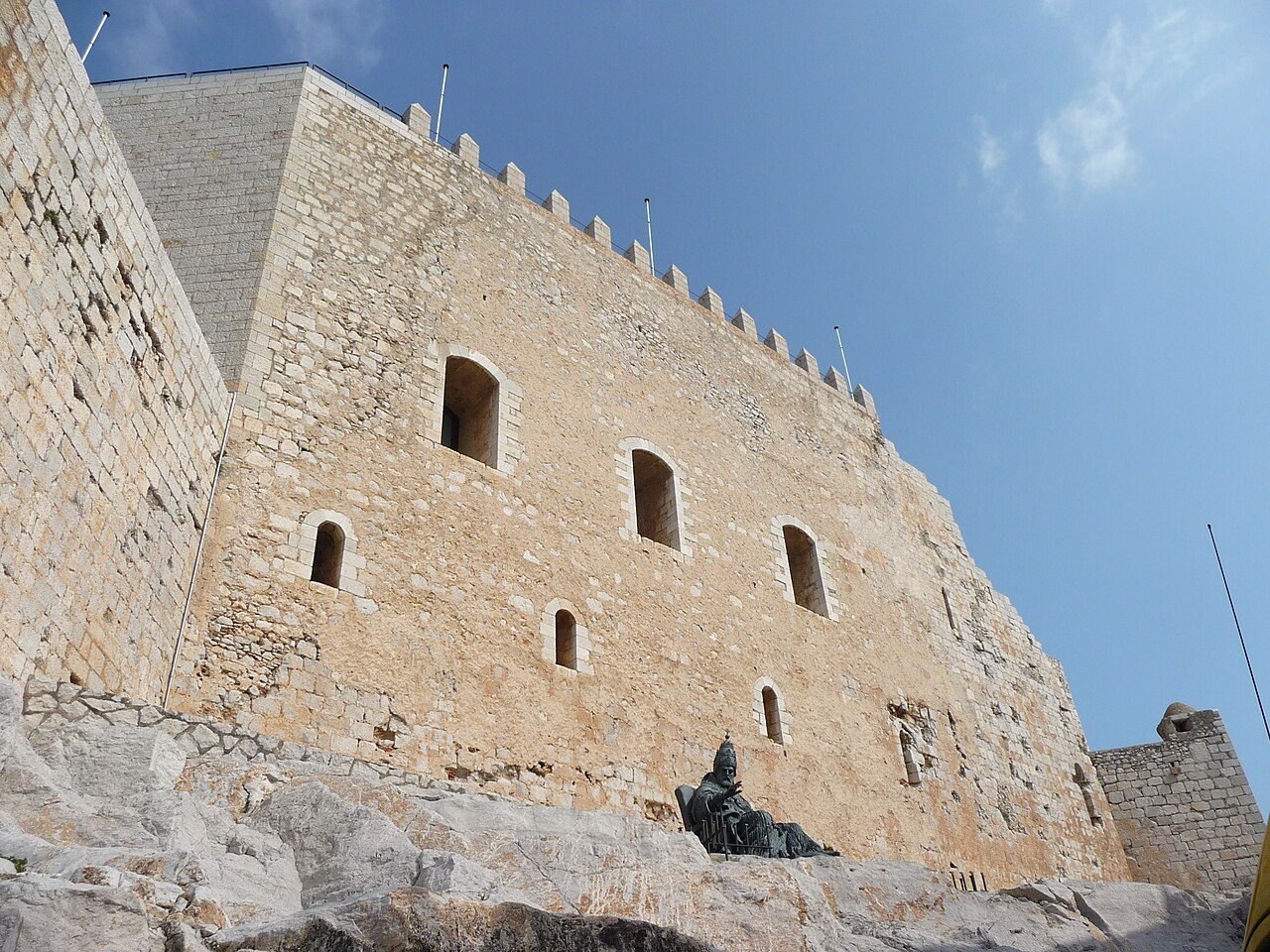
Photo: Olga Gairin · CC BY-SA 3.0
- Antiquity
Iberian settlement
The municipality has Iberian settlements (Ilercavones) such as el Poaig and Els Barrancs; the ancient occupation of the rock itself is poorly documented.
source: Wikipedia (es): Peñíscola - 8th–13th c.
Andalusi Banîskula
Arab geographers call the town Banîskula. On the summit stood an alcazaba, on which the Templar castle was built.
source: Viquipèdia (ca): Castell de Peníscola - 1225–1233
James I takes Peñíscola
James I fails in a siege in 1225. In 1233, isolated after the fall of Burriana, the town surrenders by capitulation; in 1251 it receives a settlement charter.
source: Viquipèdia (ca): Castell de Peníscola - 1294
The Tortosa exchange
The Templar master Berenguer de Cardona cedes to James II the Temple's rights over Tortosa in exchange for castles in northern Valencia, Peñíscola among them.
source: Viquipèdia (ca): Castell de Peníscola - 1294–1307
Templar construction
Commander Arnau de Banyuls builds a new castle over the alcazaba, of isodomic ashlars and pointed barrel vaults. A letter of 1305 gives instructions for the works.
source: Barros Costa et al., El castillo templario de Peñíscola (XV EGA) - 1307–1317
End of the Temple
In 1307 James II arrests the Templars and places the castle in the hands of royal administrators. The order is suppressed in 1312.
source: Barros Costa et al., El castillo templario de Peñíscola (XV EGA) - 1317–1319
Order of Montesa
The Order of Montesa is created; it receives Peñíscola in 1319 and practically completes the fortress.
source: Viquipèdia (ca): Castell de Peníscola - 1411–1423
Seat of the Papa Luna
Benedict XIII settles in the castle in 1411 and a palace with a large library is built for him. Deposed by the Council of Constance, he holds out there until his death in 1423; in 1414 he opens the Portal de Sant Pere at sea level.
source: Viquipèdia (ca): Castell de Peníscola - 1429
Clement VIII abdicates
Gil Sánchez Muñoz, elected in Peñíscola as Clement VIII, renounces in 1429 and brings the Western Schism to an end.
source: Viquipèdia (ca): Castell de Peníscola - 1576–1579
Philip II's wall
Vespasiano Gonzaga designs a landward front with bastions in front of the medieval wall; Bautista Antonelli directs the work and the Portal Fosc.
source: Balaguer Dezcallar, La muralla renacentista de Peñíscola (FORTMED 2015) - 1705–1707
Siege in the War of the Spanish Succession
Peñíscola remains loyal to Philip V and withstands the siege by the Archduke's troops. Between 1708 and 1714 the Ermitana is built against the north tower.
source: Viquipèdia (ca): Castell de Peníscola - 1812–1814
Peninsular War
Suchet occupies the stronghold in 1812. In 1814 General Elío retakes it after a bombardment that flattens almost the whole town and destroys part of the castle.
source: Wikipedia (es): Peñíscola - 1890–1972
From stronghold to monument
The army leaves the stronghold in 1890; the castle becomes a national monument in 1931 and the Diputación de Castellón restores it from 1957.
source: Viquipèdia (ca): Castell de Peníscola - 1956–2015
Film set
Location for Calabuch (Berlanga, 1956), El Cid (Anthony Mann, 1961) and recent TV series.
source: Ajuntament de Peníscola
Using the 3D model we worked out how big this castle was and what it took to build it. Here is a sample:
- How many people worked, how much stone, lime and carts, year by year
- Work by work and how we calculate it
- The data to download (CSV)
Leave your email and you will see everything, for this castle and all the others. As a gift, the castle poster.
Already signed up? Sign in with your email- Viquipèdia (ca): Castell de Peníscola
- Wikipedia (es): Castillo de Peñíscola
- Castillo de Peñíscola (Diputación de Castellón)
- Barros Costa et al., El castillo templario de Peñíscola (XV EGA)
- Balaguer Dezcallar, La muralla renacentista de Peñíscola (FORTMED 2015)
- Ajuntament de Peníscola
- MDT i ortofoto: IGN · PNOA (CC BY 4.0)
- Cadastre (INSPIRE)
🏰 Enter the castle in 3D⏳ See how it changed⚒ How they built it