 CASTLE
The reconstruction shows the castle of La Palma around 1750, the last period in which everything known about it coexists: an elongated enclosure about 100 m long above a meander of the Ebro, with rectangular towers, the great west tower, the manor house and the Baroque hermitage of El Pilar. The layout follows the reconstruction by Alejandro Martínez Alcrudo, checked against the orthophoto. Battlements, heights and roofs are hypotheses, and the Islamic origin is inferred only from the type of masonry.
Works in the browser on computers and phones, with nothing to install. Fly with the drone and switch between then and now.
Interpretive recreation: our approach ›
Or fly over it as the centuries go by: from the first settlement to today, with the town growing and the milestones of its history.
- Period reconstructed
- c. 1750
- Town
- Sástago
- County
- Ribera Baja del Ebro
- Province
- Zaragoza
- Region
- Aragon
- Coordinates
- 41.31028, -0.37556 · Open the map
Leave us your email and we'll send you the poster of this castle at its height, high resolution, ready to print, plus two wallpapers (computer and phone). We'll also tell you about news on this castle. No passwords; unsubscribe any time.
Are you at the castle? Get its stamp for your castle passport. We only check that you are within 300 m; we don't store your location.
North gate
Off-center entrance at the northern end, with a semicircular arch. It kept the Alagón coat of arms until 1969.
Main tower
An 8 × 6 m plan built against the outside of the wall, with a truncated-pyramid elevation over 17 m high. Today it has lost its inner face.
Hermitage of El Pilar
Baroque single-nave hermitage with side chapels and a lath-and-plaster barrel vault, from the late 17th or the 18th c. Abandoned in 1936, its roof has been rebuilt since 2024.
Manor house
Built against the head of the hermitage, on two floors. It was a residence, perhaps the hermitage keeper's house and, finally, a Civil Guard barracks.
East tower
The only tower on the east side. Today only its outline at ground level can be seen.
South enclosure
Separated by a cross wall and lower. The sources speak of two enclosures; that they are these is a hypothesis.
The northern pit
Unidentified oval pit. The legend of the White Lady speaks of a well in the castle, but nothing proves it is this one.
Videos and stories about this place on our account.
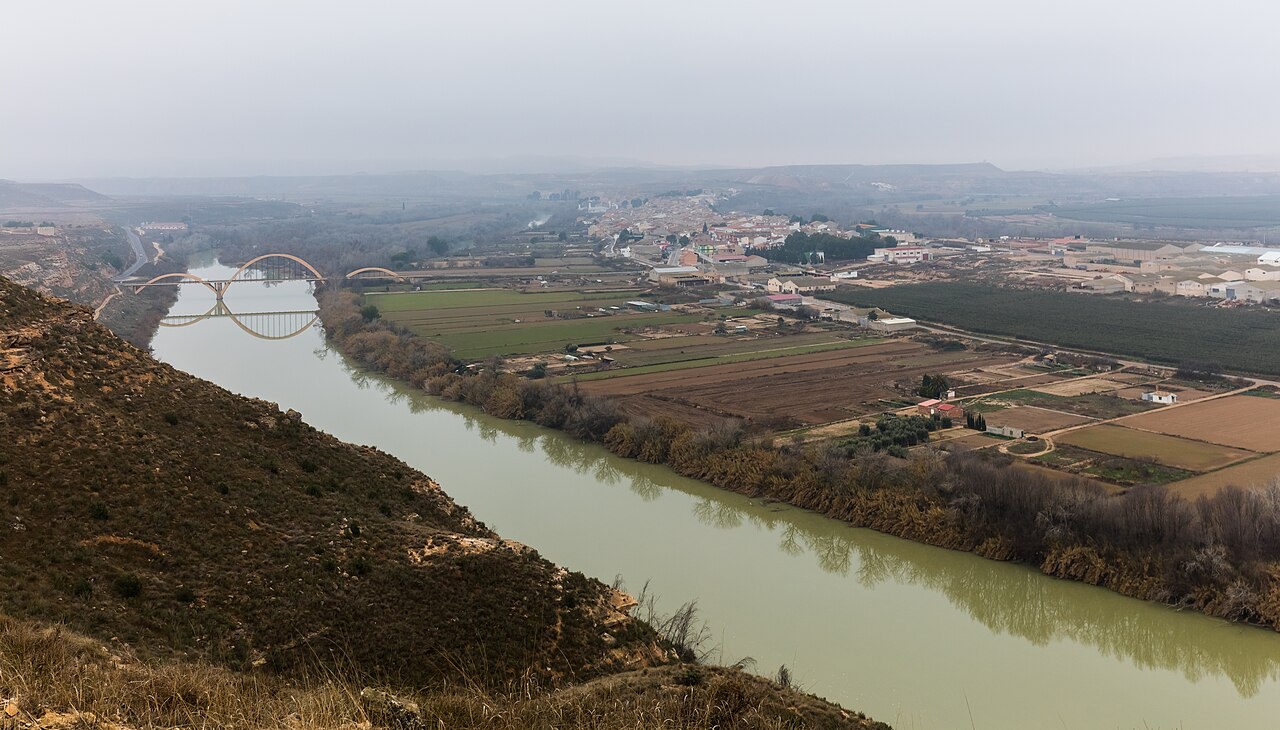
Photo: Diego Delso · CC BY-SA 4.0
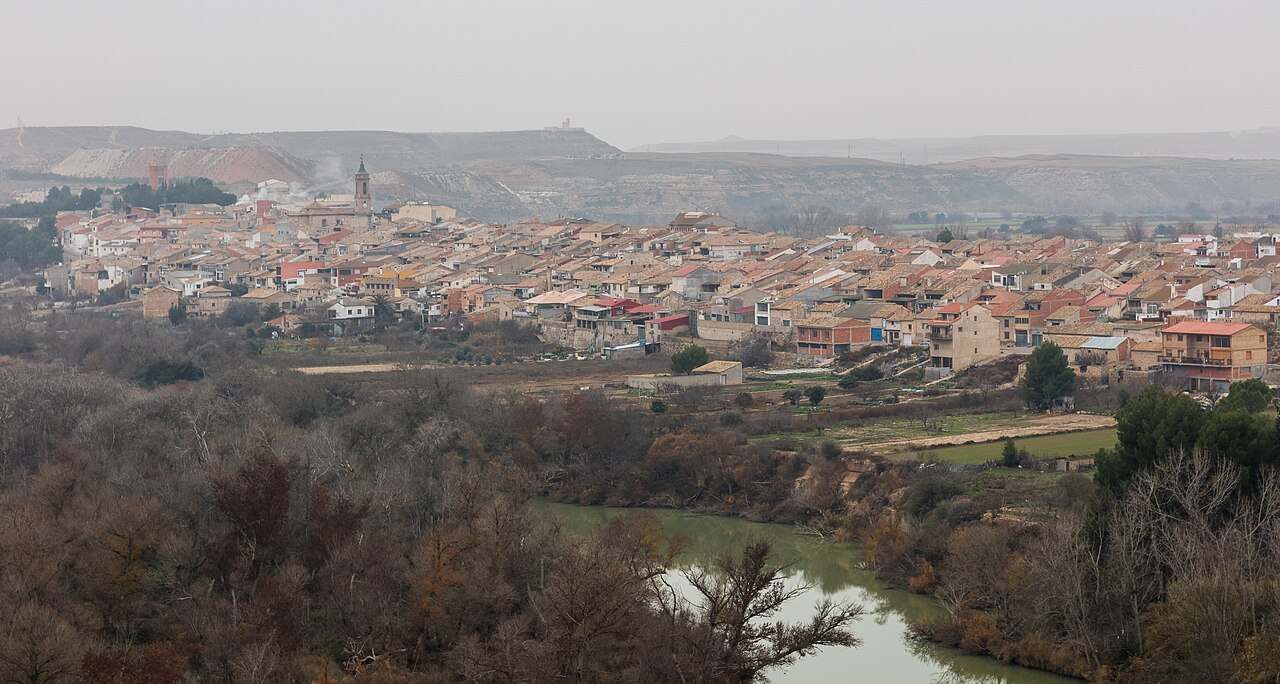
Photo: Diego Delso · CC BY-SA 4.0
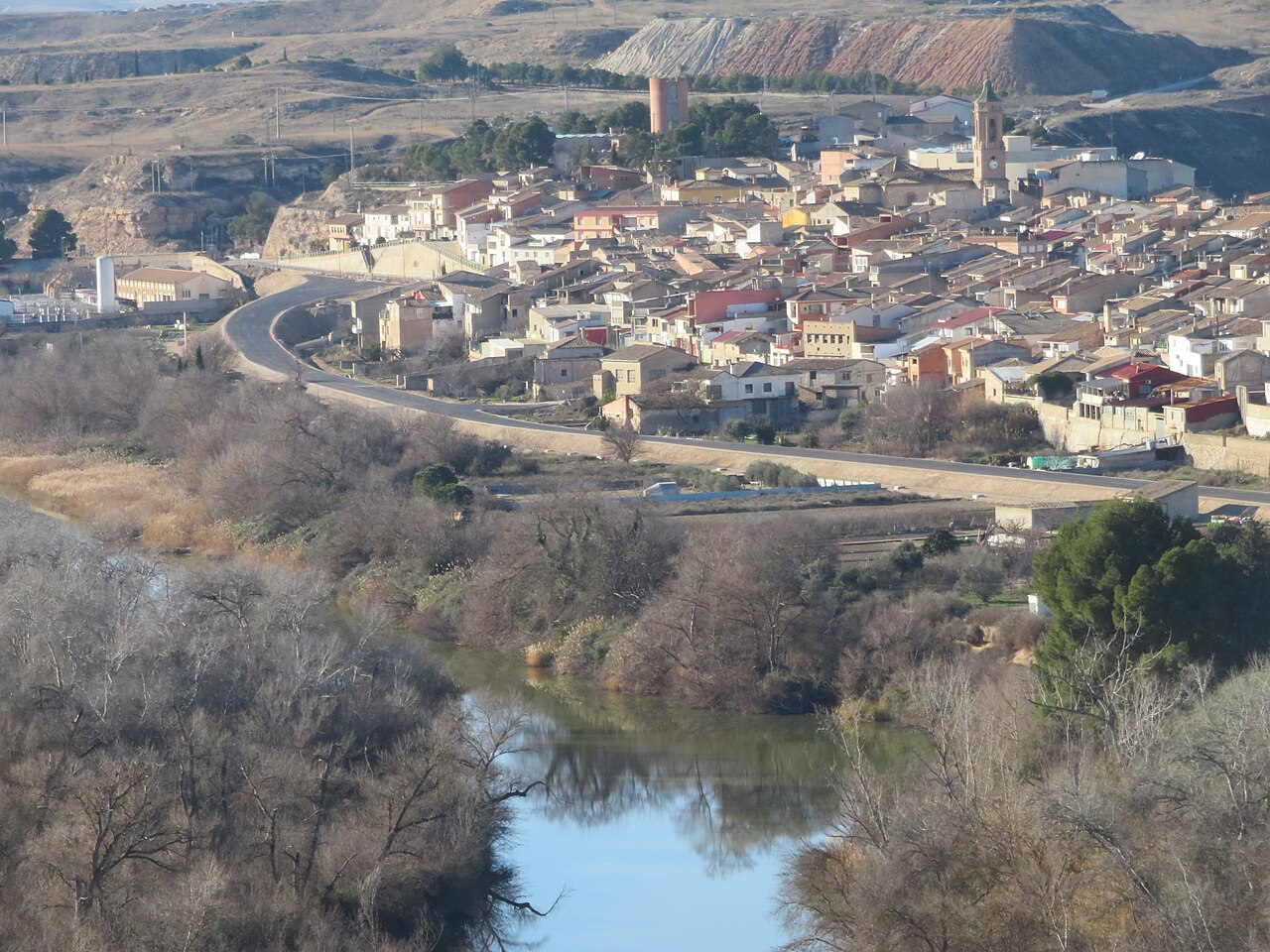
Photo: Juan Emilio Prades Bel · CC BY 4.0
- 10th–11th c.
A hisn above the meander
Based on its typology and masonry, the elongated enclosure with rectangular towers is tentatively dated to the Islamic period.
- 1147
First mention
Sástago appears for the first time in documents as royal land.
- 1199
Peter II grants it
Peter II hands the castle and the town over to Artal de Alagón, and shortly afterward they return to the Crown.
- 1232–1233
Sástago for Morella
James I gives Sástago to Blasco de Alagón in exchange for Morella and María de Huerva, and the place becomes tied to this lineage.
- 1511
Counts of Sástago
Ferdinand the Catholic grants the title of count to Blasco de Alagón y Olcina, lord of the place.
- c. 1695–1750
The hermitage of El Pilar
The Baroque hermitage is built inside the enclosure, dated by the sources to the late 17th or the 18th c.
- 1845
Still the count's palace
According to Madoz, the castle still serves as the count's palace, although it is already described as an inhabited ruin.
- 1936
Abandonment
After serving as a Civil Guard barracks, the complex is abandoned and the hermitage falls out of use.
- 2024
The first consolidation
A Site of Cultural Interest since 2006, the castle receives its first works, which rebuild the roof of the hermitage and reinforce the tower.