 CASTLE
The reconstruction shows La Suda around 1294, when James II obtains the Templar share of Tortosa and the castle returns in full to the Crown. The elongated enclosure still keeps its Andalusi layout and serves as a prison and as a residence for the itinerant court. At its feet, the walled city stretches down to the Ebro, with the Romanesque cathedral, the Jewish quarters of Remolins and the shipyards.
Works in the browser on computers and phones, with nothing to install. Fly with the drone and switch between then and now.
Interpretive recreation: our approach ›
Or fly over it as the centuries go by: from the first settlement to today, with the town growing and the milestones of its history.
Or watch how it was raised: the years of building up to its heyday, with masons, treadwheel cranes, carts and the passing seasons (interpretive recreation).
🏰 Enter the castle in 3D⏳ See how it changed⚒ How they built it
- Period reconstructed
- c. 1294
- Town
- Tortosa
- County
- Baix Ebre
- Province
- Tarragona
- Region
- Catalonia
- Coordinates
- 40.81531, 0.52414 · Open the map
Leave us your email and we'll send you the poster of this castle at its height, high resolution, ready to print, plus two wallpapers (computer and phone). We'll also tell you about news on this castle. No passwords; unsubscribe any time.
Are you at the castle? Get its stamp for your castle passport. We only check that you are within 300 m; we don't store your location.
Great palace
A shared space in the 1149 division and lodging for the itinerant court. The royal palace that survives is from the 14th–15th c.
Romanesque cathedral
Consecrated in 1178, according to tradition on the site of the great mosque. The Gothic cathedral replaces it from 1347 onward.
Parade ground
The lower level of the enclosure, where the paths from Remolins and from the Rastre arrive. From there a ramp climbs to the upper part.
Tubalina Tower
The tower at the tip of the enclosure, above the cathedral (also called the Tower of Túbal or Punta del Diamant). Its hollow interior may have served as a dungeon.
Caliphal well (944)
A well more than 40 m deep dug under Abd al-Rahman III down to the level of the Ebro, connected to galleries that held a mill and two ovens.
Andalusi necropolis
Some thirty Muslim tombs from the 11th–12th c., the only open-air Islamic necropolis in Catalonia.
Church of Sant Joan
The castle chapel, documented in 1149; it gives the fortress the name of Castell de Sant Joan.
Prisons of La Suda
The Costums de Tortosa place the prison in La Suda, with three spaces according to the severity of the sentence.
Remolins: Jewish and Moorish quarters
The old Jewish quarter, over the former shipyards (1149), and the new one (1228), further up; the Moorish quarter was probably in this neighborhood as well.
Ebro shipyards
A shipyard founded by the caliph in 944–945; the Christian shipyards were on the riverbank, in the Templar sector.
Pontoon bridge
A crossing over the Ebro toward Ferreries. Its exact position in 1294 is not documented.
Wall of the medina
An Umayyad wall with four iron-reinforced gates; the larger 14th-century enclosure is later.
Videos and stories about this place on our account.
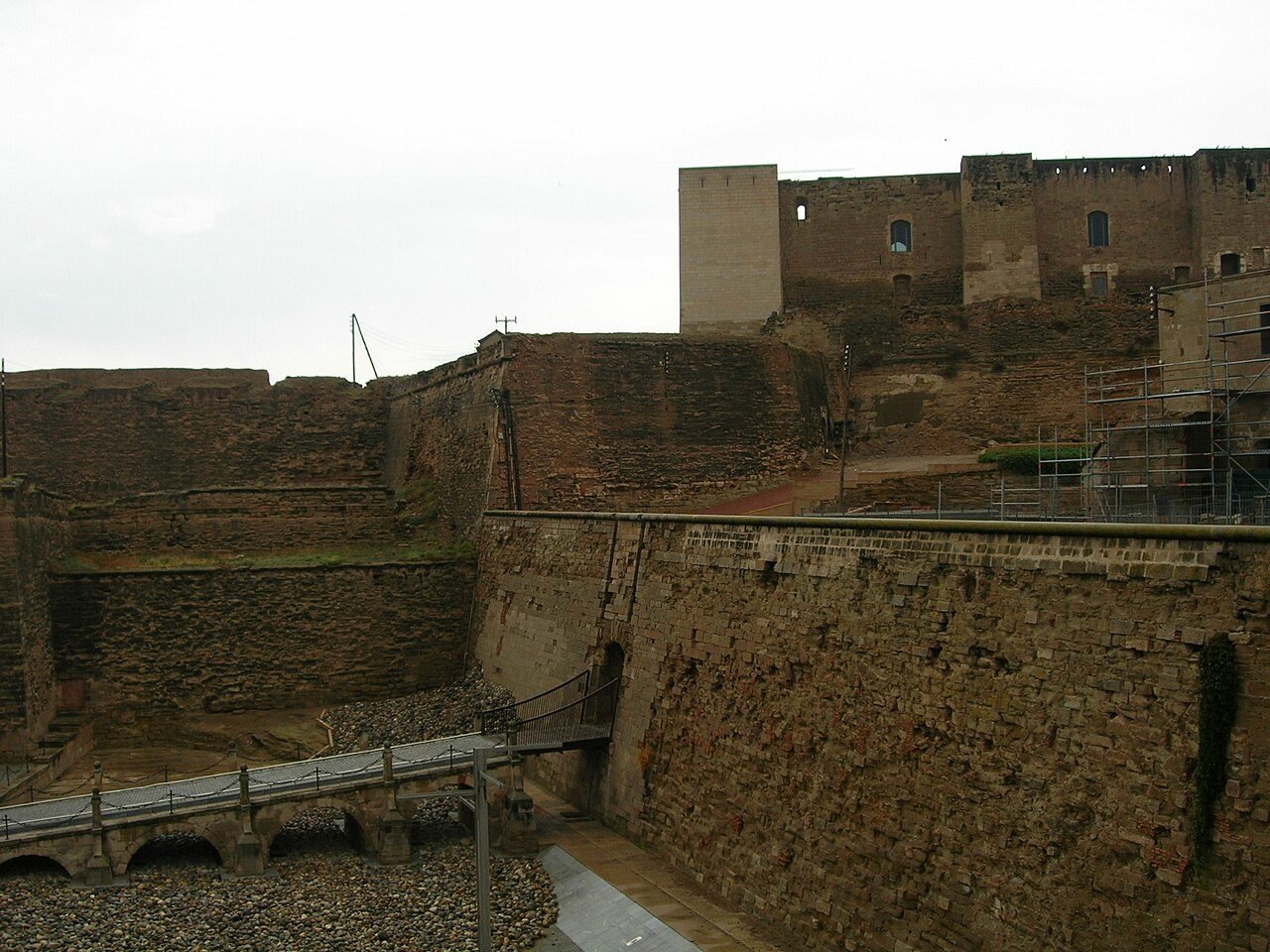
Photo: Enfo · CC BY-SA 3.0
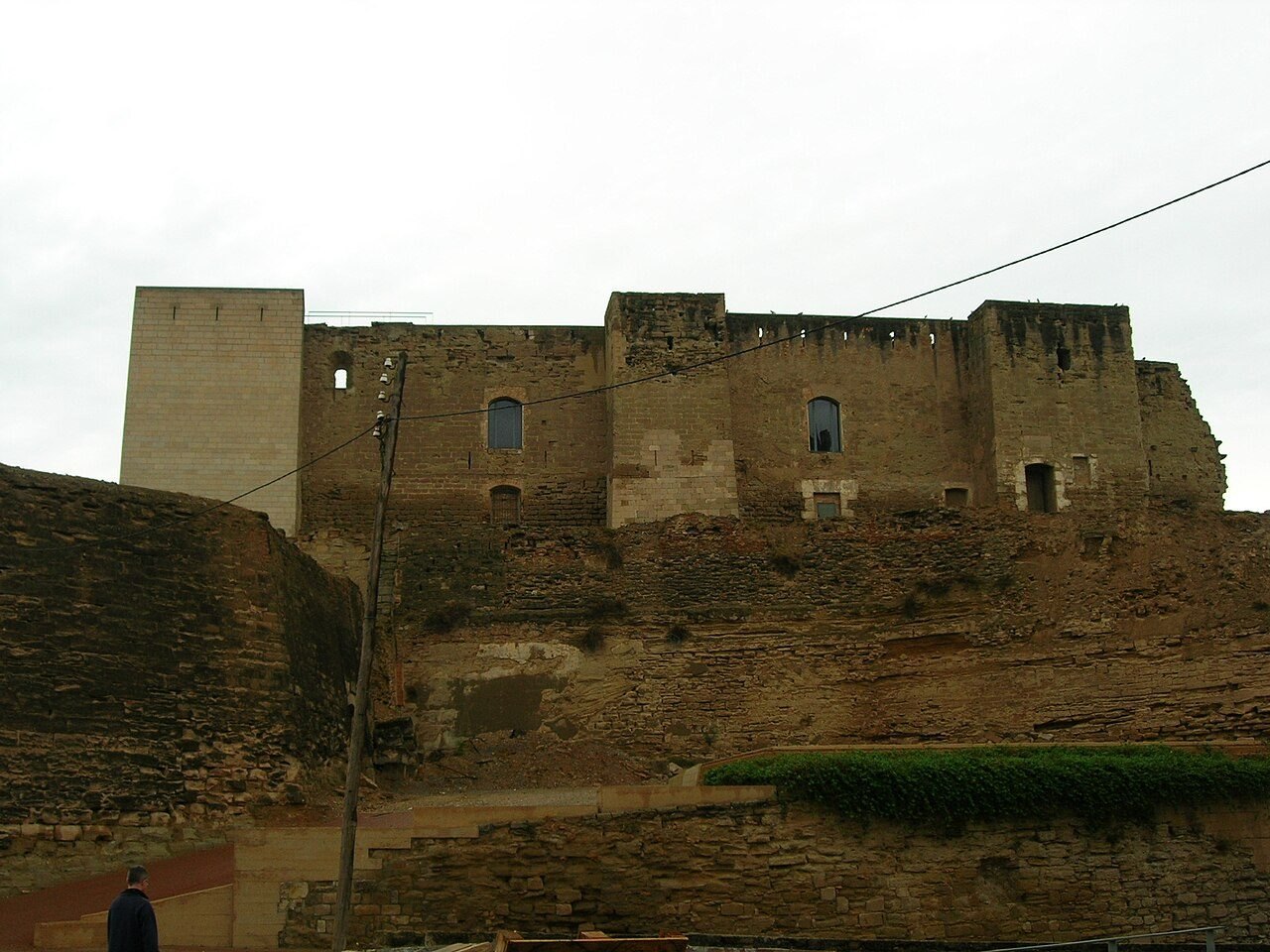
Photo: Enfo · CC BY-SA 3.0
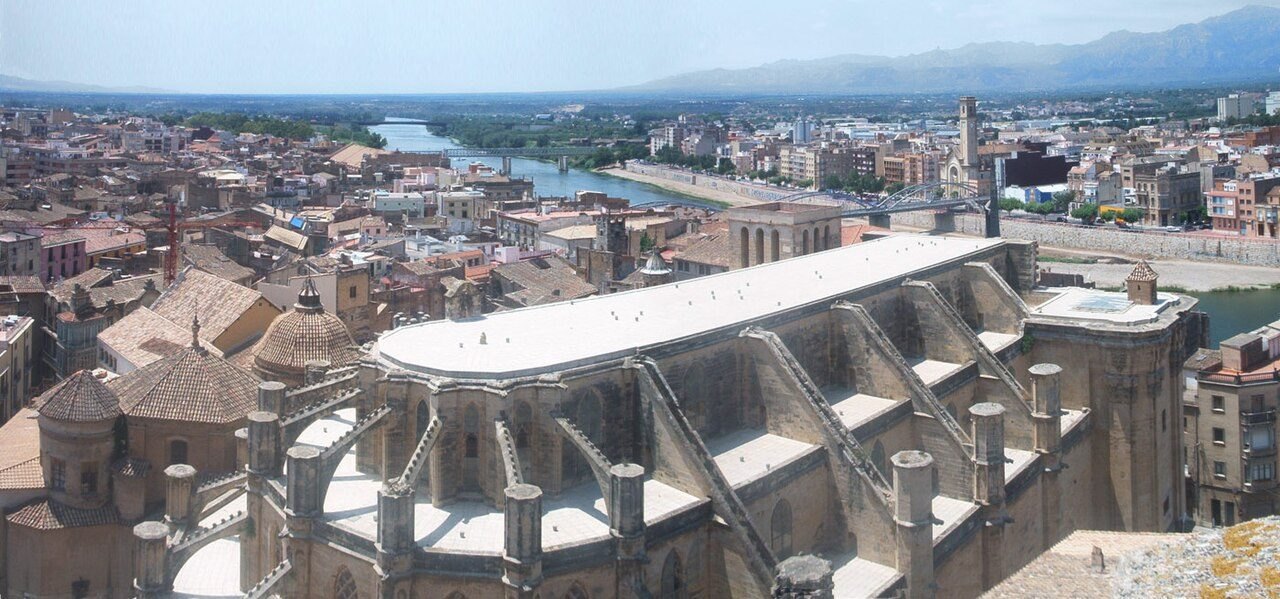
Photo: jordi domènech · CC BY-SA 3.0
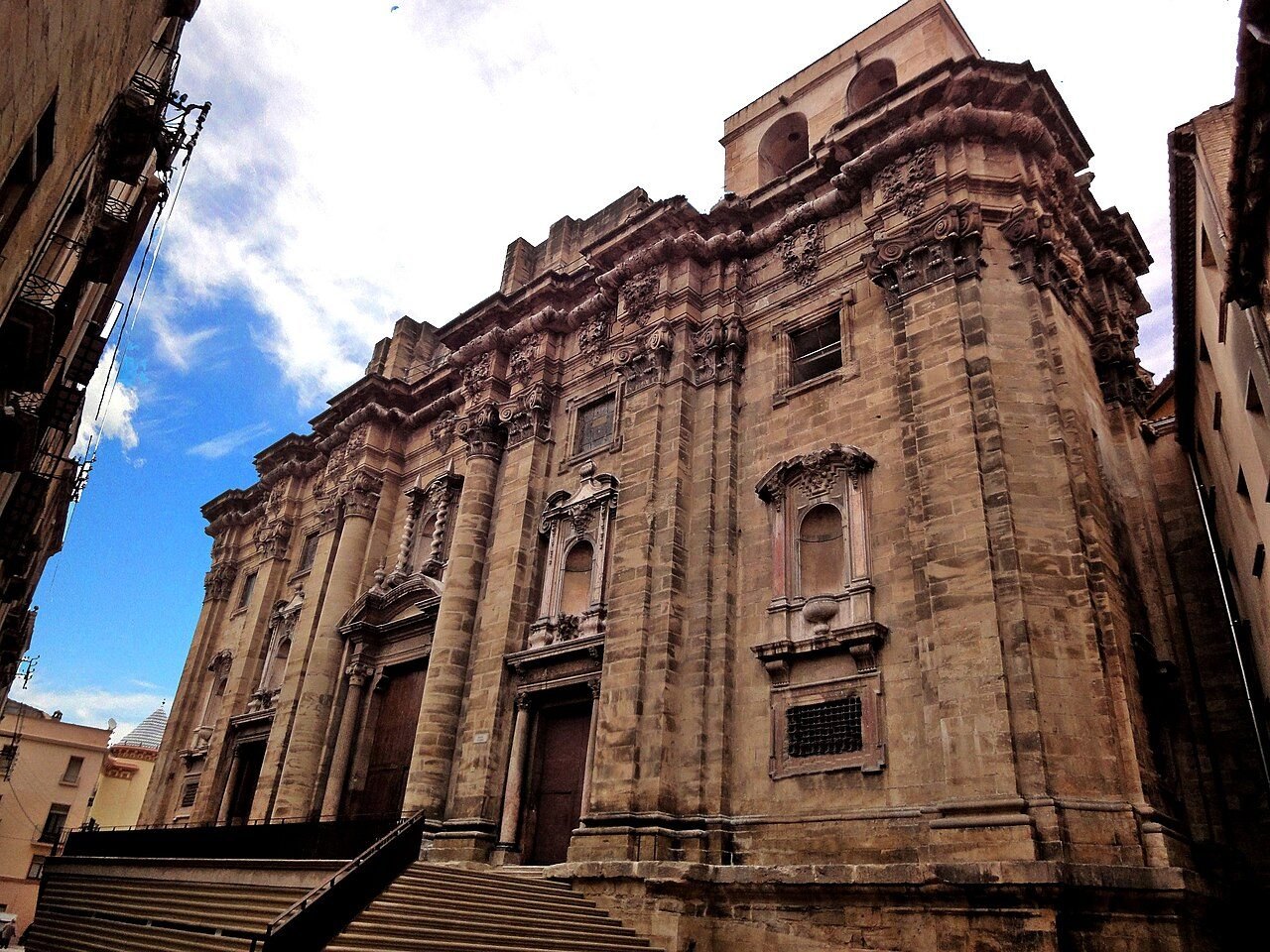
Photo: JnCrlsMG · CC BY-SA 4.0
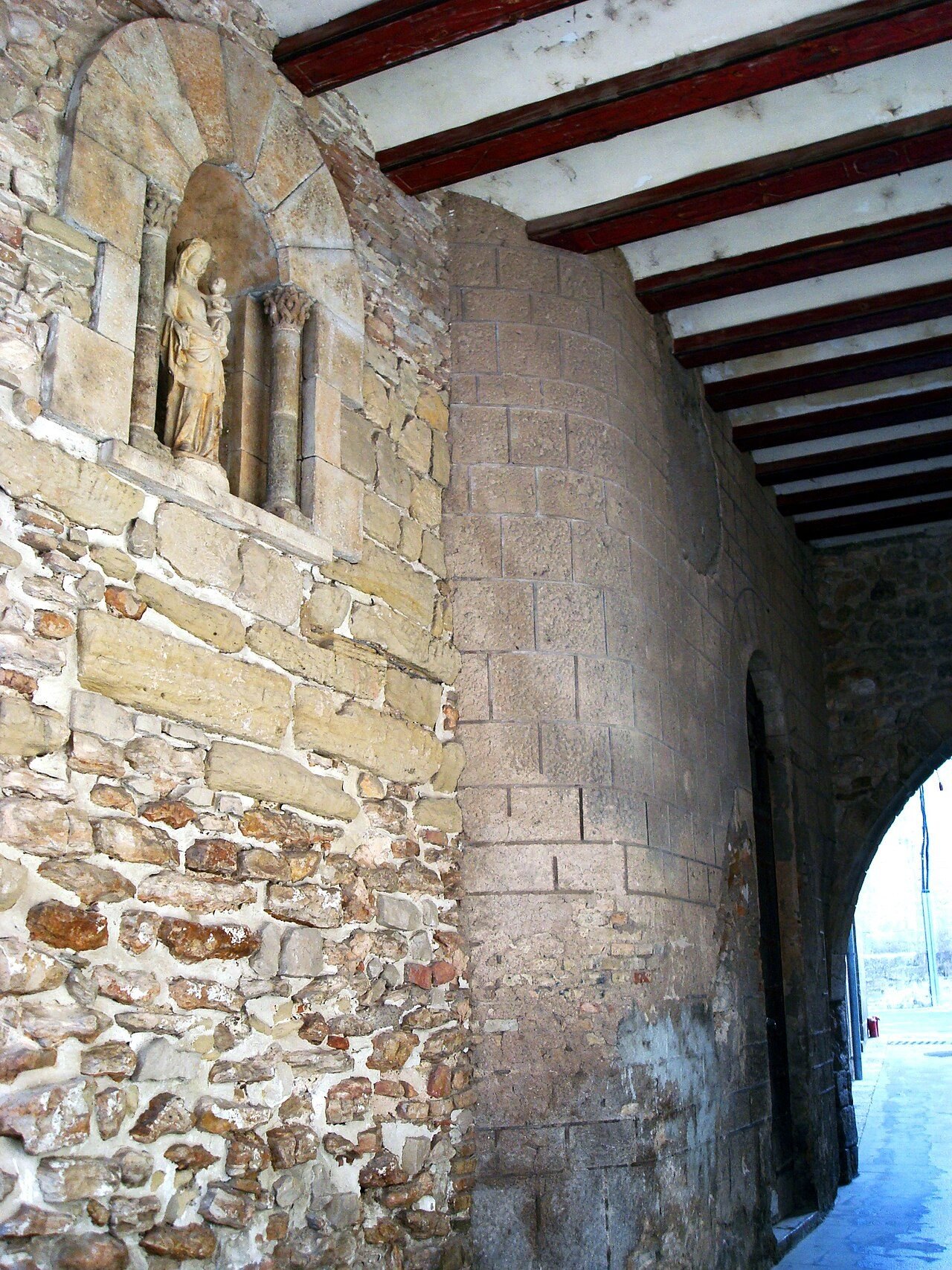
Photo: Jorge Alonso-Lej · CC BY-SA 3.0
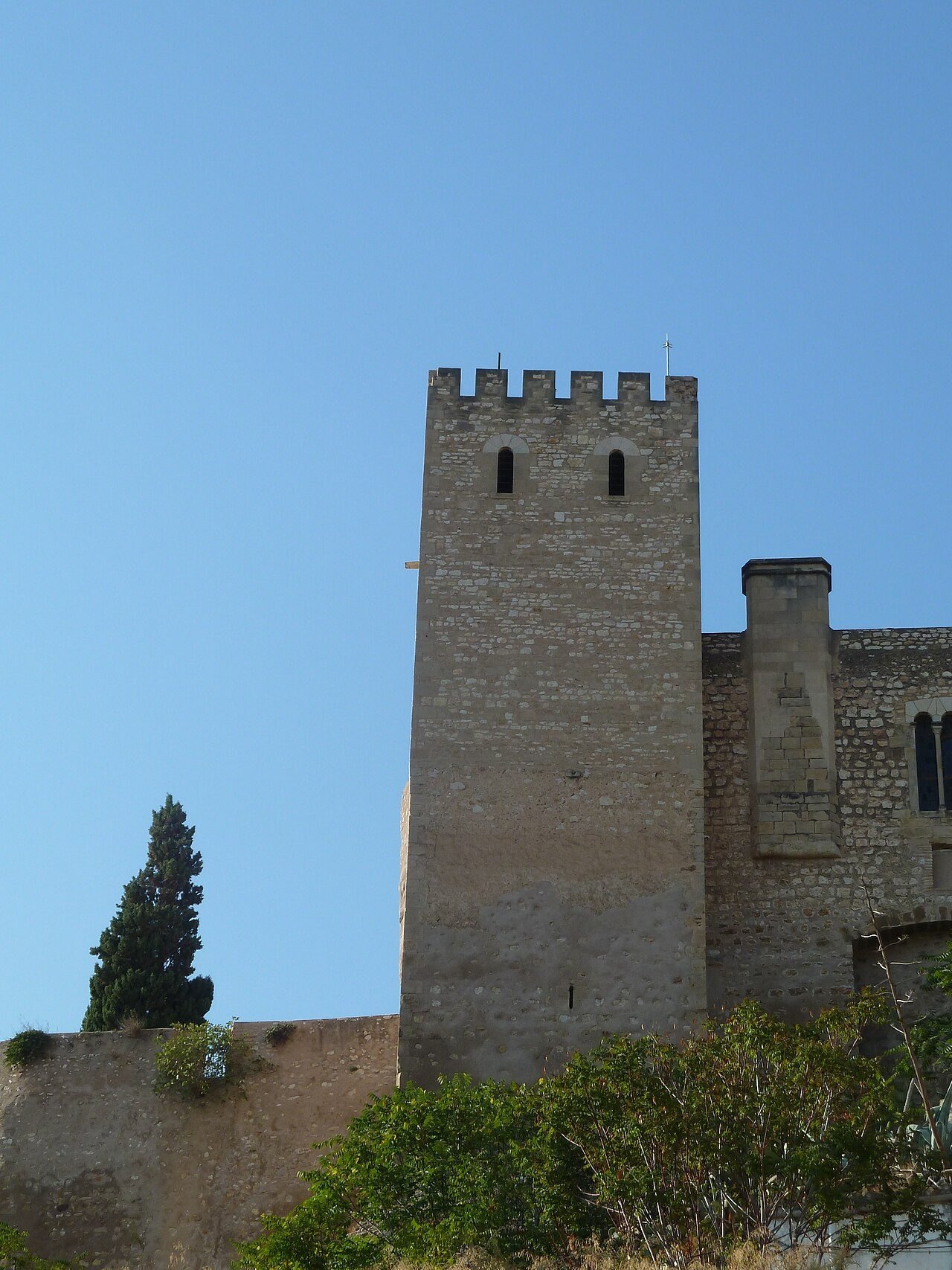
Photo: Deosringas · CC BY-SA 3.0
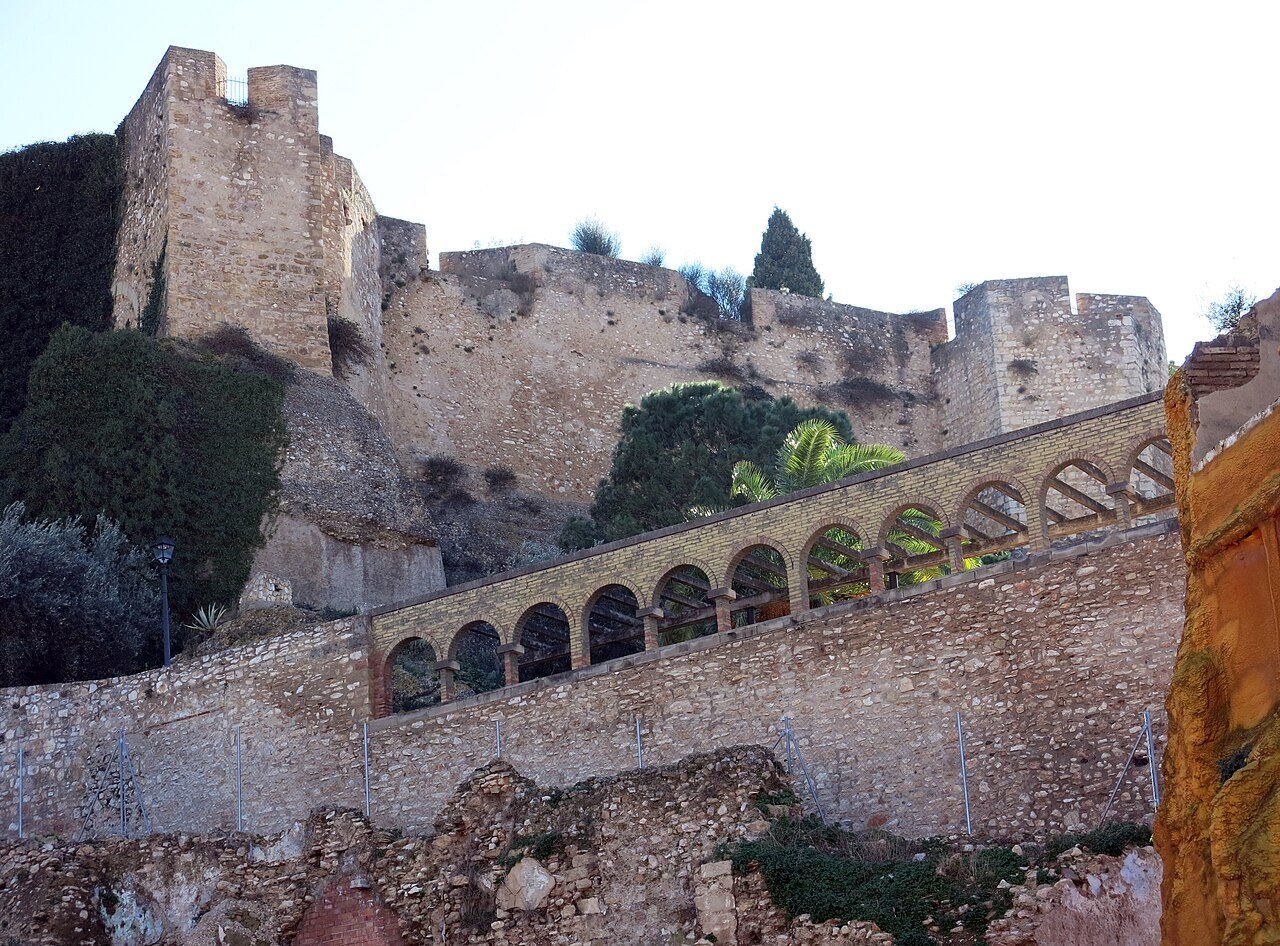
Photo: Enric · CC BY-SA 4.0
- 1st c. BC
Dertosa, a Roman municipium
The Iberian city of the Ilercavones becomes Roman Dertosa, on the Via Augusta. Excavations have not confirmed any military use of the hill.
source: Catalunya Romànica: Castell de la Suda - c. 714
Andalusi Turtuxa
The city becomes a frontier stronghold of al-Andalus for more than four centuries. Louis the Pious besieges it in 808–809 without taking it.
source: Wikipedia (en): Tortosa - 944–945
Abd al-Rahman III: shipyards and well
An inscription commemorates the shipyard that the caliph had built in Tortosa. In the citadel a well more than 40 m deep is dug down to river level.
source: Gran Enciclopèdia Catalana: la Suda de Tortosa - c. 1010–1060
Taifa of Tortosa
With the end of the caliphate, the Slav Labib founds an independent taifa; later Muqatil rules until Zaragoza annexes it.
source: Gran Enciclopèdia Catalana: taifa de Tortosa - 1148
Conquest by Ramon Berenguer IV
The count takes the city with the Genoese and crusaders of the Second Crusade; the defenders had taken refuge in the fortress that the chronicler Caffaro calls “Suda”.
source: Catalunya Romànica: Castell de la Suda - 1149–1153
Division of the city and of La Suda
Genoa receives a third of the city and the lower third of La Suda, the part facing the river; the Templars receive a fifth of the lordship.
source: Catalunya Romànica: Santa Maria de la comanda del Temple - 1178
Consecration of the Romanesque cathedral
The Romanesque cathedral, begun in 1158, is consecrated in 1178, according to tradition on the site of the great mosque.
source: Catalunya Romànica: Santa Maria de Tortosa - 1182
The Templars, lords of Tortosa
Alfonso I gives the Temple two thirds of the city along with La Suda; the Templars and the Montcadas are its co-lords, and La Suda also serves as a prison.
source: Catalunya Romànica: Santa Maria de la comanda del Temple - 1294
Exchange with James II
Master Berenguer de Cardona exchanges the Templar lordship of Tortosa for Peñíscola and other places. La Suda returns to the Crown.
source: Catalunya Romànica: Santa Maria de la comanda del Temple - 14th–15th c.
Royal palace and new wall
A royal palace is built that often houses queens and princes. Peter III walls in the suburbs and in 1347 the Gothic cathedral is begun.
source: Catalunya Romànica: Ciutat de Tortosa - 1462–1714
Wars and artillery
The castle is damaged in the war against John II, the Reapers' War and the War of the Spanish Succession; a pentagonal artillery tower is added.
source: Catalunya Romànica: Castell de la Suda - 1810–1811
Napoleonic siege
Suchet besieges Tortosa from December 1810 until January 2, 1811, when the garrison surrenders.
source: Wikipedia (en): Siege of Tortosa (1810–1811) - 1938
Battle of the Ebro
Tortosa is a war front for nine months; the bombings destroy a large part of the old town and the bridges.
source: Fem Turisme: Hemingway a Tortosa - 1976
Parador de Turismo
The castle is remodeled and in 1976 opens as a parador. The Andalusi cemetery is excavated in 1984–87.
source: Estudi sobre paradors (core.ac.uk)
Using the 3D model we worked out how big this castle was and what it took to build it. Here is a sample:
- How many people worked, how much stone, lime and carts, year by year
- Work by work and how we calculate it
- The data to download (CSV)
Leave your email and you will see everything, for this castle and all the others. As a gift, the castle poster.
Already signed up? Sign in with your email🏰 Enter the castle in 3D⏳ See how it changed⚒ How they built it